9 Best SoapUI Alternatives for API Testing in 2026
The best SoapUI alternative depends on whether you still test SOAP. For SOAP and WSDL, ReadyAPI (SmartBear's commercial edition, which imports SoapUI projects), Katalon and Insomnia all import WSDL files, and Karate covers SOAP in code. For REST, Postman, Insomnia and REST Assured are the usual candidates, and Qodex has an AI agent write the REST and GraphQL tests for you. Every vendor fact below was read on the vendor's own site on 4 October 2026. You can also compare Qodex against every major API and QA tool side by side.
Quick Comparison: Best SoapUI Alternatives at a Glance
| Tool | Best For | Pricing Model | Standout Limit |
|---|---|---|---|
| ReadyAPI | Enterprise SOAP/REST teams upgrading from SoapUI | Quote via SmartBear; 14-day trial | Converted projects may not reopen in SoapUI |
| Postman | General API development teams moving off SOAP | Free tier; Team $19/user/mo (annual); Enterprise by sales | Migrates SoapUI projects, with unsupported items to review |
| Qodex | Teams automating REST API testing with an AI agent | Individual $0; Startup from $1,299 per project/mo | Published runs cover HTTP and GraphQL APIs |
| Katalon Studio | Codeless + scripted testing with WSDL import | Professional $1,000/seat/yr offer to 31 Oct; $2,199 regular | Heavy for API-only work; per-seat costs add up |
| REST Assured | Java teams writing API tests as code | Free, open source (Apache 2.0) | JVM languages (Java, Kotlin, Scala); REST-focused |
| Karate | BDD-style API testing without Java coding | Free, open source (MIT); paid IDE add-ons from $100/user/yr | Custom DSL to learn; JVM dependency |
| Insomnia | Lightweight API debugging | Free core; Pro $12/user/mo, Enterprise $45/user/mo | Imports WSDL; a client more than a test suite |
| Tricentis Tosca | Enterprise model-based test automation | Ask Tricentis | Heavy implementation; overkill for API-only testing |
| Apache JMeter | Performance plus functional API testing | Free, open source (Apache 2.0) | Dated UI; SOAP sent as XML you supply |
SoapUI has been a staple of API testing since the mid-2000s, especially for teams working with SOAP web services. But as the industry has shifted to REST, GraphQL, and microservices, SoapUI's SOAP-first architecture feels increasingly dated. Whether the trigger is the heavy Java footprint, the gap between the open-source version and ReadyAPI, or simply wanting tests that maintain themselves, there are strong alternatives in 2026. Pricing below was re-read on each vendor's live pricing page on 4 October 2026; quote-based models are described as such, with no invented numbers.
Why Look for SoapUI Alternatives?
SoapUI (now SmartBear SoapUI Open Source) remains functional, but several factors drive teams to explore other options:
1. Aging Interface and Performance
SoapUI is a Java Swing application that shows its age. The UI feels clunky next to modern API clients, startup is slow, and large projects with many test suites degrade noticeably.
2. SOAP-Centric Design
While SoapUI supports REST, it was built around SOAP and WSDL. The REST experience feels bolted on. If your team primarily works with REST APIs and JSON payloads, SoapUI's workflow adds friction that REST-first tools simply do not have.
3. The Free-to-Paid Cliff
Open-source SoapUI lacks data-driven testing, which lives in ReadyAPI. SmartBear does not publish ReadyAPI's price; its pricing page sends you to sales. The free version is too limited for serious testing; the paid version is a real budget line.
4. CI/CD Integration Takes Setup
SoapUI runs from the command line via testrunner, but wiring it into modern pipelines takes extra configuration. Newer tools ship native CLI runners, Docker images, and webhook triggers that make CI integration trivial.
5. Every Test Is Still Handwritten
In SoapUI Open Source, a human writes the requests, assertions and edge cases. ReadyAPI, Katalon, Karate and Tosca now offer AI test generation. Tools like Qodex generate and maintain the test suite from your API spec, which changes the economics of coverage entirely.
If these pain points resonate, the alternatives below offer more modern approaches to API testing. For REST-focused automation guidance, see our tutorial on automating REST API testing.
Top 9 SoapUI Alternatives in 2026
1. ReadyAPI
ReadyAPI by SmartBear is the commercial evolution of SoapUI. If you know SoapUI and need more power without changing mental models, it is the natural upgrade path.
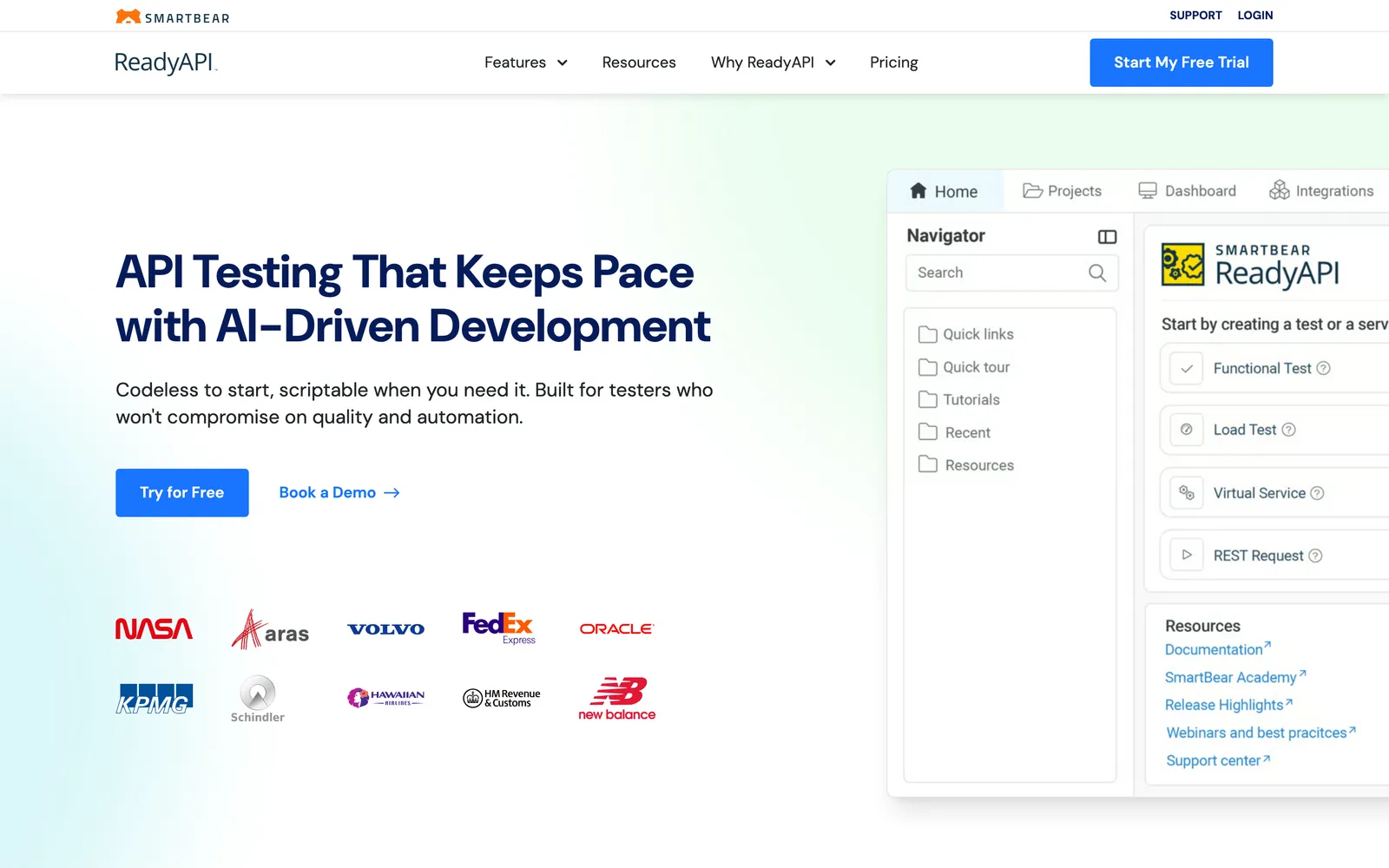
What it does: ReadyAPI bundles functional testing, load testing, and service virtualization. It supports REST, SOAP and GraphQL with WSDL import, data-driven testing from Excel and databases, built-in security scans, and CI/CD plugins.
Pricing: a 14-day free trial; the pricing page asks you to contact SmartBear rather than publishing a price list. Budget accordingly: this is enterprise-tier software.
Pros:
Direct SoapUI project import, though a converted project may not reopen in SoapUI
Best-in-class SOAP and WSDL support
Data-driven testing with Excel, database, and file sources
Service virtualization for mocking dependencies
Cons:
No published price, so budgeting starts with a sales call
Still a heavyweight Java application
Learning curve for the advanced modules
Best for: Enterprise teams with significant SOAP infrastructure that need professional-grade testing and want the shortest migration from SoapUI.
2. Postman
Postman is an API development platform that covers a broad range of API types and team workflows.
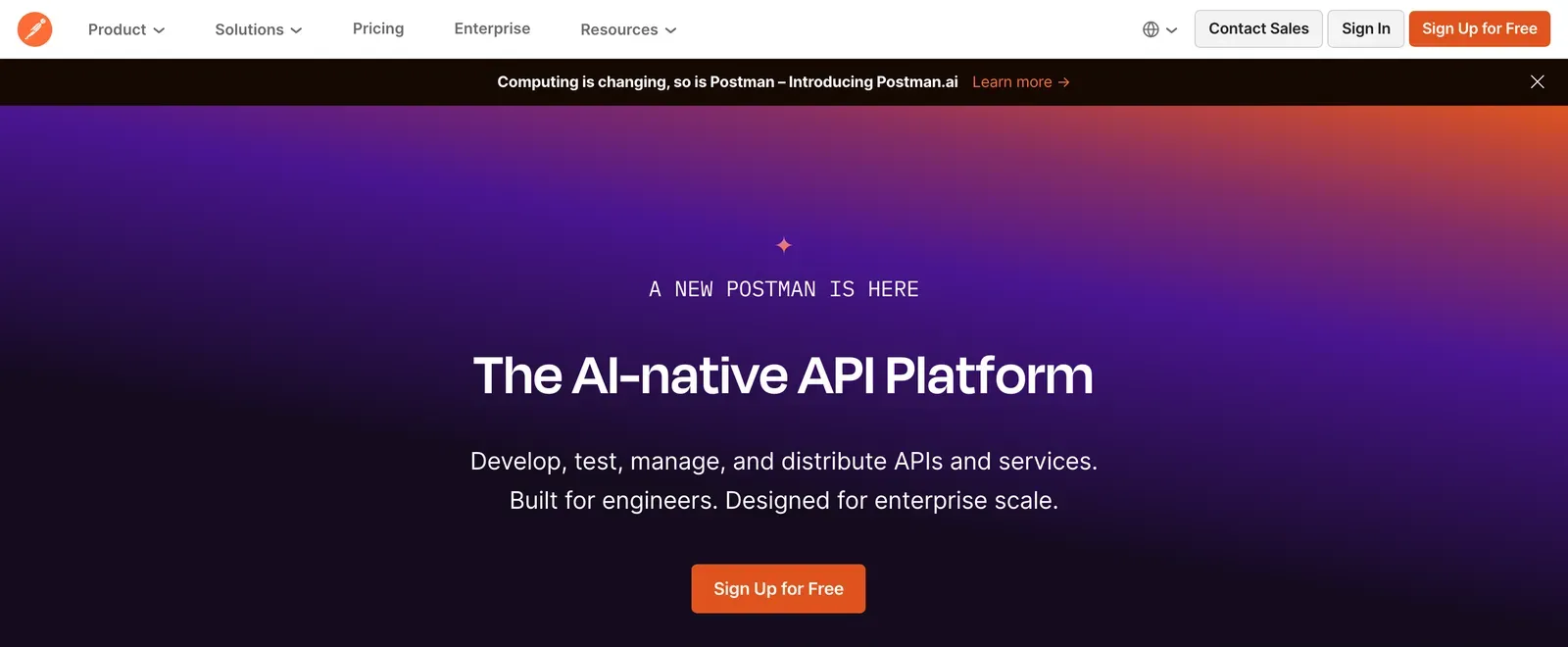
What it does: Visual interface for building, testing, and documenting APIs across REST, GraphQL, WebSocket, gRPC, and SOAP (via raw XML). Collections, environments, scripted assertions, mock servers, monitors, and shared team workspaces.
Pricing: Free tier; Solo at $9/month and Team at $19 per user/month, billed annually; Enterprise is priced by sales (read 4 October 2026).
Pros:
Massive community and documentation
Strong collaboration via shared workspaces
Mock servers, monitors, and docs built in
Newman CLI for CI/CD runs
Cons:
SoapUI project migration lists unsupported items you rebuild by hand
Team features sit behind per-seat pricing
Best for: Teams transitioning from SOAP to REST who want the ecosystem default. Weigh it against the field in our Postman alternatives guide.
3. Qodex
Qodex takes on the part of SoapUI work that costs the most time: writing the tests. It is an autonomous AI agent that explores your API, generates runnable test scenarios with assertions, and replays them deterministically on demand, on a schedule, or from CI.
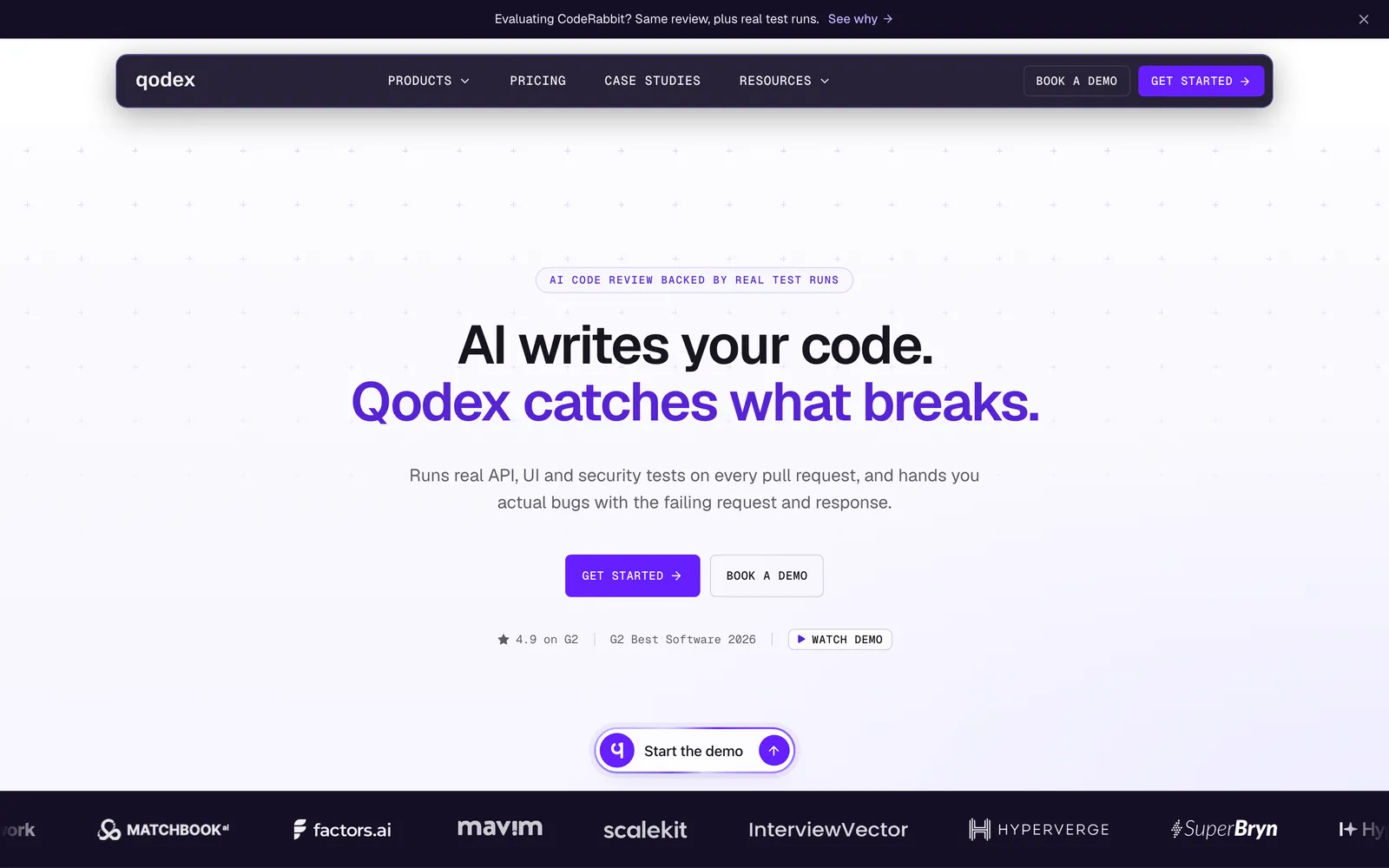
What it does: Import an OpenAPI spec or a Postman collection, and Qodex maps your endpoints. The agent then writes scenarios covering functional flows, auth, and OWASP-aligned API security checks (IDOR, auth bypass, injection) in the same suite. Saved scenarios replay with no LLM in the loop, so a rerun costs nothing in model spend, within your plan's run limit.
One honest caveat up front: Qodex's published scenario runs cover HTTP and GraphQL APIs. If your services are SOAP-first, stay in the ReadyAPI, Katalon or Insomnia lane. Qodex is for REST and HTTP APIs.
Pricing:
Individual: $0 per project per month, with up to 25 scenarios and 100 runs a month (see pricing)
Startup and Scale: from $1,299 and $2,500 per project per month, with CI/CD integrations, scoped with sales
Pros:
AI agent generates the test suite from your spec or collection, no manual scripting
Functional and security testing in one tool, including multi-role auth profiles for IDOR checks
Saved scenarios replay at zero LLM cost, so the suite stays cheap as it grows
Generated tests are standard, ejectable scripts, no lock-in
Cons:
Published runs cover HTTP and GraphQL
AI-generated tests deserve human review before promotion to scheduled runs
Best for: Teams modernizing from SOAP to REST who want coverage to scale without headcount. QA engineers tired of writing every test by hand in a desktop IDE.
4. Katalon Studio
Katalon Studio is a test automation platform covering web, mobile, desktop, and API testing in one tool, with both codeless and Groovy-scripted modes.
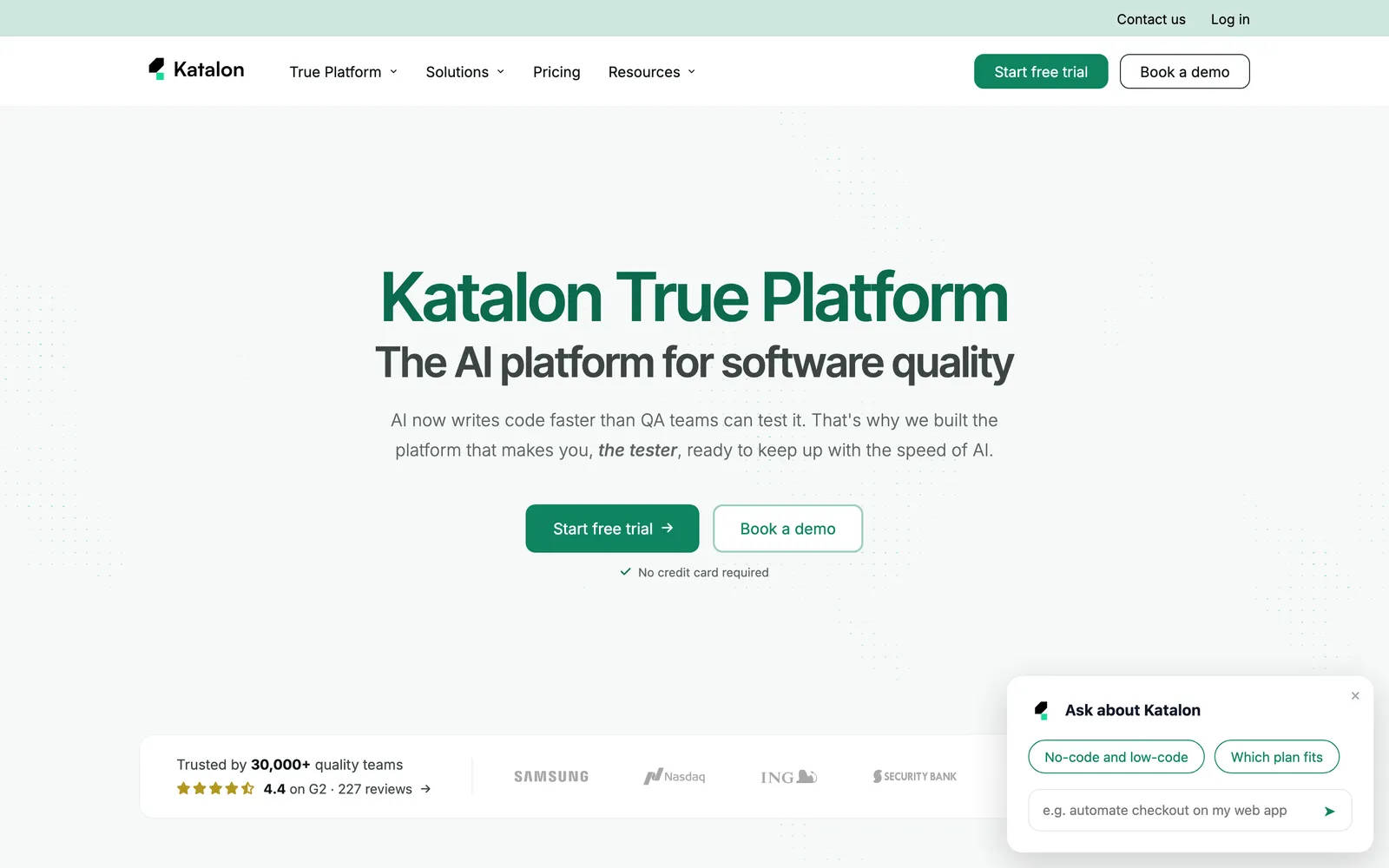
What it does: Visual test design for API tests without coding, plus a scripting mode for advanced logic. Supports REST and SOAP with WSDL import (the SoapUI-like part), data-driven testing, BDD with Cucumber, and Jira/Jenkins integrations.
Pricing: Studio Professional is $1,000 per seat per year for the first three seats on a first online purchase, through 31 October; the displayed regular price is $2,199 a year (read 4 October 2026). Free trial available.
Pros:
WSDL import for SOAP testing
Codeless creation for non-programmers
One platform for web, mobile, and API tests
Built-in reporting and analytics
Cons:
Feels bloated for API-only testing
Groovy scripting has a learning curve
Per-seat pricing is significant for small teams
Best for: Teams that need one tool across web, mobile, and API, with SOAP/WSDL still in the mix. See our Katalon alternatives comparison for that category.
5. REST Assured
REST Assured is a Java library for testing REST APIs with a fluent DSL. If your team writes Java and wants API tests living in the codebase rather than a separate GUI tool, this is the standard choice.
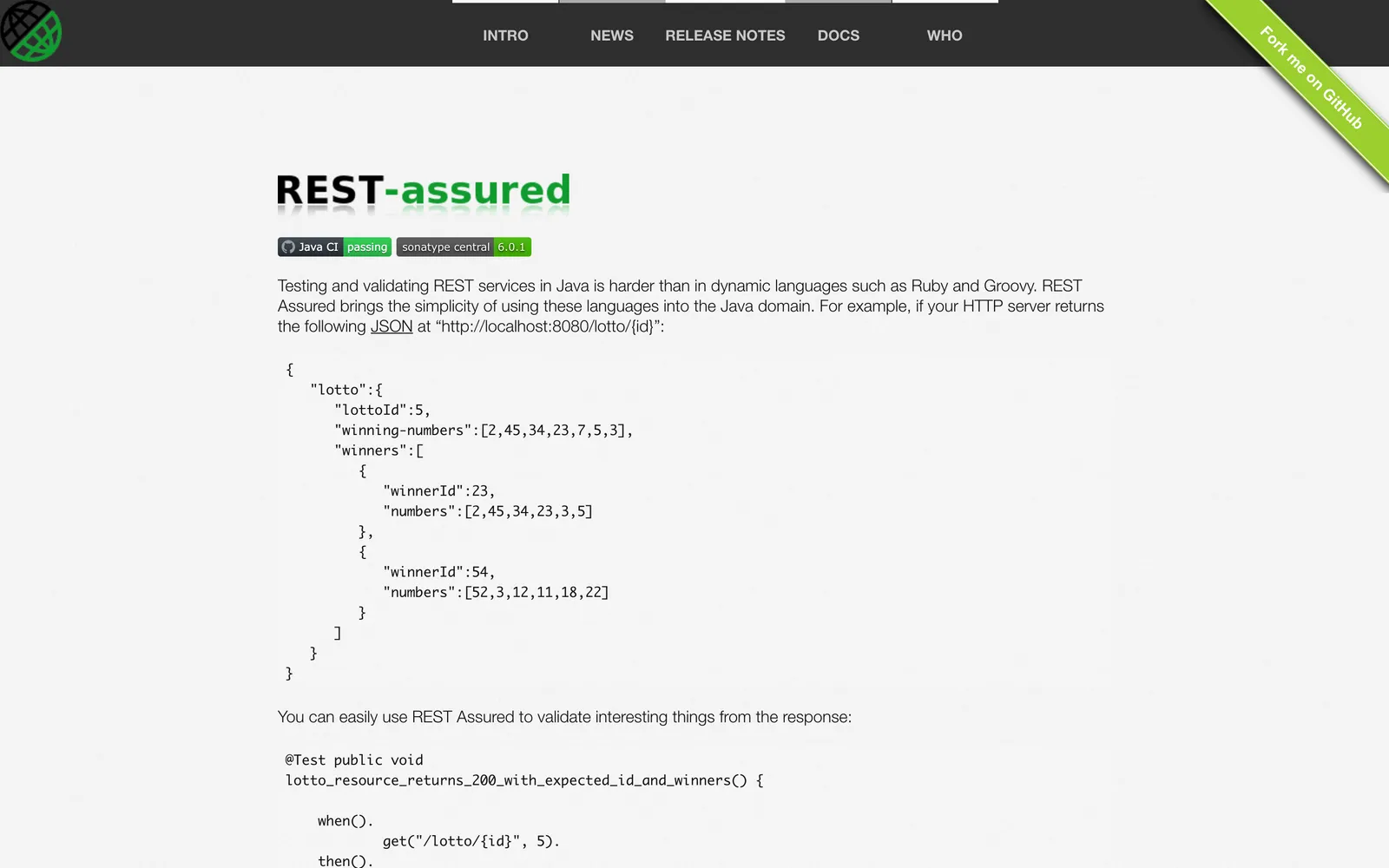
What it does: A Given/When/Then-style DSL for HTTP requests and response validation in Java, integrating with JUnit, Maven and Gradle. Strong JSON and XML parsing and complex auth handling.
Pricing: Free and open source (Apache 2.0)
Pros:
JUnit, Maven and Gradle integration
Readable BDD-style syntax
Excellent in CI/CD pipelines
Cons:
JVM only: Java, Kotlin or Scala
Programming knowledge required
Best for: Java development teams moving from SoapUI to a code-first testing approach.
6. Karate
Karate is an open-source testing framework using Gherkin-style syntax for API testing without Java programming. Tests live in readable .feature files even though the engine runs on the JVM.
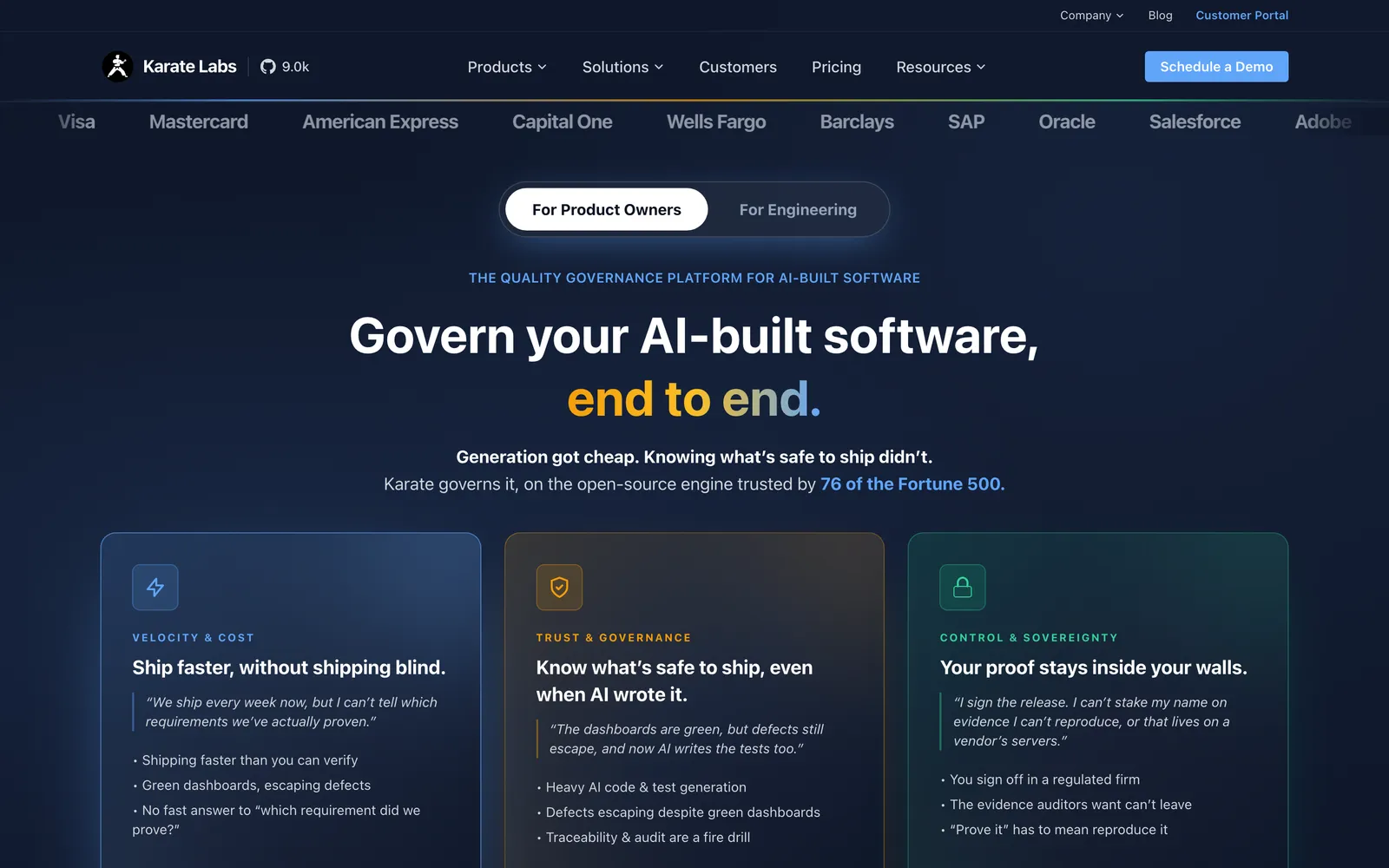
What it does: API testing, mocks, UI testing, and performance testing in one framework. Native JSON and XML handling (XML support matters for ex-SoapUI teams), data-driven testing, parallel execution, and rich HTML reports.
Pricing: The Karate framework is free and open source (MIT). Karate Labs sells optional IDE plugins and tooling from $100 to $640 per user/year (read 4 October 2026).
Pros:
No Java coding required for tests
Handles XML natively, smoother for SOAP-era payloads than most REST tools
Built-in parallel execution and mocking
Rich HTML reports included
Cons:
Custom DSL to learn
JVM dependency for execution
Best for: QA teams wanting readable, BDD-style API tests without programming. See our Karate Labs alternatives guide for adjacent options.
7. Insomnia
Insomnia (by Kong) is an open-source API client known for its clean interface. It is the lightweight option when you need to debug and explore APIs without a full automation platform.
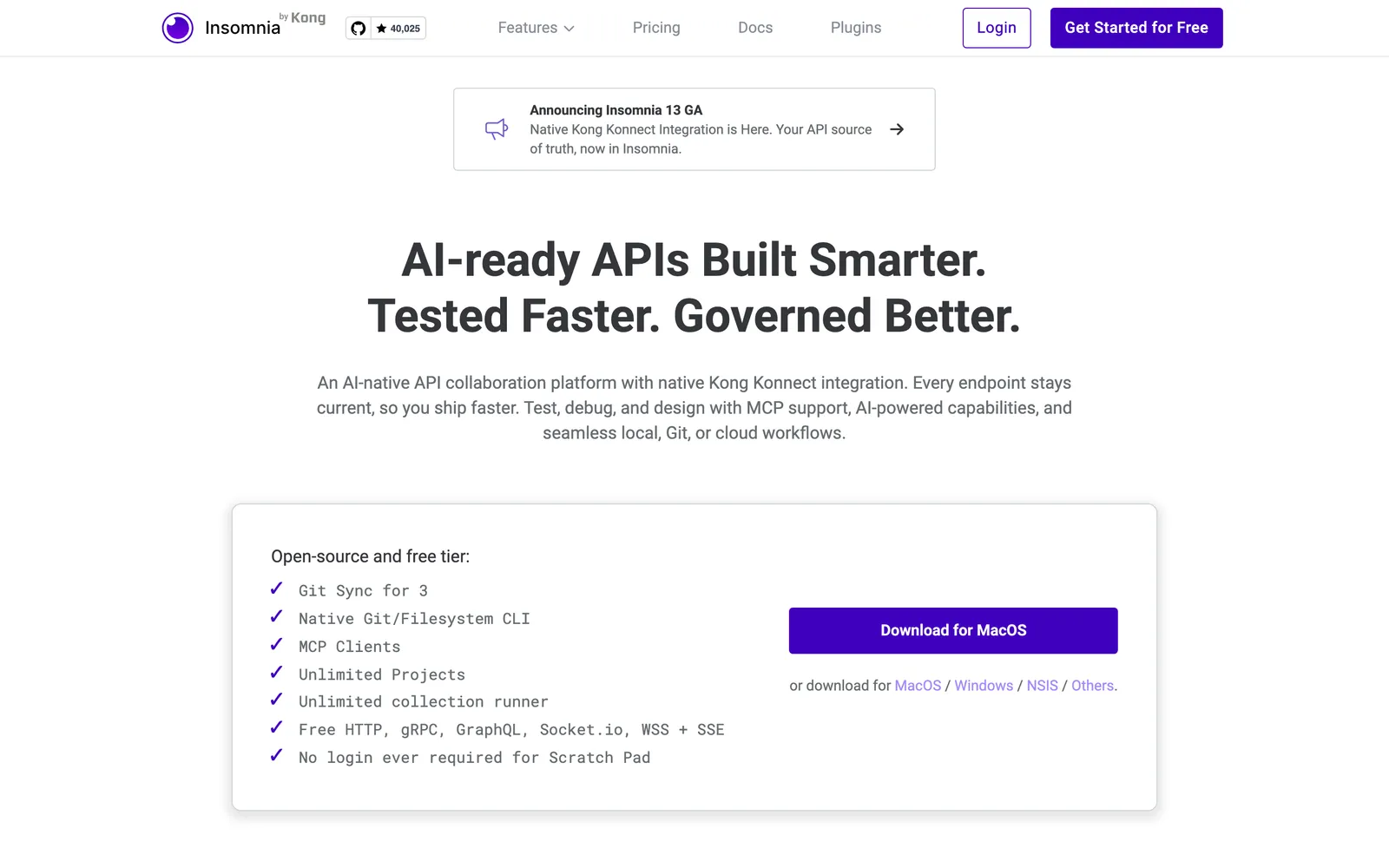
What it does: Visual client for sending requests, debugging responses, managing environments, and organizing collections across REST, GraphQL, gRPC, and WebSocket, with a plugin system.
Pricing: Free open-source core; Pro at $12 per user/month and Enterprise at $45 per user/month (read 4 October 2026).
Pros:
Clean, fast, distraction-free UI
Strong GraphQL and gRPC support
Open-source core with plugins
Low learning curve for SoapUI users
Cons:
SOAP requests are XML bodies and headers you edit, after a WSDL import
Free Git Sync stops at three users
Best for: Developers moving from SOAP to REST/GraphQL who want a clean visual client rather than a test automation suite.
8. Tricentis Tosca
Tricentis Tosca is an enterprise continuous-testing platform built on model-based test automation, for enterprise and packaged applications.
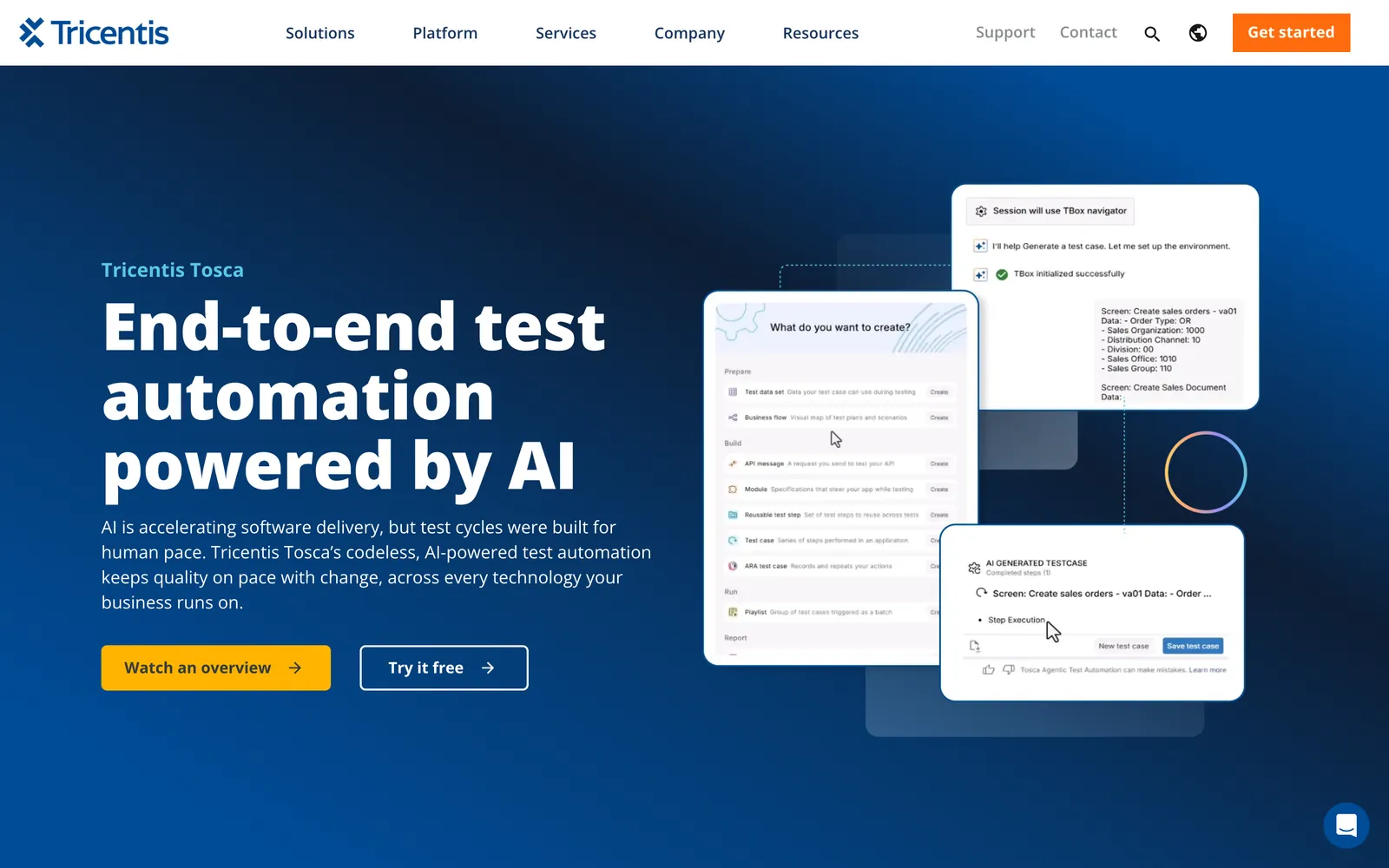
What it does: Model-based test design instead of scripts, with support for REST and SOAP and deep enterprise system integrations.
Pricing: ask Tricentis; no price was published on the pages we read.
Pros:
Codeless, model-based design that scales across large suites
Strong SOAP and enterprise integration testing
SAP and Salesforce coverage few tools match
Cons:
A heavy implementation process
Steep learning curve for the modeling approach
Massive overkill for API-only testing
Best for: Large enterprises testing complex SOAP/REST landscapes around SAP or Salesforce, with budget and a dedicated QA function.
9. Apache JMeter
Apache JMeter is an open-source Java application built for load testing that doubles as a functional API testing tool. It has been around since 1998 and handles SOAP natively.
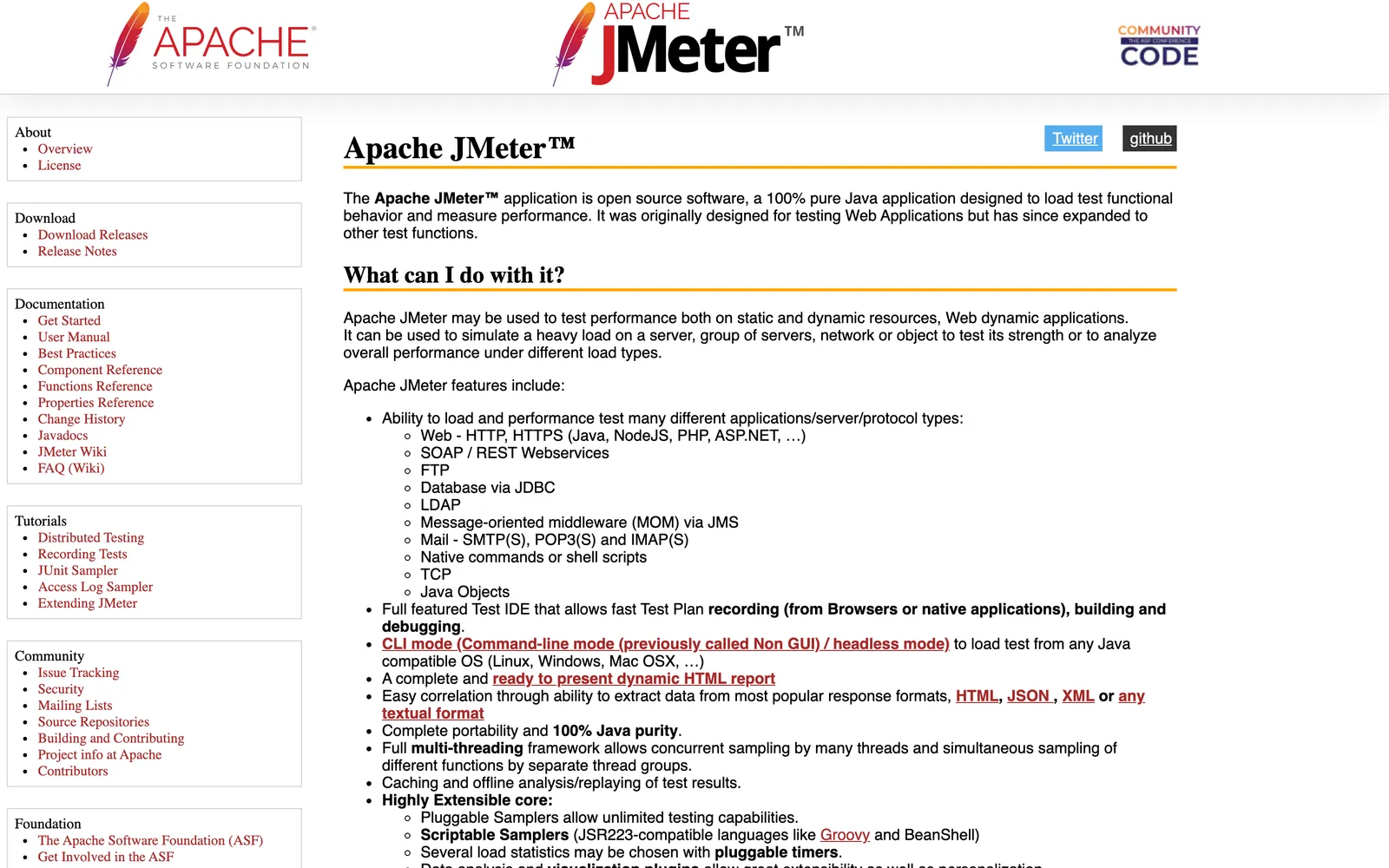
What it does: Sends HTTP/HTTPS, SOAP/REST, JDBC, and JMS traffic with assertions, parameterization, and distributed execution. Primarily a performance tool, but its samplers and assertion system cover functional API checks too.
Pricing: Free and open source (Apache 2.0)
Pros:
Free with a massive community
Native SOAP and REST support
Performance and functional testing in one tool
Highly extensible via plugins
Cons:
Dated, unintuitive UI
Steep learning curve
Poor fit for quick exploration or debugging
Best for: Teams that need load testing and functional API coverage from one free tool, including legacy SOAP services.
How to Choose the Right SoapUI Alternative
Pick by the constraint that actually binds your team:
If you need SOAP/WSDL support: ReadyAPI (direct upgrade), Katalon Studio or Insomnia (both import WSDL), or Karate (SOAP in code). JMeter can also send SOAP, as XML you write yourself.
If you are moving from SOAP to REST: Postman for the ecosystem, Insomnia for the cleaner client.
If your team writes Java: REST Assured for tests as code; Karate for a no-code DSL that still runs on the JVM and handles XML gracefully.
If you want the tests written for you: Qodex. Import the spec or collection, review the generated scenarios, and schedule them. Start free and see current limits on the pricing page.
If budget is zero: REST Assured, Karate, and JMeter are fully open source. Qodex's free tier covers automated testing without a license fee.
If you need enterprise scale and someone to call: ReadyAPI or Tricentis Tosca, priced accordingly.
If SoapUI is still doing the job, keep it. For maintaining a stable estate of legacy SOAP services with existing SoapUI projects and no appetite for migration, open-source SoapUI plus JMeter for load remains a perfectly serviceable zero-cost stack. Migrate when REST becomes your center of gravity, not before.
Frequently Asked Questions
What is the best free alternative to SoapUI?
For SOAP specifically, Apache JMeter is the strongest free option with native SOAP support. For REST, REST Assured (Java, code-first) and Karate (BDD-style, XML-friendly) are excellent open-source choices. Qodex's free tier covers AI-generated REST API testing (see pricing for current limits).
Can I import SoapUI projects into other tools?
ReadyAPI imports SoapUI projects directly, since it is the commercial successor. Postman documents a migration for SoapUI projects, with unsupported items to review. Elsewhere, plan on recreating tests, though modern tools make that faster than it sounds: Qodex, for example, regenerates a suite from your OpenAPI spec or Postman collection rather than porting old XML projects.
Is SoapUI still relevant in 2026?
For teams maintaining significant SOAP/WSDL infrastructure, yes, and ReadyAPI remains the deepest SOAP toolchain available. For new projects, the industry has moved: REST, GraphQL, and gRPC dominate, and REST-first tools like Postman, Insomnia, or automated platforms like Qodex serve them better than a SOAP-era IDE.
What replaced SoapUI Pro?
SmartBear replaced SoapUI Pro with ReadyAPI, which bundles SoapUI's functionality with load testing, service virtualization, and security scanning. It imports existing SoapUI projects, though a converted project may not reopen in SoapUI.
How does REST Assured compare to SoapUI?
REST Assured is a code-based Java library; SoapUI is a GUI tool. REST Assured runs inside your build and CI, but requires programming skills. SoapUI is more accessible to non-programmers and far stronger on SOAP. Choose by whether your team prefers tests as code or tests in a visual designer.
Which SoapUI alternative handles both SOAP and REST?
ReadyAPI is the strongest dual-protocol option, built from SoapUI's SOAP foundation with modern REST support added. Katalon Studio covers both with WSDL import, and JMeter handles both natively for free. For occasional SOAP calls in a REST-first workflow, Postman's raw XML requests are workable.