7 Best KushoAI Alternatives for API Testing in 2026
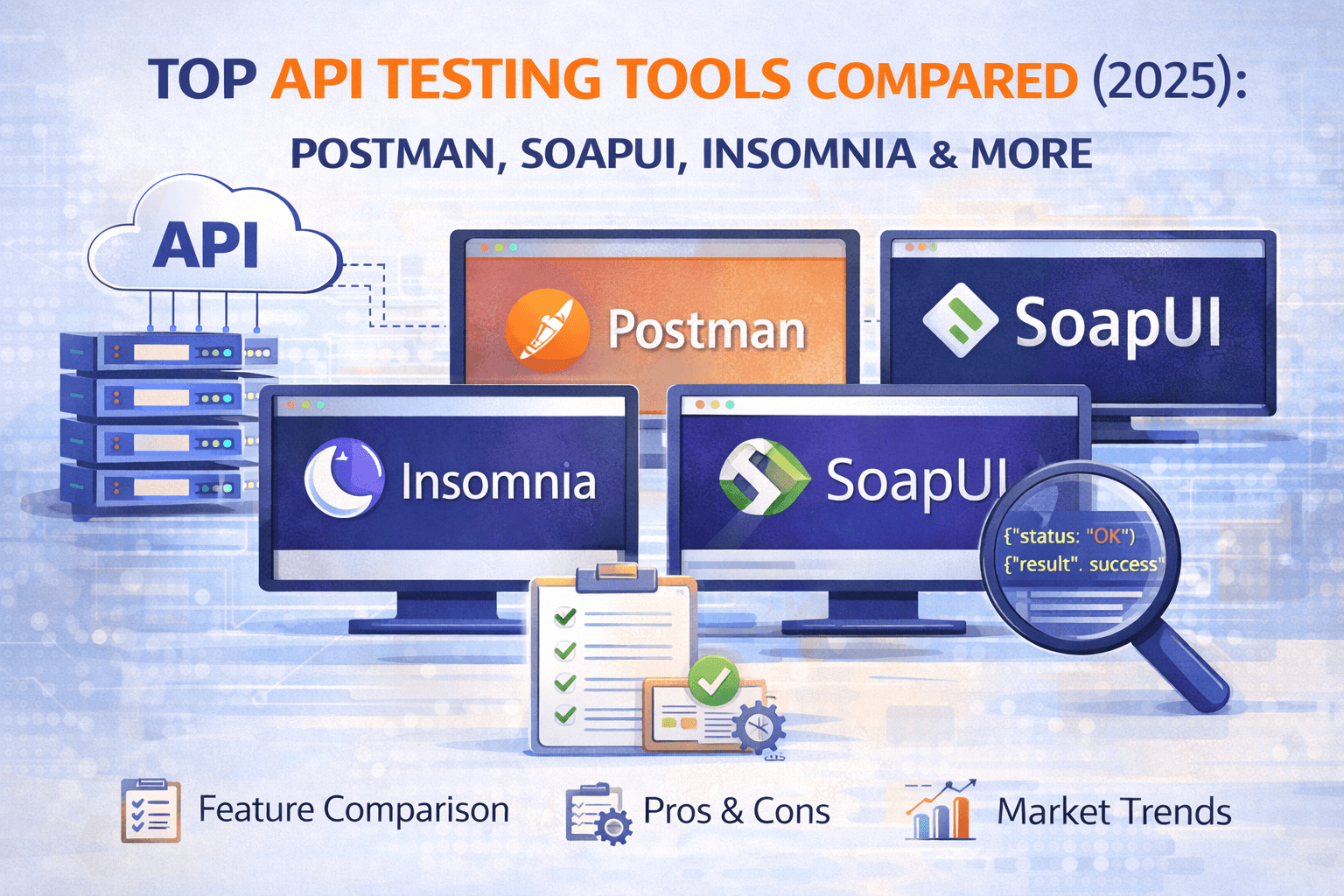
Quick Comparison: KushoAI Alternatives at a Glance
| Tool | Approach | Best For | Pricing (verified June 2026) |
|---|---|---|---|
| Qodex | Autonomous AI QA agent | AI-generated API + security suites, code you own | Free tier; paid plans via sales |
| Postman | Full API platform with AI credits | Teams already standardized on Postman workflows | Free; Solo $9, Team $19/user, Enterprise $49/user per month (annual) |
| Insomnia | Open-source API client | Developers wanting a clean manual client | Free core; paid Pro and Enterprise tiers |
| Bruno | Git-first, offline-first client | Collections versioned next to code | Free core; Pro $6, Ultimate $11 per user/month (annual) |
| Hoppscotch | Browser-based open-source client | Zero-install, self-hostable testing | Free open source; paid enterprise plans |
| ReadyAPI | Enterprise API testing suite | Functional + performance + virtualization in one | Quote-based; contact sales |
| Karate | Open-source test framework | Engineers writing BDD-style API tests in code | Free (MIT), commercial support available |
KushoAI is one of the more interesting entrants in AI-native API testing: describe your API or hand it your endpoints, and it generates and runs test suites for you, with a free Developer Edition to validate fit. It is also the closest direct overlap with what we build at Qodex, so consider this comparison written by a competitor that takes Kusho seriously. The honest summary: Kusho's free tier is a real on-ramp, but it caps at 50 API endpoints, and everything beyond it, including security testing, CI/CD integration, and SSO, lives in a custom-priced Enterprise tier. Whether that shape fits depends on the size of your API surface and how much you want between "free trial" and "enterprise contract." Here are the seven alternatives to evaluate alongside it.
What KushoAI Does Well
The case for Kusho first, because it earns its shortlist spot:
AI-native from the start. Kusho was built around generating API tests with AI rather than bolting an assistant onto a manual client. Test generation and execution are the product, not a feature.
A genuinely free on-ramp. The Developer Edition is $0/month for up to 50 API endpoints, including API contract testing, UI testing, and test generation and execution. That is enough to validate the approach on a real service.
Enterprise checkboxes covered. The Enterprise tier lists OWASP security testing, full CI/CD integration, SOC 2 and ISO 27001 certified data security, SSO/SAML with RBAC, an on-premise deployment option, and a 99.9% uptime SLA. For procurement-driven buyers, the list is there.
Transparent pricing drivers. Kusho publishes what its enterprise pricing scales on: endpoint and workflow counts, execution volume, team size, and deployment model. More than many vendors disclose.
Why Teams Look for KushoAI Alternatives
The 50-endpoint cliff. The free Developer Edition caps at 50 API endpoints, and the next step is a custom-priced enterprise conversation. There is no published mid-tier for a team with 200 endpoints and no procurement department.
Security testing is gated to Enterprise. OWASP security testing sits in the custom-priced tier, so the teams most likely to need it early (small teams shipping fast) cannot reach it on the free plan.
Execution volume is a pricing driver. Kusho's own pricing factors include monthly test runs (they cite typical ranges of 50K to 5M+). If your bill scales with how often you test, testing on every commit becomes a budgeting decision instead of a default.
You may want a manual client too. AI generation does not replace the quick request-response loop developers use daily. Several tools below are that loop.
The 7 Best KushoAI Alternatives in 2026
1. Qodex
Qodex is the most direct alternative: also an AI agent that generates and runs API tests, but with three structural differences. First, scale: the free tier is generous (see pricing for current limits) and includes security testing rather than gating it to enterprise. Second, cost model: the LLM authors a scenario once and replays are deterministic with zero LLM cost, so execution volume is not a pricing driver; rerunning your suite on every commit costs nothing extra. Third, ownership: generated tests are standard HTTP and Playwright scripts, git-syncable and ejectable, not platform artifacts.
How it works: import an OpenAPI 3.x or Swagger 2.0 spec, a Postman collection, or point the agent at live endpoints. It maps your API, infers the auth scheme, and generates scenarios covering functional flows, chained calls, and error handling. The same agent runs OWASP-aligned security checks (IDOR, BOLA, auth bypass, injection) with inverted semantics: a passing security test means the attack was blocked, and the agent will not "fix" a failing security test by relaxing the assertion. Scenarios run on demand, on a cron schedule, or from CI webhooks, and every failure is triaged as a real bug, a stale test, or an environment issue. A Postman-style API playground covers the manual moments.
Pricing: free tier, no credit card; paid plans via sales (see pricing).
Pros: AI generation plus security testing on the free tier; zero-cost deterministic replays; standard ejectable code; multi-role auth profiles for IDOR testing; BYOK support with every token logged.
Cons: not a traditional manual request client (the playground covers basics, but exploration is not the core workflow); AI-generated tests deserve human review before promotion; newer platform with a smaller community than Postman's.
Best for: teams that want Kusho's AI-generated coverage with a bigger free tier, security included, and code they own. Start free and point the agent at your spec.
2. Postman
Postman is the incumbent API platform: client, collections, mock servers, monitors, documentation, and an AI layer (the assistant formerly known as Postbot, now part of Postman's credit-metered AI alongside Agent Mode) that helps write tests and requests. If your team already lives in Postman, adding its AI features is the lowest-friction move available.
Pricing (verified June 2026): Free tier with 50 AI credits; Solo at $9/month; Team at $19 per user/month; Enterprise at $49 per user/month, all billed annually. AI usage beyond included credits is pay-as-you-go per credit.
Pros: the largest ecosystem and community in API tooling; collections, mocks, monitors, and docs in one place; AI assistance built into a workflow millions already know.
Cons: AI is credit-metered, so heavy generation has a running cost; the platform has grown heavy for teams that just need testing; collections live in a proprietary cloud-backed format. Our Postman alternatives guide covers the full landscape.
Best for: teams standardized on Postman that want incremental AI help rather than a new tool.
3. Insomnia
Insomnia (by Kong) is the most popular clean-client alternative: a focused interface for REST, GraphQL, gRPC, and WebSocket testing with environments, request chaining, and a plugin system.
Pricing: free open-source core with full local functionality; paid Pro and Enterprise tiers add cloud sync, collaboration, and admin controls.
Pros: clean, distraction-free UI; strong GraphQL and gRPC support; open-source core; Git sync available.
Cons: a manual client at heart, with no AI test generation; an Electron footprint similar to Postman; collaboration sits behind paid plans.
Best for: developers who want a polished manual client and are happy writing their own test logic.
4. Bruno
Bruno stores collections as plain files on disk in its Bru markup, which makes API definitions trivially versionable with Git, fully offline, and free of any vendor cloud.
Pricing (verified June 2026): free open-source core; Pro at $6 per user/month and Ultimate at $11 per user/month, billed annually, with a 14-day Ultimate trial.
Pros: collections live in Git next to your code; no accounts, no cloud, works offline; imports Postman and Insomnia collections; fast and lightweight.
Cons: no AI test generation; cloud collaboration is deliberately absent; the Bru format is one more thing to learn.
Best for: teams that want API collections under version control and value local-first tooling over platform features.
5. Hoppscotch
Hoppscotch is the zero-install option: an open-source, browser-based API platform supporting REST, GraphQL, WebSocket, SSE, Socket.IO, and MQTT, with self-hosting for full data control.
Pricing: free and open source, hosted or self-hosted; paid enterprise plans add SSO, admin controls, and audit logs.
Pros: instant load, nothing to install; completely open source and self-hostable; broad protocol support; active community.
Cons: browser sandbox limits some OS-level integrations; scripting is less mature than Postman's; no AI generation.
Best for: teams that want a fast, private, self-hostable client with the lightest possible footprint.
6. ReadyAPI
ReadyAPI is SmartBear's commercial API testing suite (the enterprise sibling of SoapUI), bundling functional testing, performance testing, and API virtualization in one platform with deep SOAP and REST support.
Pricing: quote-based. As of June 2026 SmartBear's ReadyAPI pricing page lists module options but no dollar figures; you contact sales.
Pros: functional, load, and virtualization testing in one suite; the strongest SOAP and legacy-protocol support on this list; established enterprise vendor.
Cons: heavyweight desktop tooling; quote-based pricing; little AI-native capability compared with Kusho or Qodex. If you came to ReadyAPI via SoapUI, our SoapUI alternatives guide maps that path.
Best for: enterprises with SOAP estates and formal performance or virtualization requirements.
7. Karate
Karate is the code-first answer: an open-source framework (MIT licensed) where API tests are written in a readable BDD-style DSL, with API mocking, performance testing via Gatling, and even UI automation in the same toolkit. It is the standard pick for Java-centric engineering teams.
Pricing: free and open source; Karate Labs offers commercial IDE plugins and support.
Pros: tests are code in your repo, fully portable and CI-native; mocking and performance testing included; no vendor dependency.
Cons: engineers write every test by hand; JVM toolchain required; no AI assistance out of the box.
Best for: engineering teams that want API tests as version-controlled code and have the capacity to write them.
Decision Framework: Which KushoAI Alternative Fits Your Team
| Your situation | Start with | Why |
|---|---|---|
| Want AI-generated API tests + security, free, code you own | Qodex | 100-endpoint free tier, OWASP checks included, ejectable scripts, zero-cost replays |
| Already standardized on Postman | Postman | AI credits inside the workflow you know |
| Want a clean manual client | Insomnia | Focused open-source client, strong GraphQL/gRPC |
| Collections must live in Git | Bruno | File-based, offline-first, cheap paid tiers |
| Zero-install, self-hosted, open source | Hoppscotch | Browser-based with full data control |
| Enterprise SOAP, performance, virtualization needs | ReadyAPI | One suite for functional + load + virtual services |
| Java team writing tests as code | Karate | MIT-licensed BDD framework with mocking built in |
| Under 50 endpoints, evaluating AI generation, enterprise buyer later | Stay with KushoAI | The free edition fits, and the enterprise tier has the compliance list |
How to Choose
Count your endpoints first. Kusho's free tier caps at 50 endpoints; Qodex's free tier covers a generous API surface (see pricing for current limits). If your API surface is bigger than the free tier you choose, you are really comparing the first paid conversation, so have it early.
Price the run rate, not the demo. Kusho's enterprise pricing scales with execution volume, and Postman meters AI by credits. Qodex replays are deterministic and free after authoring, and the open-source options are free by definition. Model a year of CI-triggered runs before signing anything.
Separate generation from exploration. AI tools generate suites; developers still need a fast manual loop for debugging. Pairing a generator (Qodex, Kusho) with a lightweight client (Bruno, Hoppscotch, Insomnia) is a legitimate stack, not redundancy.
Put security on the table explicitly. Kusho gates OWASP testing to its enterprise tier; most manual clients do not attempt it. Qodex includes OWASP-aligned API security checks from the same agent on the free tier. If auth bypass or IDOR would be a material incident for you, weight this heavily.
Frequently Asked Questions
How much does KushoAI cost?
As of June 2026, KushoAI offers a free Developer Edition ($0/month) covering up to 50 API endpoints with contract testing, UI testing, and test generation and execution. Everything else is a custom-priced Enterprise tier that adds unlimited endpoints, OWASP security testing, full CI/CD integration, SSO/SAML with RBAC, an on-premise option, and a 99.9% SLA. Enterprise pricing scales on endpoint counts, execution volume, team size, and deployment model.
What is the best free KushoAI alternative?
For AI-generated testing, Qodex's free tier is generous (see pricing for current limits), with OWASP-aligned security checks included rather than reserved for an enterprise tier. For manual clients, Bruno, Hoppscotch, and Insomnia all have genuinely useful free open-source cores, and Karate is a fully free MIT-licensed framework if your team writes tests as code.
Is KushoAI better than Postman?
They solve different problems. Postman is a full API platform (client, collections, mocks, monitors, docs) with credit-metered AI assistance layered on; Kusho is AI test generation as the core product. Teams already invested in Postman usually try its AI features first; teams that want generated suites without the platform weight look at Kusho or Qodex. The deciding factors are usually your endpoint count, how much you test in CI, and whether you need security coverage.
Do these tools replace a manual API client?
Mostly no, and that is fine. Qodex and Kusho generate and run test suites; Postman, Insomnia, Bruno, and Hoppscotch are clients for the everyday request-response loop. Qodex ships a Postman-style playground with cURL import and export for manual checks, but many teams run a generator and a lightweight client side by side.
Which KushoAI alternative is best for CI/CD?
Karate and Bruno (via its CLI) run naturally in pipelines as code. Qodex triggers runs through per-project API-key webhooks from any CI system, and because replays are deterministic with no LLM cost, running the full suite on every commit does not change your bill. Kusho lists full CI/CD integration in its Enterprise tier, so on the free plan that capability is limited.
Does any KushoAI alternative include API security testing for free?
Qodex does: OWASP-aligned checks for IDOR, BOLA, auth bypass, and injection run from the same agent as functional tests, on the free tier, with inverted pass/fail semantics so a pass means the attack was blocked. Kusho lists OWASP security testing under its custom-priced Enterprise edition, and the manual clients in this list do not attempt automated security testing at all.