BrowserStack Alternatives in 2026: 9 Free and Paid Tools Compared
The best BrowserStack alternatives in 2026 fall into three groups: open-source frameworks (Playwright, Selenium Grid, Cypress) if you have engineering time, device clouds (TestMu AI, Sauce Labs, TestingBot) if you need real hardware, and AI QA agents (Qodex, Momentic) if the bottleneck is writing tests. Free options exist in every group: Playwright and Selenium Grid cost nothing to license, and seven vendors here publish a free plan, free allowance or trial. Every price below came off the vendor's own pricing page on 4 October 2026. Where a vendor publishes no number, this guide says so instead of guessing. You can also see how Qodex stacks up against every major QA tool in one place.
Quick answer: choose by constraint
Start from the thing blocking you, not from the tool list.
Free automation: Playwright. Apache 2.0, no vendor meter, no session fee.
Real phones and tablets: Sauce Labs or TestMu AI. Both advertise 10,000+ real Android and iOS devices.
Test data must stay in the EU: TestingBot. It states it is hosted in Europe and GDPR ready.
Everything on your own infrastructure: Selenium Grid. You run the nodes, so you pick the building.
Nobody has time to write tests: Qodex or Momentic. Both generate tests instead of renting browsers.
A few manual checks a month: Browserling. Starter is $9 a month billed annually.
Two of those cost nothing and one costs $1,299 a month, which is the point. "BrowserStack alternative" hides two questions: same cloud for less money, or no cloud at all because the real problem was authoring.
How we evaluated
We did not run these tools against a test app, so this guide makes no speed or reliability claims. On 4 October 2026 we opened each vendor's homepage, pricing page and docs, and wrote down what each page states, with its link. Then we sorted every tool on three questions. What does it test? Who writes the tests? What do you have to move to switch? Where a vendor page states nothing, the table says so. The homepage pictures were captured the same day with a headless browser.
Decision table: what each tool tests, who writes the tests, what you move
| Tool | What it tests | Who writes tests | What moves | Price; free option |
|---|---|---|---|---|
| BrowserStack (baseline) | Live sessions, automated browser and app tests, visual tests | Developers bring scripts; Test Companion helps author | Nothing: this is the tool you are leaving | Freelancer $12.50/mo annual ($19 monthly); Automate $175. Free: Trial: 30 Live minutes, 60 Automate minutes |
| Playwright | Automated browser tests on Chromium, Firefox and WebKit | Developers, in code; codegen records steps | Playwright code runs locally; Selenium suites get rewritten | $0 license; you supply machines. Free: Apache 2.0, no meter |
| Qodex | API, UI and security tests an AI agent writes, run on Playwright browsers | An AI agent, from plain English; people approve repairs | Imports scenarios from OpenAPI, Postman, spreadsheets and existing tests | Startup from $1,299 per project/mo. Free: 25 scenarios, 100 runs a month |
| Selenium Grid | WebDriver sessions on nodes you run | Developers write scripts and run the grid | Point RemoteWebDriver at your own hub | $0 license; you pay for machines. Free: Apache 2.0, no meter |
| Cypress | Web end-to-end and component tests | Developers, in JavaScript | Cypress specs move; other suites get rewritten | Cloud Team $67/mo annual. Free: App is MIT; Cloud Starter 500 results/mo |
| TestMu AI | Live and automated tests on browsers and real devices; KaneAI writes tests | Developers bring code; QA writes plain English in KaneAI | Change credentials, hub URL and capabilities | Virtual Live $15/parallel/mo; automation from $29. Free: 2-minute live sessions, renewed monthly |
| Sauce Labs | Live and automated tests on browsers, emulators and real devices | Developers bring scripts; AURA adds AI authoring | Change endpoint, credentials and options | Live $39/mo annual ($49 monthly). Free: 28-day trial with 60 minutes |
| TestingBot | Live, automated and visual tests on browsers and real devices | Developers bring scripts; QA runs live sessions | Change endpoint and capabilities, then smoke-test | Live $20/user/mo annual; Automated $50. Free: 100 free minutes, no card |
| Momentic | Web tests in Chromium; mobile on emulators | Plain-English steps saved as YAML in your repo | Flows rewritten as YAML; no converter | $125/mo plus usage. Free: 2,000 credits a month, about 200 runs |
| Browserling | Live browser sessions; JavaScript tests through its Live API | People test by hand; developers script the API | Suites do not move; the API has its own interface | Starter $9/mo annual; Live API $99. Free: Limited Windows 10 sessions |
Read on 4 October 2026. "Annual" means billed annually. Hosting, licenses and device counts sit in each tool's fact block below, and in the hosting table further down.
Which BrowserStack plan are you replacing?
BrowserStack sells several products and the invoice can cover more than one. Name the line you want to replace, or you end up comparing a manual plan against real-device automation and calling one of them cheap.
The entry point: on BrowserStack's pricing page, read 4 October 2026, Freelancer is $12.50 a month billed annually, or $19 monthly, for one user and 100 Live minutes.
The automation line: Automate Desktop and Mobile is $175 a month billed annually for one parallel.
The fleet: its pricing page advertises 3,500+ desktop and mobile browser combinations and, separately, 35,000+ real devices.
Where it runs: BrowserStack's data-center page lists 21 data centers across 13 locations, including device centers in Frankfurt, Mumbai and Sydney. Enterprise geo-region restriction keeps test data in one selected region; analytics, account and billing data are excluded.
Breadth is what BrowserStack does well: Live, Automate, App Live, App Automate and Percy under one contract. Authoring is newer. Its Test Companion, announced on 29 July 2026, helps write and maintain tests, but the suite is still yours to own.
The 9 best BrowserStack alternatives in 2026
Grouped by what they replace. Free frameworks first, because for many web teams they end the search.
1. Playwright
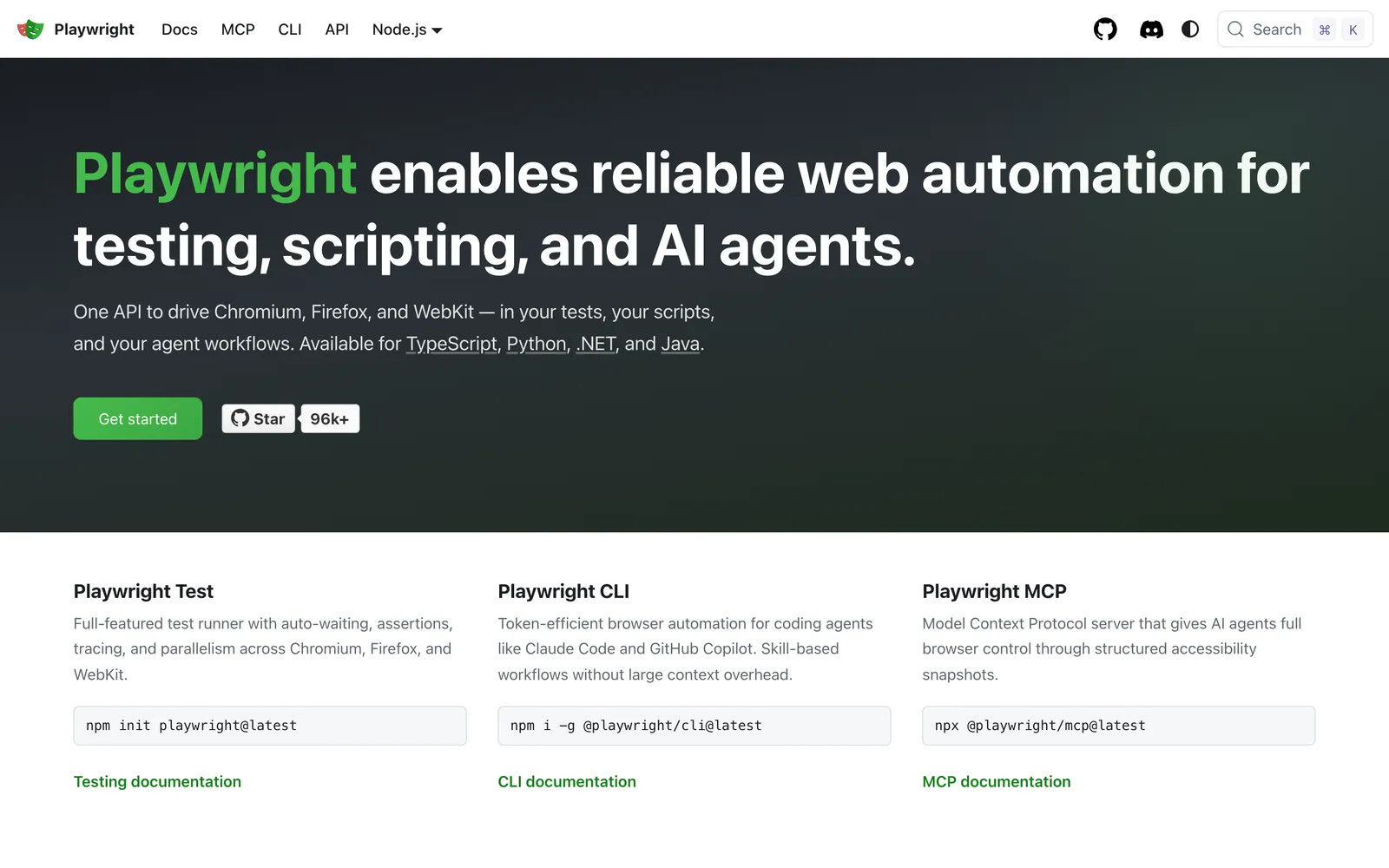
Playwright is Microsoft's open-source automation framework, and the reason teams quietly cancel cloud subscriptions. It bundles Chromium, Firefox and WebKit.
Price, 4 Oct 2026: $0 license. You supply the machines.
Free: free software, not a free tier. No caps.
Parallels: no session fee. Shard across machines you supply.
Devices: no bundled device cloud. Viewport and touch emulation, plus experimental Android automation on devices or emulators you supply.
Region and GDPR: no vendor region. Your CI, your choice.
License: Apache 2.0. Self-hosted by definition.
Migration: Playwright code runs on your own machines. No converter for BrowserStack settings is documented.
Best for: teams with the engineering time to own a suite. See our Playwright alternatives guide.
Watch out for: you own and maintain every test. Codegen and the Inspector help you record and explore, but there is no hosted device fleet.
2. Qodex
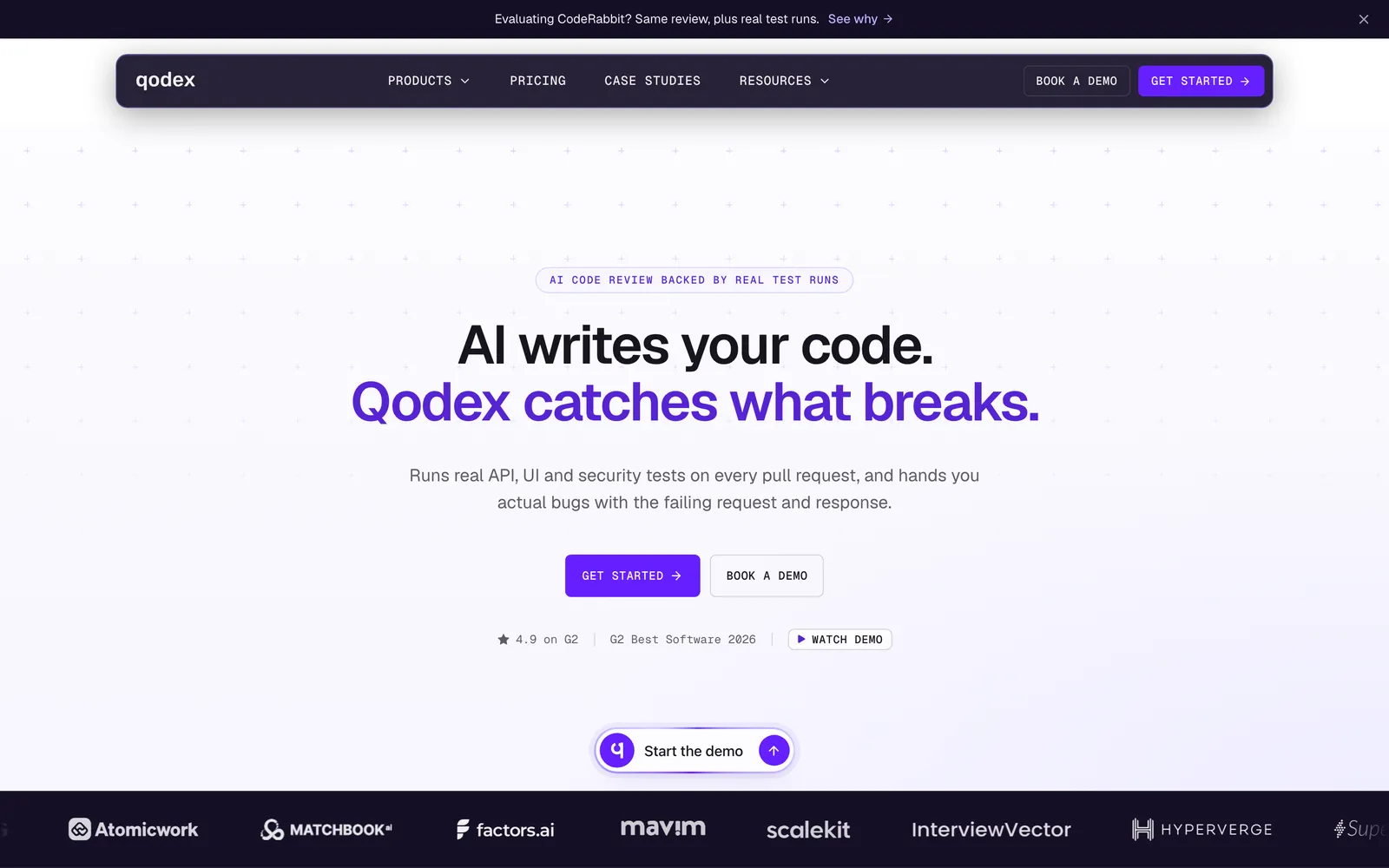
Qodex is an AI QA agent that writes and runs API, UI and security tests on every pull request. UI runs happen on Playwright browsers, and its pricing page lists no real-device fleet.
Price, 4 Oct 2026: Startup from $1,299 per project per month, Scale from $2,500. See Qodex pricing.
Free: Individual is $0 with 25 scenarios, 100 runs a month, one repository, one run at a time. No card.
Parallels: one run on Individual, two on Startup, custom on Scale. No per-parallel price.
Devices: none published.
Region and GDPR: its security testing page says data is encrypted in transit and at rest on US servers. The pricing and product pages we read make no GDPR statement.
License: generated Playwright and HTTP tests export. Self-hosting is published for PR Review Enterprise only.
Migration: scenarios import from OpenAPI, Postman, spreadsheets and existing tests. Running a BrowserStack suite unchanged is not documented.
Best for: teams whose bottleneck is authoring, not hardware. See UI testing, or start free against staging.
Watch out for: free to $1,299 is a steep step, and its pricing page lists no real-device fleet.
3. Selenium Grid
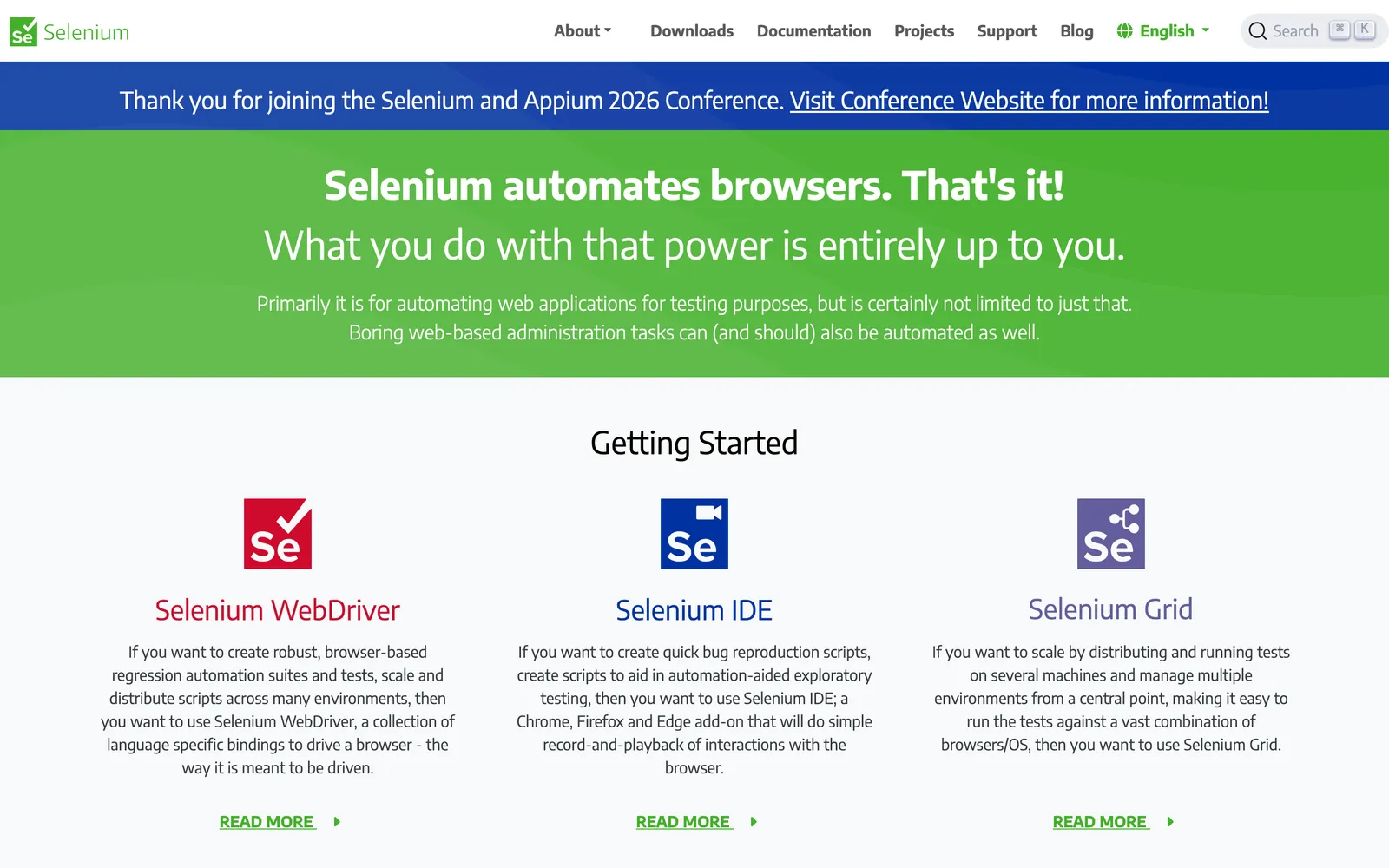
Selenium Grid is the self-hosted ancestor of every device cloud: a hub spreading WebDriver sessions across nodes you run. Grid 4 ships Docker and Kubernetes support.
Price, 4 Oct 2026: $0 license. You pay for the machines.
Free: free software under Apache 2.0. No vendor meter.
Parallels: capacity is however many browser instances you provision.
Devices: none. You supply the machines and any phones.
Region and GDPR: you own the infrastructure and its location.
License: Apache 2.0. Self-hosting is the normal deployment.
Migration: point RemoteWebDriver at your own hub.
Best for: teams whose compliance rules forbid a third-party cloud. See Selenium alternatives for managed options.
Watch out for: the meter you dodge comes back as maintenance. Someone keeps the nodes healthy.
4. Cypress
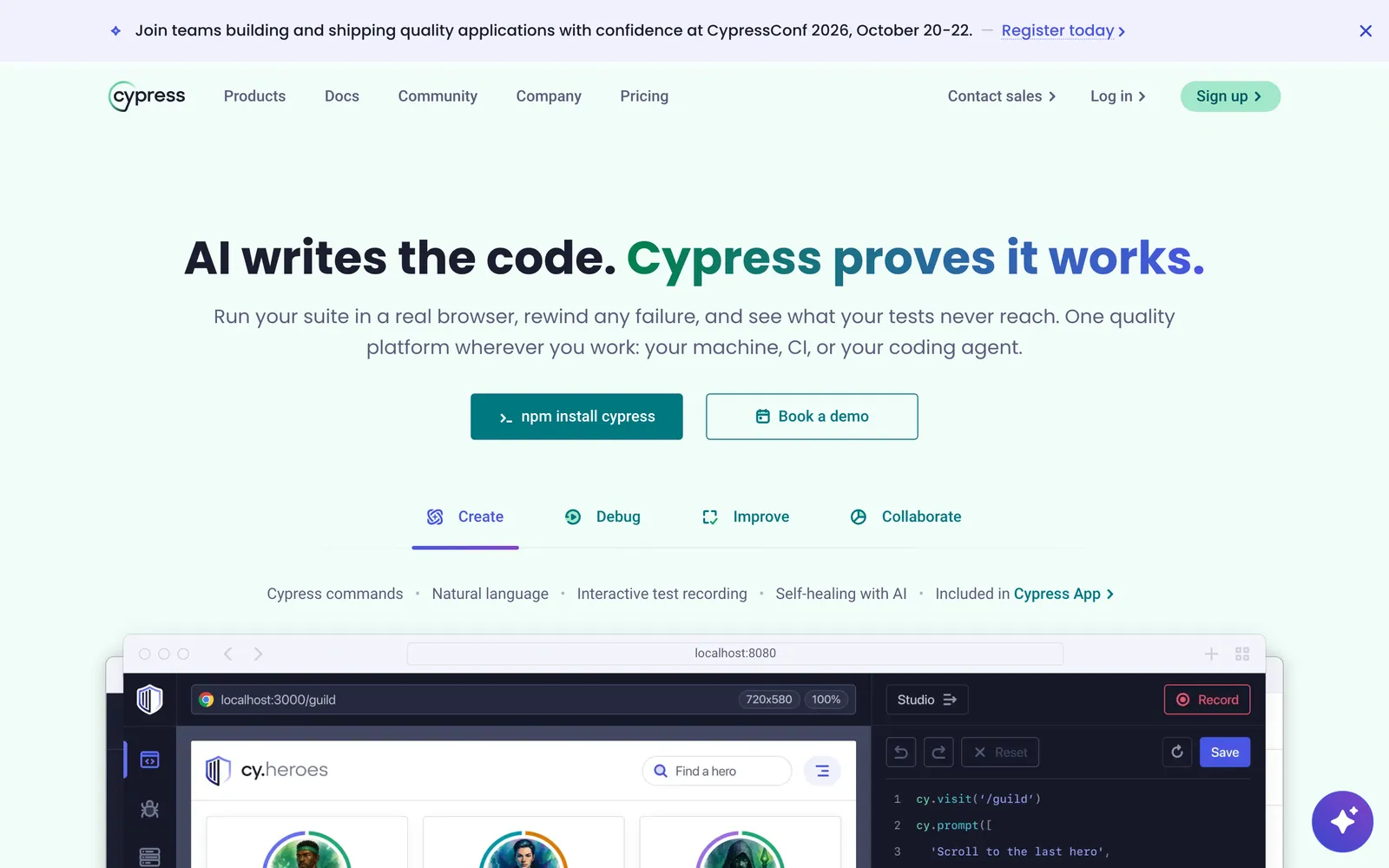
Cypress is the JavaScript-first end-to-end and component framework. The app is open source; Cypress Cloud records and parallelizes runs, with a free Starter tier and paid plans.
Price, 4 Oct 2026: Cloud Team $67 a month billed annually at $799. Business from $267 a month.
Free: Starter gives 10 users, 500 test results a month, 100 prompt executions, 30-day retention.
Parallels: included. The meter is test results. Extra Team results cost $6 per 1,000.
Devices: none. Browsers run on your machines or CI.
Region and GDPR: its security page says all test content is stored in the USA.
License: Cypress App is MIT. Self-hosting the Cloud is not published.
Migration: Cypress specs run in the App and in CI, with Cloud recording. No converter for BrowserStack settings is documented.
Best for: JavaScript teams needing component and end-to-end coverage more than browser breadth.
Watch out for: multi-tab tests are limited, cross-origin tests need special commands, and WebKit support is experimental.
5. TestMu AI (formerly LambdaTest)
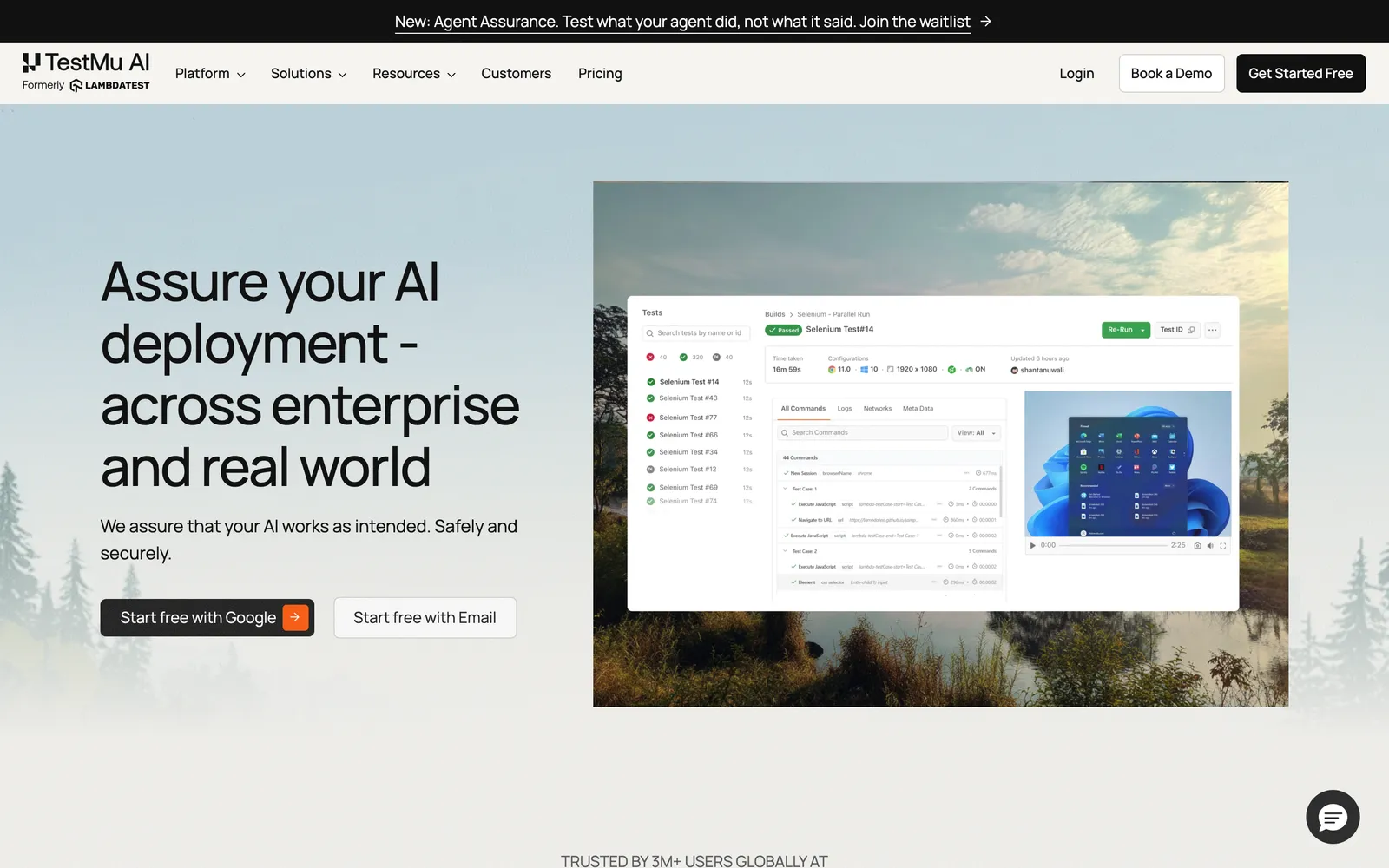
LambdaTest rebranded to TestMu AI and now leads with AI agents on top of its device cloud. It is the closest like-for-like BrowserStack substitute.
Price, 4 Oct 2026: Live from $15 per parallel per month annual, $29 ChromeOS, $39 real device. Automation from $29 per parallel on Linux-only desktop, $79 multi-OS, $139 virtual device, $199 real device. KaneAI is $17 per agent per month.
Free: 2-minute live sessions on 200+ desktop browser combinations plus emulators, renewed monthly, no card. Real devices get five 2-minute sessions a month.
Parallels: the parallel is the billing unit, so cost scales with lanes.
Devices: 10,000+ real Android and iOS devices, plus 3,000+ browser combinations.
Region and GDPR: says it follows GDPR; cloud data in AWS and Azure.
Deployment: the Real Device Cloud comes public, dedicated or on-premise.
Migration: publishes a three-step path off BrowserStack: credentials, hub URL and capability names change.
Best for: teams wanting the cloud model cheaper, or a real-device fleet they can host themselves.
Watch out for: $15 buys one live lane, and the $29 automation plan is Linux only.
6. Sauce Labs
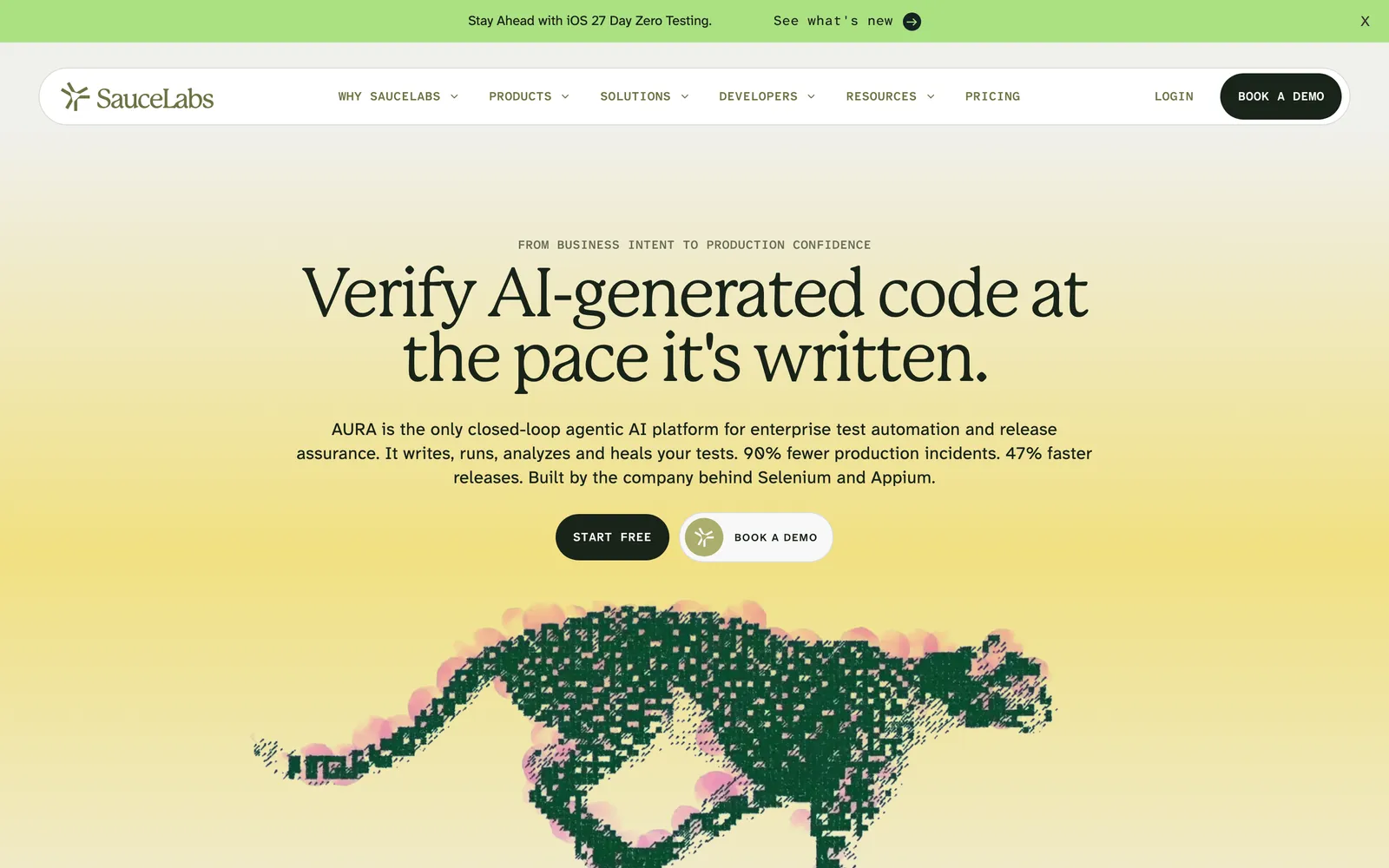
Sauce Labs is the enterprise device cloud: virtual browsers, real phones, mature CI integration. Its self-serve pricing is unusually legible.
Price, 4 Oct 2026: Live Testing $39 a month annual or $49 monthly. Virtual Device Cloud $149, Real Device Cloud $199, both annual.
Free: a 28-day trial with 60 automated and live-testing minutes, three parallel virtual machines, unlimited users, no card.
Parallels: each plan starts at one. Virtual and Real Device Cloud go to 24, priced dynamically.
Devices: 10,000+ real Android and iOS devices, plus 3,000+ virtual browser and OS combinations.
Region and GDPR: signup offers a US or Europe data center; states GDPR alignment.
Frameworks and AI: supports Appium, Espresso and XCUITest. AURA, launched 22 July 2026, adds AI test authoring and healing.
Migration: change the endpoint, credentials and options. Appium and native suites carry over after configuration.
Best for: mid-size and enterprise teams standardizing device infrastructure under one vendor. If you are moving the other way, see our Sauce Labs alternatives guide.
Watch out for: parallels are the meter. Twenty-four lanes is a very different invoice from one.
7. TestingBot
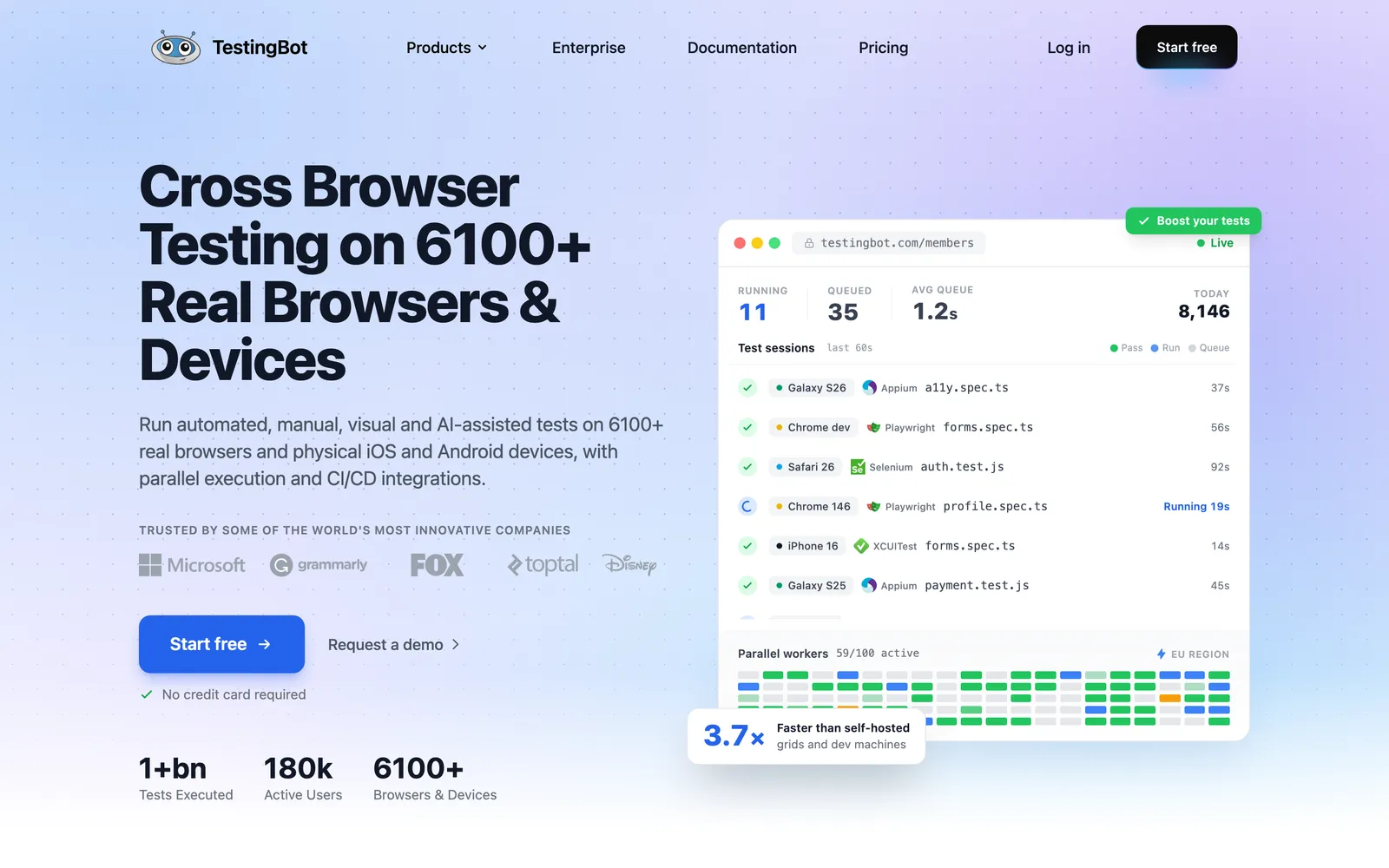
TestingBot is the value pick among device clouds, and it states Europe as its hosting region.
Price, 4 Oct 2026: Live manual testing from $20 per user a month annual, or $30 monthly. Automated is $50 annual ($70 monthly) for one parallel and 1,000 minutes; Automated Pro $90 annual ($120 monthly) for one parallel, unlimited minutes. All amounts are in USD.
Free: the pricing page lists a free plan with 100 testing minutes and no card, plus a 7-day full-access trial with a card. Its FAQ still says 14 days, so confirm before you plan around it.
Parallels: Live is billed per user seat. Automation tables publish every tier up to 24 parallels.
Devices: 6,100+ real browsers and devices, as one combined figure.
Region and GDPR: states it is hosted in Europe and GDPR ready.
Deployment: an Enterprise private cloud is offered. TestingBot says it does not yet support on-premise deployments.
Migration: publishes a four-step swap off BrowserStack: endpoint and capabilities change, then a smoke test.
Best for: small teams and agencies running occasional cross-browser checks, and anyone who must keep test data in the EU.
Watch out for: unlimited minutes on one parallel is not unlimited throughput.
8. Momentic
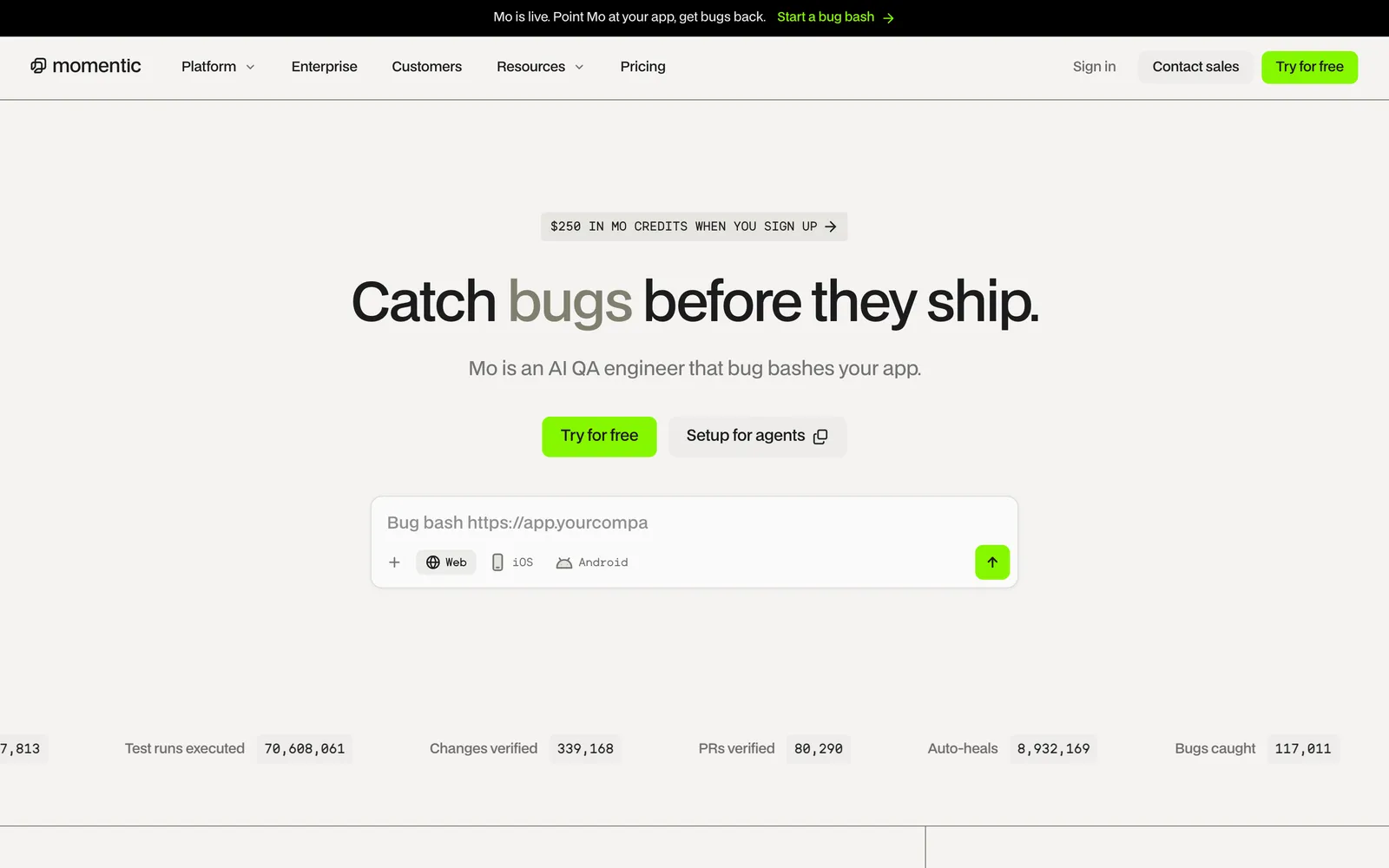
Momentic is an AI testing platform in the same category as Qodex: plain-English steps, locators described in natural language, credit pricing with no seats. Mo, launched 28 September 2026, explores an app and returns bug reports.
Price, 4 Oct 2026: pay-as-you-go is $125 a month plus usage, with 10,000 credits, roughly 1,000 runs.
Free: free forever with 2,000 credits a month (about 200 runs), one concurrent emulator, 30-day retention. Hosted emulator time draws from credits: 8 a minute on Android, 15 on iOS.
Parallels: five concurrent hosted browsers free, 25 on pay-as-you-go. Paid runs five Android and five iOS emulators at once.
Devices: none. Mobile coverage is emulators.
Region and GDPR: hosted browsers run in westus3 or eastus2; mobile runs can be pinned to the US, EU or Asia. No GDPR statement found.
Where it runs: the CLI runs tests on your machines or in CI, with hosted browsers optional.
Migration: tests are YAML files in your repository. Flows from other frameworks get rewritten; there is no automatic converter.
Best for: product teams wanting plain-English UI coverage fast inside a hosted platform.
Watch out for: credits are the meter, so a flaky suite costs more. API and security testing are not the focus.
9. Browserling
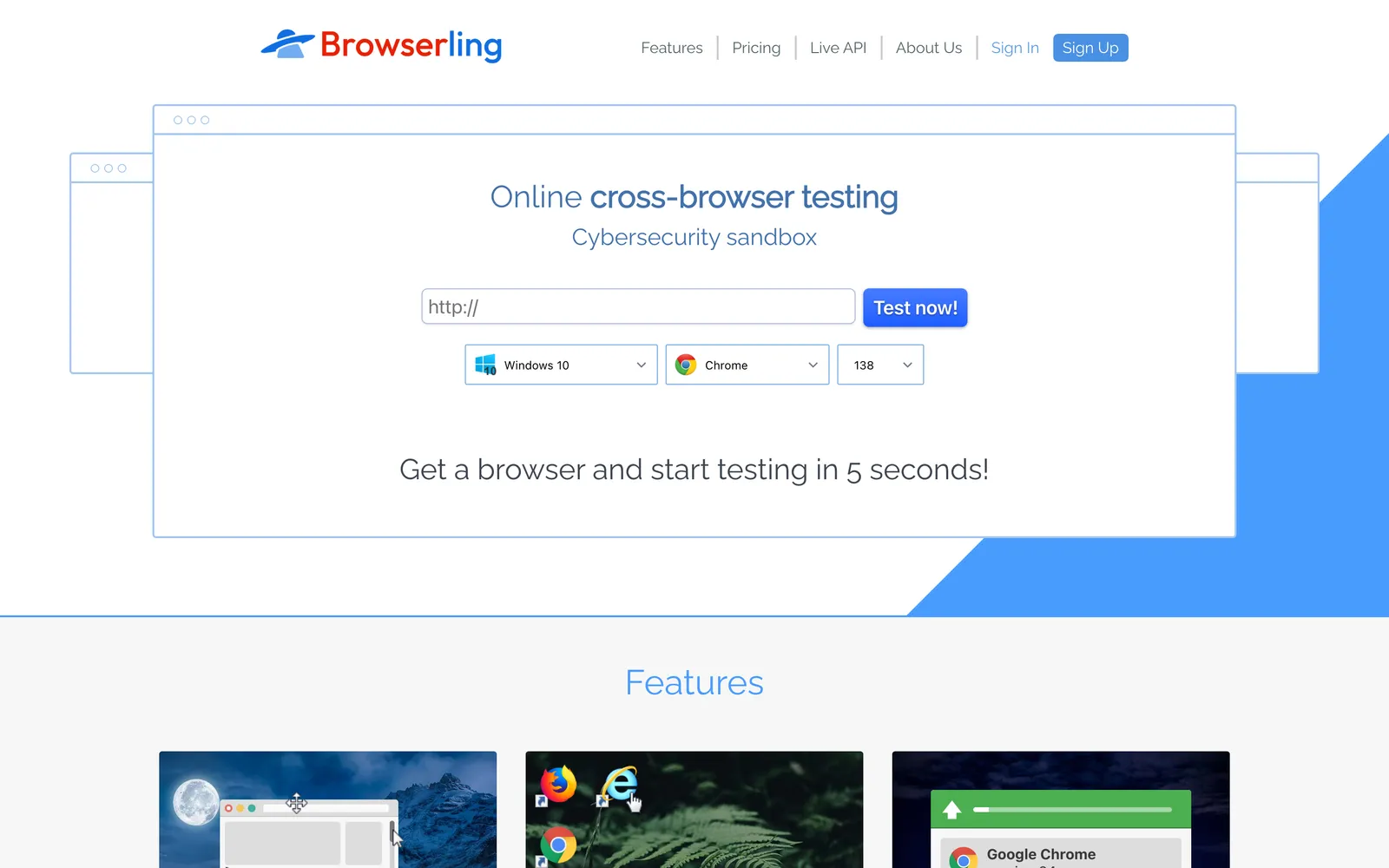
Browserling is the lightweight option: live sessions in real browser VMs, for the "does this break in an old browser" check. A separate Live API runs JavaScript tests.
Price, 4 Oct 2026: Starter $9 a month annual or $12 monthly. Developer $19 annual or $24 monthly.
Free: no card, a limited number of live sessions on Windows 10. The count is not published.
Parallels: not published for manual plans, which are single-user or per seat. The Live API starts at $99 a month for one parallel.
Devices: Developer adds Android; Developer Pro adds iOS, macOS and native Safari.
Region and GDPR: the pricing page states GDPR compliance. Test-session location is not stated.
Migration: no BrowserStack suite import. The Live API has its own JavaScript interface.
Best for: solo developers and designers needing occasional visual checks. We compare the two in Browserling vs BrowserStack.
Watch out for: the manual plans do not run in CI. The Live API does, as a separate product.
Price by workload
Comparing a manual plan to an automation plan is how teams save money on a tool that cannot do the job. Prices read 4 October 2026, billed annually.
| Workload | Cheapest published option | Price | Also worth pricing |
|---|---|---|---|
| Occasional manual checks | Browserling Starter | $9/mo | TestingBot Live $20 per user, Sauce Live $39 |
| One automated parallel | TestMu AI desktop automation, Linux only | $29/parallel/mo | TestingBot Automated $50 (1,000 minutes), TestMu AI multi-OS $79, Sauce Virtual $149, BrowserStack $175 |
| Automation, no minute cap | TestingBot Automated Pro | $90/mo, 1 parallel | Sauce Real Device $199, TestMu AI real device $199/parallel |
| AI-written tests | Momentic pay-as-you-go | $125/mo plus usage | Qodex Startup from $1,299 per project/mo |
| Self-hosted infrastructure | Playwright or Selenium Grid | No license fee | TestMu AI on-premise Real Device Cloud, BrowserStack Automate Self-Hosted |
Two things the table hides. Per-parallel prices multiply: TestMu AI at $79 is one lane, so eight lanes cost eight times that. And self-hosted is free in license terms only. Machines and the person maintaining them are not free.
What free actually means
Several tools here say free and mean different things.
Licensed software with no meter. Playwright and Selenium Grid are Apache 2.0, Cypress App is MIT. Nobody counts your runs, users or minutes. Your cost is machines and engineering time.
Metered free plans. Real products with a hard ceiling. Qodex Individual gives 25 scenarios and 100 runs a month on one repository. Momentic gives 2,000 credits, roughly 200 runs, and hosted emulator time comes out of those credits. Cypress Cloud Starter gives 500 test results across 10 users. TestMu AI gives 2-minute live sessions on 200+ desktop browser combinations, renewed monthly. TestingBot lists a free plan with 100 testing minutes.
Time-limited trials. Sauce Labs runs 28 days with 60 automated and live-testing minutes and three parallel virtual machines. BrowserStack's trial gives 30 Live minutes and 60 Automate minutes. Browserling's free sessions have no published count.
To run a real suite with no meter at all, only the first group works. The second is a pilot. The third is a demo with a clock on it.
Where your tests run: GDPR, regions and deployment
| Tool | Where it runs | Published GDPR statement | Deployment |
|---|---|---|---|
| BrowserStack | 21 data centers across 13 locations, including Frankfurt | States its privacy policy complies with GDPR | Cloud; Automate Self-Hosted runs a grid in your AWS, Azure or GCP; enterprise geo-region restriction |
| Sauce Labs | Signup offers a US or Europe data center | States GDPR alignment | Cloud |
| TestingBot | States it is hosted in Europe | States GDPR ready | Cloud; Enterprise private cloud; no on-premise |
| TestMu AI | Cloud data in AWS and Azure | States it follows GDPR | Public, dedicated or on-premise real-device cloud |
| Playwright | Wherever you run it | No vendor claim; the data stays yours | Local or CI machines |
| Selenium Grid | Wherever you run it | No vendor claim; the data stays yours | Self-hosted |
| Qodex | US servers, per its security testing page | Not published | Cloud; self-hosting for PR Review Enterprise |
| Momentic | Hosted browsers in westus3 or eastus2 | Not published | CLI on your machines or CI; hosted browsers optional |
| Cypress | Test content stored in the USA | Not published on the pages checked | App on your machines; Cloud is hosted |
| Browserling | Personal data may be stored in the US and elsewhere; test-session location not stated | Pricing page states GDPR compliance | Cloud |
One warning, because procurement can get this wrong. "GDPR compliant" is a claim about how a vendor handles personal data. It is not a promise that your test data sits in the EU. A US-hosted vendor can be GDPR compliant. If residency is the requirement, ask for the region in writing, then ask where session videos, logs and screenshots live and for how long.
Real devices, virtual browsers and emulators
Vendors publish three kinds of number and readers add them up. They are not the same thing.
Real devices are physical phones and tablets in a rack, with real radios, cameras and OEM software. Sauce Labs and TestMu AI each advertise 10,000+ real Android and iOS devices. BrowserStack advertises 35,000+.
Virtual browsers are a browser and OS version in a VM. Sauce Labs and TestMu AI each advertise 3,000+ browser combinations, BrowserStack 3,500+. They catch version and rendering differences, not hardware behaviour.
Emulators are software pretending to be a device. Playwright emulates viewport, user agent and touch. Momentic runs mobile emulators, one concurrent free and five Android plus five iOS on paid. Fine for responsive layout, useless for a camera bug.
TestingBot's 6,100+ is a combined figure for real browsers and devices that cannot be split. Read it as breadth, not a device count. And never add a real-device number to a browser one: Sauce Labs is 10,000+ devices and 3,000+ combinations, not 13,000 of anything.
Can Playwright replace BrowserStack?
Run the checklist. If nothing you need sits in the second list, the cloud subscription is dead weight.
Playwright covers:
Rendering and JavaScript differences across Chromium, Firefox and WebKit, one configured project per engine.
Responsive and mobile-web layout, through viewport, user agent and touch emulation.
Parallel runs at whatever scale you can afford machines for, with no session fee.
You still need a device cloud for:
Native iOS apps, and native Android beyond Playwright's experimental Android support for Chrome and WebView.
Real camera, microphone and sensor hardware. Playwright can grant permissions and fake some inputs, not the hardware.
A bug that only reproduces on one handset model, the case that sold you the subscription.
A web-only team may tick nothing in the second list. A team shipping a native app ticks most of it.
Migrating off BrowserStack
The mechanical part is smaller than people expect. Selenium, Playwright and Appium suites all talk to a remote endpoint, so you change a URL and a pair of credentials rather than rewriting tests. The risk is coverage you lose without noticing.
Inventory what you use. List the frameworks (Selenium, Playwright, Cypress, Appium) and the BrowserStack products on the invoice (Live, Automate, App Automate, Percy). Cancel nothing yet, but mark any you stopped using.
Choose like-for-like per product. Live maps to Browserling or TestingBot Live, Automate to an automation plan, Percy to a visual testing tool. Price each line on its own.
Map regions and devices first. Write down every device model your suite names and the region your data must stay in. That list eliminates candidates faster than any pricing page.
Swap the endpoint and the secrets. Change the remote WebDriver or CDP URL, the vendor capability names, the access key and the CI secrets. Do not forget the local tunnel binary, a separate download per vendor, and allowlisted IPs on staging.
Shadow-run both vendors. Keep BrowserStack live and run the same suite on the new platform for two weeks. You want the tests that pass on one and fail on the other.
Cut over after result parity. Same passes, same failures. Then cancel, not before.
TestingBot and TestMu AI publish their own migration paths, four steps and three. Both change the endpoint, the credentials and the vendor capabilities. The shadow run is the step vendors leave out, and the one that catches the bug you relied on the old fleet to find.
How to choose
| Your situation | Right category | Start with |
|---|---|---|
| Native mobile apps, real-device bugs, OEM browser quirks | Device cloud | Sauce Labs or TestMu AI |
| Web app, strong eng team, time to own a suite | Open-source framework | Playwright |
| Web app, nobody has time to write or maintain tests | AI QA agent | Qodex or Momentic |
| BrowserStack-style cloud on a tighter budget | Device cloud, value tier | TestingBot or TestMu AI |
| Test data must stay in the EU | Device cloud, EU hosted | TestingBot |
| Compliance forbids third-party clouds | Self-hosted grid | Selenium Grid |
| JS monorepo, component testing matters | Framework plus cloud | Cypress |
| Occasional manual spot-checks only | Live testing | Browserling |
| API quality is the risk, not rendering | AI QA agent | Qodex (see Postman alternatives) |
Audit where your last 20 bugs came from. Rendering differences on specific devices mean you need hardware. Broken flows, regressions and API contract failures mean browser breadth was never the problem.
Count authoring hours, not subscription dollars. A $199 cloud plus an engineer spending a day a week on maintenance is not a $199 line item. Tools that generate and repair tests change that arithmetic. Infrastructure does not.
Check the exit before you sign. Playwright and Selenium suites are portable by definition, and Qodex generates Playwright you can export. Some platforms keep tests in a format only they can run.
Frequently Asked Questions
What is the best free BrowserStack alternative?
Playwright: Chromium, Firefox and WebKit under Apache 2.0 with no usage meter. For free manual checks, Browserling allows a limited number of Windows 10 sessions, TestMu AI gives 2-minute live sessions on 200+ desktop browser combinations, and TestingBot lists 100 free minutes. Qodex's free plan covers 25 scenarios and 100 runs a month.
Is BrowserStack worth it in 2026?
Yes, if you need real hardware and breadth. It advertises 3,500+ browser combinations and 35,000+ real devices, from $12.50 a month billed annually, with Automate Desktop and Mobile at $175 a month for one parallel. Less compelling if your constraint is writing tests: Test Companion helps, but the suite is still yours to own.
Can Playwright really replace a device cloud?
For a web-only app, it can. It covers the three rendering engines behind modern browsers, with no session fee. It cannot replace a device cloud for native iOS apps, real camera and sensor hardware, or a bug that only reproduces on one handset.
How is Qodex different from BrowserStack?
BrowserStack rents you browsers and real devices to run tests you wrote. Qodex writes and runs API, UI and security tests on every pull request, on Playwright browsers. Need a physical device matrix? Use a device cloud. Drowning in test authoring? Use an agent.
Which BrowserStack alternative is cheapest for automated testing?
TestMu AI: desktop automation from $29 per parallel per month billed annually, Linux only, or $79 multi-OS. TestingBot starts at $50 a month with one parallel and 1,000 minutes, or $90 for unlimited minutes. Playwright and Selenium Grid are cheaper still if you have the engineering time.
Which BrowserStack alternative is EU-hosted?
TestingBot states it is hosted in Europe and GDPR ready, the clearest published statement here. Sauce Labs offers a Europe data center at signup. BrowserStack lists data centers including Frankfurt, and its enterprise geo-region restriction keeps test data in one selected region, excluding analytics, account and billing data. For certainty rather than a claim, self-host Selenium Grid or run Playwright on your own EU machines.
Can I migrate Selenium, Playwright, Cypress or Appium tests without rewriting them?
Mostly, yes. Those suites connect to a remote endpoint, so you change the hub URL, the credentials, the capability names, the tunnel binary and your CI secrets. TestingBot publishes a four-step swap, TestMu AI a three-step one. What does not carry over is vendor-specific: custom capabilities, device names, visual baselines.
Do AI testing tools work for cross-browser testing?
Yes, with a caveat. Qodex exports standard Playwright tests, and Playwright supports Chromium, Firefox and WebKit, so you can run an exported suite on each engine. But engine coverage is not physical-device coverage. If a bug only reproduces on one phone model, you still need real hardware.
What is the best open-source BrowserStack alternative?
Playwright and Selenium Grid, both Apache 2.0. Playwright supports all three rendering engines, one configured project each, with no meter. Selenium Grid runs on infrastructure you control. Cypress App is a third option under MIT, with Cypress Cloud a separate product that has free and paid plans.
Is there a BrowserStack alternative for mobile testing?
For native iOS and Android apps and device-specific bugs you need a real-device cloud: Sauce Labs and TestMu AI each publish 10,000+ real devices, TestingBot 6,100+ browsers and devices combined. For mobile web, Playwright's device emulation handles responsive and layout checks without a cloud.