Octomind Alternatives in 2026: 7 Tools for the Migration
Octomind, the AI end-to-end testing startup, shut down in May 2026. If you were running Octomind, you now have a suite that still executes for the moment and a decision to make about where it lives next. The good news is smaller than the panic suggests: Octomind generated standard Playwright tests, so the tests themselves are portable code, not a proprietary format locked to a dead vendor. The real question is not "how do I get my tests out," it is "who writes and maintains the next hundred tests now that the agent that did it is gone." This guide answers that, with seven honest alternatives, verified pricing where it is public, and a migration checklist built for ex-Octomind teams. You can also see how Qodex compares against every major QA tool in one place.
Quick Comparison: Octomind Alternatives at a Glance
| Tool | Category | Best for | Pricing |
|---|---|---|---|
| Qodex | Autonomous AI QA agent (UI + API + security) | Teams that want an agent to generate and maintain tests across the whole stack, not just E2E | Free tier; paid plans via sales |
| Momentic | AI-native E2E platform | The closest like-for-like "AI writes your E2E tests" replacement | Free tier; pay-as-you-go from $125/mo; enterprise custom |
| QA Wolf | Managed QA service + platform | Teams that want QA taken off their plate entirely, with exportable Playwright | Usage-based self-serve; managed tier via sales |
| mabl | Agentic low-code platform | Enterprise teams that want a documented Playwright import/export path | Custom, sales-led (14-day trial) |
| testRigor | Plain-English test platform | Non-technical QA authoring, willing to re-write flows from scratch | Custom, sales-led (no public tiers) |
| Testsigma | Open-source low-code platform | Teams that want a self-hostable, open-source-anchored option | Open-source edition free; cloud pricing custom |
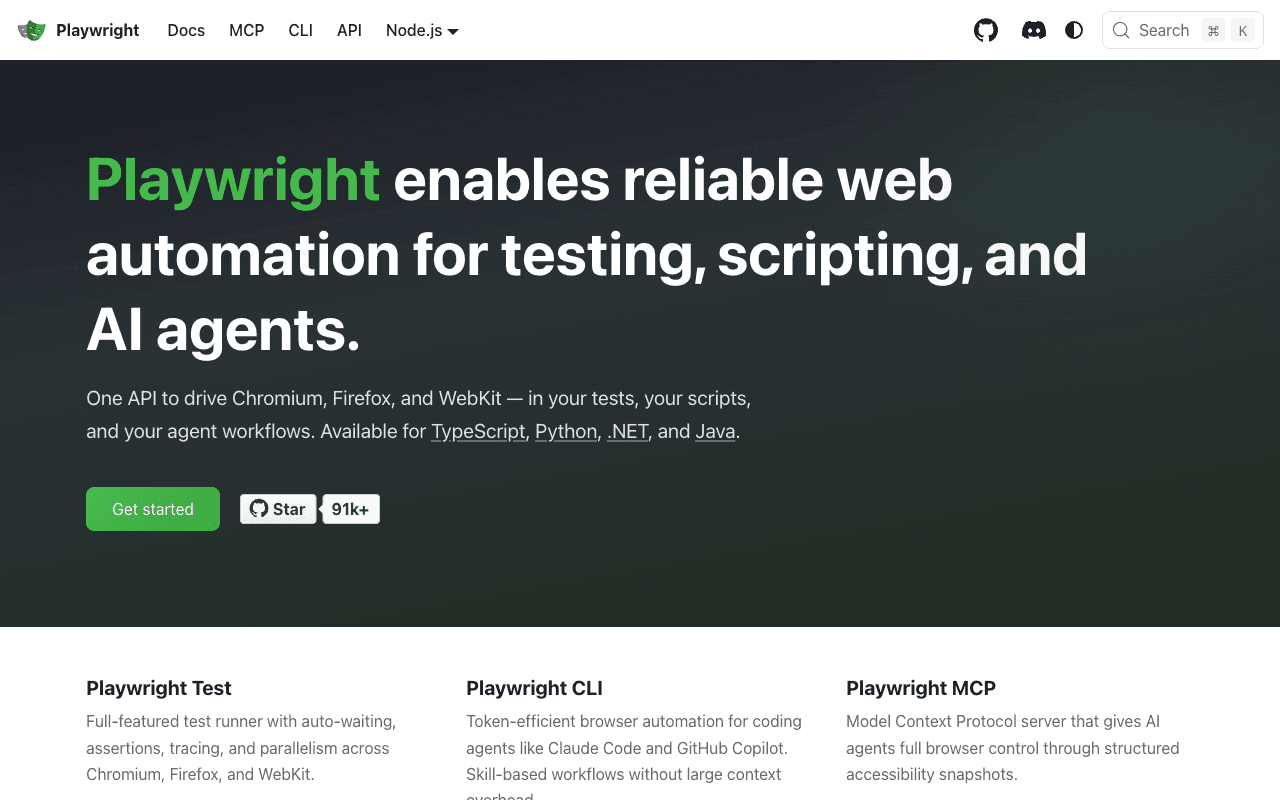
| Playwright + codegen | Open-source framework (DIY) | Engineering teams that want to keep the suite and drop the AI layer | Free (Apache 2.0) |
Octomind was a $4.8M-funded agent that explored your web app, generated Playwright end-to-end tests, and auto-maintained them as the app changed. Its founders said they could not find the market traction to keep the company going. What made it useful is exactly what makes the migration tractable: the output was ordinary Playwright, so you are not trapped. But if all you do is grab your test files and run, you inherit the maintenance burden Octomind's agent used to carry. Picking a replacement is really about deciding how much of that authoring and maintenance you want a tool to do for you again.
What Migrating Off Octomind Actually Means
Every replacement below fits one of four migration paths. They are not interchangeable, and choosing the wrong category is the most expensive mistake here.
1. Autonomous AI QA agent (Qodex). An agent explores your app and API, generates and maintains tests, and triages failures, the same job Octomind did, extended beyond E2E to API and security testing. Closest to "replace the agent, gain more surface."
2. AI-native E2E platforms (Momentic, mabl, testRigor, Testsigma). Hosted platforms where you author tests in plain English or low-code and the platform runs and self-heals them. The nearest conceptual match to Octomind's model, with the trade-off that tests usually live inside the vendor's platform rather than as code in your repo.
3. Managed QA as a service (QA Wolf). You do not write or maintain tests at all; a vendor team does it for you against an SLA. Maximum offload, highest cost, and you still own exportable Playwright at the end.
4. Do-it-yourself open source (Playwright + codegen). Keep the Playwright suite you already have, run it in CI, and write new tests yourself. Zero vendor cost, full ownership, and you carry all the authoring and maintenance that Octomind used to automate.
One fact anchors all four: because your Octomind tests were standard Playwright, the DIY path is always available as a floor. Every AI tool below has to beat "just keep the free Playwright suite you already own" to be worth paying for. That is the honest bar, and it is the right one.
The 7 Best Octomind Alternatives in 2026
1. Qodex
Qodex is an autonomous AI QA agent, and it is the closest thing to "Octomind, but broader." You chat with an agent that explores your web app in a real Chromium browser and your API over direct HTTP calls, learns your critical flows, and generates runnable Playwright and HTTP test scenarios. Where Octomind stopped at end-to-end browser testing, Qodex runs one agent across UI testing, API testing, security checks, and pull request review, so the migration is also a chance to close the API and security gaps Octomind never covered.
Why it fits an Octomind refugee: the generated tests are standard Playwright and HTTP scripts you can read, edit, version, and eject, the same portable-code property that made your Octomind suite salvageable in the first place. You are not trading one proprietary format for another. And the agent keeps doing the generation and maintenance work you just lost.
Pricing: free tier, no credit card; paid plans are scoped with sales. See Qodex pricing. A structural difference from per-run-priced AI tools: once a scenario is saved, replays are deterministic with no LLM in the loop, so reruns add zero AI cost as the suite grows.
Pros:
One agent covers UI, API, and security testing, plus PR review, not just E2E
Generated tests are plain Playwright and HTTP scripts, no proprietary runtime
The agent maintains tests as the app changes; you review and promote them
Zero LLM cost on replays; schedules and CI webhooks included
Failure triage separates real bugs from stale tests and environment issues
Rated 4.9 out of 5 across 60 reviews on G2
Cons:
Younger product than the incumbents on this list
Web and API focused; native mobile app testing is not the use case
Best for: teams whose real loss with Octomind was autonomous test generation and maintenance, and who want that back across the whole stack rather than E2E alone. You can start free and have the agent generate its first Playwright suite against your staging app in one session.
2. Momentic
Momentic is the most direct like-for-like replacement for Octomind's model: an AI-native platform that writes end-to-end tests for web and mobile in plain English, then builds, runs, and self-heals them as your product changes. It raised a $15M Series A in November 2025 and lists teams at Notion, Webflow, and Retool as customers.
Pricing: a genuine free tier ($0/month, 2,000 credits, roughly 200 test runs, no card), pay-as-you-go at $125/month plus usage, and custom enterprise pricing, all listed on their pricing page.
The portability catch for ex-Octomind users: Momentic stores tests as YAML that its agent interprets on a managed runner, and its documentation describes no path to export standard Playwright code. That is the opposite of what you just came from. Octomind gave you portable Playwright; Momentic keeps the tests inside its platform. If the lesson you took from Octomind's shutdown is "never depend on a vendor-locked test format again," weigh this carefully before committing.
Pros: very low authoring barrier, strong self-healing, web and mobile coverage, GitHub Actions integration with test sharding for parallel CI. Cons: tests live in Momentic's platform, not your repo; usage-based pricing can climb with suite size. See our Momentic alternatives guide for the wider field.
Best for: teams that want the closest thing to the Octomind experience and are comfortable authoring inside a hosted platform.
3. QA Wolf
QA Wolf answers a different question: what if you never write tests again at all. It is a hybrid platform and managed service. Its "Coverage as a Service" tier embeds QA engineers who build and maintain your test suite, guarantee coverage, and investigate every failure, while a self-serve platform (Mapping AI, Automation AI, run infrastructure) is available if you want to drive it yourself.
Ownership, and why it matters here: QA Wolf builds in Playwright and Appium and states the tests are "open source, exportable, and yours to keep." For a team that just got burned by a vendor disappearing, that portability guarantee is a stronger promise than most platforms on this list make.
Pricing: the self-serve platform is usage-based (billed per AI credit and per runner minute); Coverage as a Service, the done-for-you tier, is quoted by sales with no public price. Expect an annual contract for the managed offering.
Pros: maximum offload of authoring and maintenance, human-verified failures, 100% parallel execution, exportable Playwright. Cons: the managed tier is the most expensive way to solve this problem; it is a service relationship, not a tool you control day to day. See our QA Wolf alternatives guide.
Best for: teams that want QA completely off their plate and can fund a managed contract, while keeping test code they can walk away with.
4. mabl
mabl is an established low-code test-automation platform that has repositioned around "agentic testing," coverage that it says builds, runs, and recovers itself across web, mobile, and API. Of every tool here, it has the most concrete migration story for a Playwright shop.
The migration angle: mabl documents a real Playwright interop path. Its CLI can import existing Playwright tests and export mabl tests back to Playwright format, and it publishes a dedicated "Migrating Playwright tests" guide. That means your surviving Octomind-generated Playwright suite can come along rather than being rebuilt from zero. The caveat: the export covers user-authored tests, and anything you build with mabl's native low-code or agentic steps stays in mabl's platform.
Pricing: demo and sales-led, with no public tiers and a 14-day free trial. mabl does not publish prices, so budget for a quote.
Pros: documented Playwright import/export, unified web/mobile/API coverage, native GitHub, GitLab, and Jenkins integrations, cloud or self-hosted CI runner execution. Cons: no public pricing; native mabl tests are platform-bound even though imported Playwright is not. See our mabl alternatives guide.
Best for: enterprise teams that want an established platform and value a real, documented path to bring existing Playwright tests in and out.
5. testRigor
testRigor takes the plain-English idea furthest: you write tests as human-readable sentences ("click the login button, enter username, verify the dashboard loads"), no CSS or XPath, and it self-heals by re-locating elements from those descriptions plus a vision fallback. It targets non-technical testers and covers web, mobile, and API.
The honest migration cost: testRigor has no documented Playwright importer. Moving off Octomind means re-authoring every flow as plain-English steps from scratch, because testRigor positions itself as a replacement for coded frameworks, not a converter for them. Your existing Playwright suite does not transfer; it becomes reference material. That is a real re-investment, and worth naming before you start.
Pricing: testRigor does not publish standard pricing tiers; pricing is quote-based, and third-party estimates for it disagree with each other, so treat any number you find with suspicion and get a direct quote.
Pros: genuinely accessible to non-engineers, stable plain-English tests, GitHub Actions and Jenkins CI guides. Cons: no Playwright import (full re-authoring), proprietary cloud DSL, opaque pricing. See our testRigor alternatives guide.
Best for: teams that want to hand test authoring to non-technical people and are willing to rebuild their suite to get there.
6. Testsigma
Testsigma is a low-code, natural-language test-automation platform with a twist that matters after a vendor shutdown: it ships an Apache-2.0 open-source Community Edition you can self-host, alongside its commercial cloud. AI agents generate tests from prompts, Jira tickets, or recordings, and cover web, mobile, and API.
What "open source" does and does not get you: the Community Edition is genuinely inspectable and self-hostable, so the platform itself cannot vanish out from under you the way a hosted-only vendor can. But tests are still written in Testsigma's own natural-language engine, and there is no documented export to plain Playwright. You trade one form of lock-in (a hosted vendor) for a milder one (a self-hostable but proprietary test format). For a team spooked by Octomind's closure, the self-host guarantee is the real draw.
Pricing: the open-source Community Edition is free to self-host; the cloud Pro and Enterprise tiers are custom-quoted with no public prices.
Pros: self-hostable open-source edition, NL authoring, broad web/mobile/API coverage, solid GitHub Actions, Jenkins, and REST-API CI integrations. Cons: proprietary test DSL, no Playwright import, cloud pricing not public. See our Testsigma alternatives guide.
Best for: teams that want to eliminate hosted-vendor risk by self-hosting an open-source-anchored platform.
7. Playwright + codegen
Playwright is the floor every option above has to beat, and for many ex-Octomind teams it is also the ceiling. Octomind generated Playwright, so you already have a working Playwright suite. Keep it, run it in CI, and use Playwright's built-in codegen to record new flows into code. No vendor, no per-run meter, no shutdown risk, ever.
The trade you are making: Playwright does exactly nothing to write or maintain tests for you. Octomind's whole value was the agent that explored the app, generated coverage, and healed broken tests. Drop to raw Playwright and that work becomes an engineer's job again. If your team has the time and skill, that is a feature (total control, zero cost); if the reason you used Octomind was that nobody had time to author and maintain tests, raw Playwright reproduces the exact problem Octomind solved.
Pricing: free, Apache 2.0.
Pros: you already own the suite, fast parallel execution, auto-waiting that kills most flake, Chromium/Firefox/WebKit engines, no lock-in of any kind. Cons: no AI generation, maintenance, or triage; every test is hand-owned. For managed and AI-native options layered on top, see our Playwright alternatives guide.
Best for: engineering teams with the time to own the suite, who valued Octomind's execution more than its authoring.
How to Migrate Off Octomind Without Losing Your Tests
Run this in order. Each step is also the exact question to ask any vendor on this list before you sign.
Step 1: Export and pin your existing Playwright suite
Before anything else, get your Octomind-generated tests into your own repository and confirm they run under a current Playwright version in your CI. This is your safety net and your baseline. Even if you adopt an AI platform next, a portable Playwright suite you control means no future vendor shutdown can strand you again. If a candidate tool cannot ingest or coexist with this suite, that is a real cost, not a detail.
Step 2: Check test-suite portability before you commit
Ask one blunt question of every tool: if we leave, do we walk away with runnable code, or nothing? Playwright and QA Wolf hand you exportable Playwright; mabl documents CLI import and export; Qodex generates standard Playwright and HTTP you can eject. Momentic (YAML), testRigor, and Testsigma keep tests in their own formats with no documented Playwright export. Octomind taught you what vendor lock-in costs when the vendor disappears; do not re-sign for it without knowing.
Step 3: Verify CI/CD integration matches your pipeline
Confirm the tool plugs into the CI you actually run before you migrate a single test. All seven integrate with GitHub Actions; mabl adds native GitLab and a Jenkins plugin; Testsigma and testRigor document Jenkins and REST-API hooks. Check that it can gate a pull request (run on the PR, block merge on failure), because that is where E2E tests earn their keep, and where a broken integration will quietly cost you the coverage you paid for.
Step 4: Match the pricing model to how your suite grows
Pricing model matters more than sticker price. Usage-based tools (Momentic, QA Wolf self-serve) get more expensive as your suite and run frequency grow, so model your real run volume, not today's. Sales-led tools (mabl, testRigor, Testsigma cloud) mean a quote and a negotiation. Free options (Playwright, plus Qodex's free tier and deterministic zero-cost replays) remove the meter entirely. Map each model against a year of growth, not a first month.
Step 5: Run a pilot on your five most critical flows
Do not migrate the whole suite blind. Pick the five flows that would hurt most if they broke, rebuild or import them in your top one or two candidates, and run them for a sprint. You are measuring the thing Octomind actually did for you: how much authoring and maintenance the tool removes versus how much it hands back. That number, not the marketing, decides the migration.
Decision Framework: Match the Tool to Your Team
Find your row:
| Your situation | Right category | Start with |
|---|---|---|
| Want the agent back, and want it across API and security too | Autonomous AI QA agent | Qodex |
| Want the closest "AI writes my E2E tests" replacement | AI-native E2E platform | Momentic |
| Never want to write or maintain tests again | Managed QA service | QA Wolf |
| Need a documented path to bring Playwright tests in and out | Agentic low-code platform | mabl |
| Want non-technical teammates authoring tests | Plain-English platform | testRigor |
| Refuse to depend on a hosted vendor after this | Open-source platform | Testsigma (self-hosted) or Playwright |
| Have the engineering time and want zero vendor risk | DIY framework | Playwright + codegen |
| API quality is the risk Octomind never covered | Autonomous AI QA agent | Qodex (see best AI QA tools) |
Choosing Your Octomind Replacement
Decide what you are actually replacing. Octomind did two jobs: it executed Playwright tests, and it authored and maintained them. Raw Playwright replaces the first for free. The AI tools on this list exist to replace the second. Be honest about which one was the reason you paid for Octomind, because it determines whether a free framework or a paid agent is the right move.
Do not re-sign for the lock-in that just burned you. The single sharpest lesson from Octomind's shutdown is that a vendor-only test format is a liability. Favor tools that leave you with runnable, exportable code: Playwright, QA Wolf, mabl's export path, and Qodex's standard Playwright output all pass that test. Weigh the platform-locked options (Momentic, testRigor, Testsigma cloud) knowing exactly what leaving would cost.
Count maintenance hours, not licence fees. A free Playwright suite plus an engineer spending a fifth of their week healing broken tests costs far more than the licence line suggests. Tools that generate and maintain tests change that math; a bare framework does not. That trade is the whole decision.
Pilot before you commit. Every claim on this page, including ours, should survive a one-sprint pilot on your five hardest flows. Migrate deliberately, measure the maintenance you get back, and let that decide.
Frequently Asked Questions
Why did Octomind shut down?
Octomind shut down in May 2026. It was a $4.8M-funded startup whose AI agent generated and maintained Playwright end-to-end tests, and its founders said they could not find the market traction needed to keep the company going. The product was turned off and the company wound down; the practical impact for users is that the hosted agent that authored and healed tests is gone, though the Playwright tests it produced remain standard, portable code.
Are my Octomind tests still usable after the shutdown?
Yes, in principle. Octomind generated standard Playwright tests, which are ordinary code rather than a proprietary format. The first migration step is to get that suite into your own repository and confirm it runs under a current Playwright version in your CI. Once it does, you have a working baseline you control, independent of any vendor, and you can decide separately which tool takes over authoring and maintenance.
What is the closest alternative to Octomind?
Momentic is the closest like-for-like: an AI-native platform that writes, runs, and self-heals end-to-end tests from plain English, which is conceptually what Octomind did. Qodex is the closest match on the property that made Octomind's tests salvageable, because it also generates standard Playwright you can export, and it extends the agent beyond E2E to API and security testing.
Which Octomind alternative lets me keep exportable test code?
Playwright (you already own the code), QA Wolf (Playwright and Appium, stated as exportable and yours to keep), mabl (documented CLI import and export to Playwright), and Qodex (generates standard Playwright and HTTP you can eject) all leave you with runnable code. Momentic, testRigor, and Testsigma keep tests in their own formats with no documented Playwright export, so leaving those platforms means rebuilding.
Is there a free Octomind alternative?
Yes. Playwright is free and open source under Apache 2.0, and since your Octomind tests were already Playwright, it is the zero-cost path if you have engineering time to author and maintain tests yourself. Testsigma's Community Edition is free to self-host, Momentic has a free tier, and Qodex has a free tier whose saved-scenario replays add no per-run AI cost as the suite grows.
How do I migrate off Octomind without rewriting everything?
Keep your existing Playwright suite and choose a tool that works with it rather than against it. Playwright itself needs no rewrite; mabl documents importing existing Playwright tests; Qodex generates standard Playwright alongside what you have. Tools with no Playwright importer (testRigor, Testsigma, Momentic) require re-authoring flows in their own format, so reserve those for teams that specifically want plain-English or open-source authoring and accept the rebuild.
What should a dev or QA lead check before switching?
Five things, in order: that your existing Playwright suite is exported and running in CI; whether the new tool leaves you with exportable code if you ever leave; that it integrates with your CI and can gate a pull request; how its pricing model behaves as your suite grows over a year, not a month; and how much authoring and maintenance it actually removes in a one-sprint pilot on your most critical flows.