Escape Alternatives in 2026: 7 API Security Tools Compared
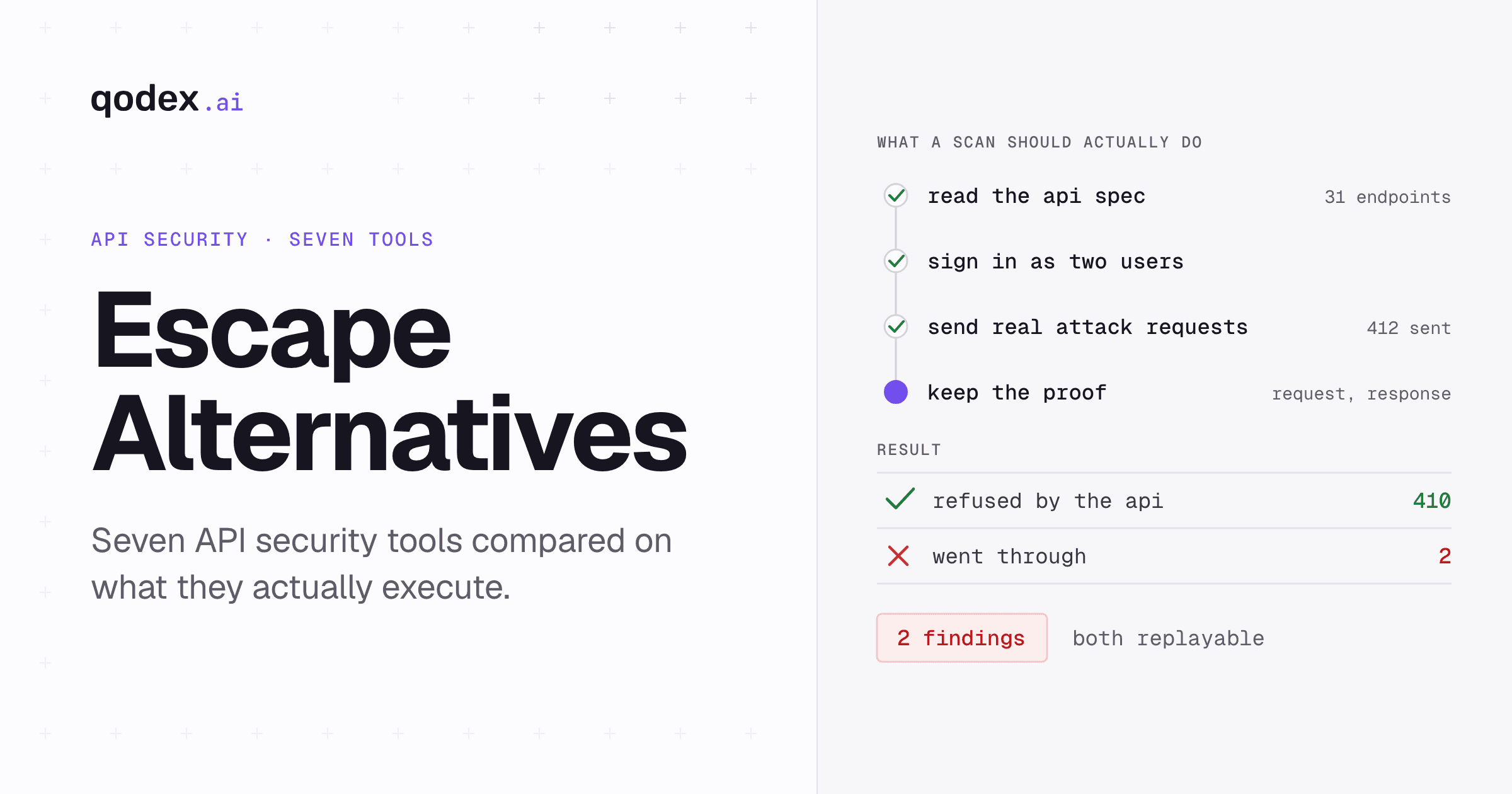
Escape (escape.tech) is one of the stronger API security platforms on the market. Since its $18M Series A in March 2026 it positions itself as an AI-powered offensive security platform spanning three products: attack surface management, business-logic-aware DAST, and AI pentesting agents. Under the hood it is API-native, with agentless scanning from a spec or endpoint, real GraphQL depth, and attack sequences that go past payload spraying. It is a well-funded, actively developed product, not a company in trouble. So if you are reading this, you are almost certainly doing one of two things: evaluating Escape against the field before you buy, or already running it and weighing a move. Either way, the decision is not "which scanner has the longest feature list." It is "where should API security testing actually live, and who owns the fix." This guide answers that with seven honest alternatives, sorted into the three categories they genuinely belong to, verified pricing where it is public and quote-based flagged where it is not, and a blunt section on when you should just stay on Escape. You can also see how Qodex compares against every major QA and security tool in one place.
Quick Comparison: Escape Alternatives at a Glance
| Tool | Category | Best for | Pricing (verified 2026) |
|---|---|---|---|
| Qodex | Agentic security regression | BOLA/IDOR/auth checks that rerun with your functional tests on every change | Free tier; paid plans via sales |
| StackHawk | Developer-first CI-native DAST | The closest modern-DAST like-for-like, owned by developers in the pipeline | Wingman $10/user/month; Scale on request (read 23 October 2026) |
| Burp Suite | Manual proxy toolkit + DAST | Security pros doing hands-on, chained API testing | Community free; Professional $499/user/year; Enterprise by quote |
| ZAP by Checkmarx (formerly OWASP ZAP) | Open-source DAST | A free scanning baseline wired into CI | Free, open source |
| APIsec | Automated API pentesting | Scheduled, certified pentest reports for compliance | Free tier; Standard $690/month per 100 endpoints; Pro $2,750/month |
| Akto | API discovery + security testing | Inventorying sprawling API estates, then testing them | Open-source core; Cloud and self-hosted by quote |
| Invicti (Web + API, formerly Acunetix) | Enterprise DAST + IAST platform | Proof-based web + API scanning across a large AppSec program | Quote-led; Web + API on request, per target (FQDN) |
Escape sits squarely in the automated-DAST-scanner lane itself, and that is the first thing to notice. Most "Escape alternatives" lists just hand you five more scanners, as if the only choice is which vendor runs the sweep. That misses the actual decision. Every tool below fits one of three categories, and picking the wrong category is the expensive mistake, not picking the wrong brand inside a category. If you want the wider security-tool field beyond Escape's direct rivals, our best API security testing tools roundup covers ten in depth; this page is the migration-evaluation version, focused on the decision in front of an Escape buyer.
What You Are Actually Replacing When You Leave Escape
Escape's core testing job is dynamic scanning: it probes a running API from the outside, understands your data model (GraphQL included), and reports what looks exploitable, now wrapped in attack surface management and AI pentesting on top. Replacing it means choosing which of three categories takes over that testing job. They are not interchangeable.
1. Automated DAST scanners and platforms (StackHawk, APIsec, Akto, Invicti). This is Escape's own lane: a tool sweeps your app or spec, on a schedule or in CI, and produces a findings report. Moving here is the like-for-like swap. You are trading one scanner for another with different ergonomics (StackHawk is developer-and-CI-first; APIsec produces certified pentest reports; Akto leads with discovery; Invicti brings proof-based scanning across web and API). The shared trait, and the shared limit, comes with the category (more on that below).
2. Manual-first proxy toolkits (Burp Suite, ZAP). Human-driven intercepting proxies where a person crafts, replays, and chains requests. This is the deepest testing you can do and the only way to find creative, chained, business-logic exploits that no automation invents. The trade is that coverage scales with skilled hours, not compute, so it does not replace continuous per-deploy scanning on its own. ZAP is the free floor; Burp Professional is the professional's toolkit.
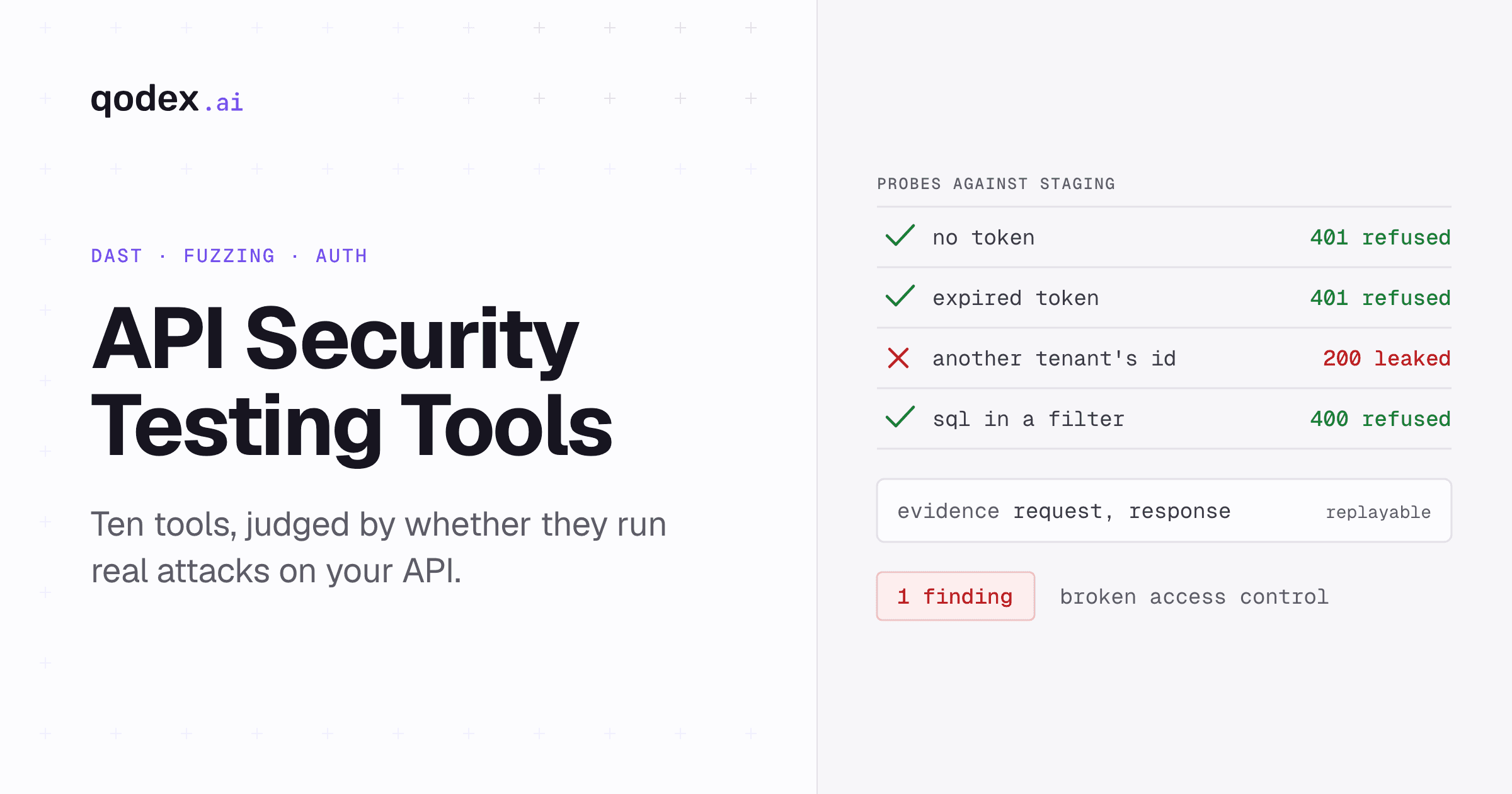
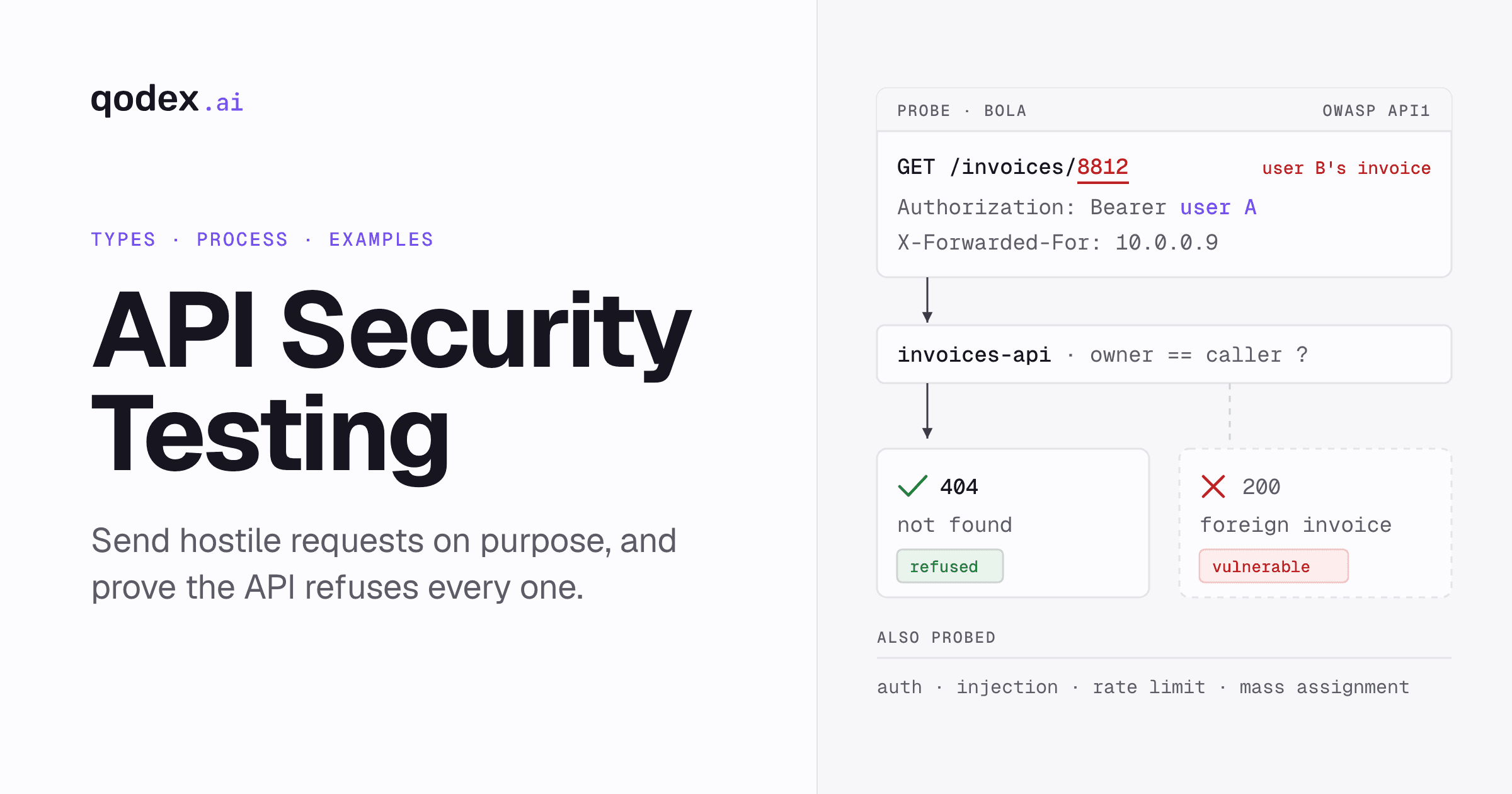
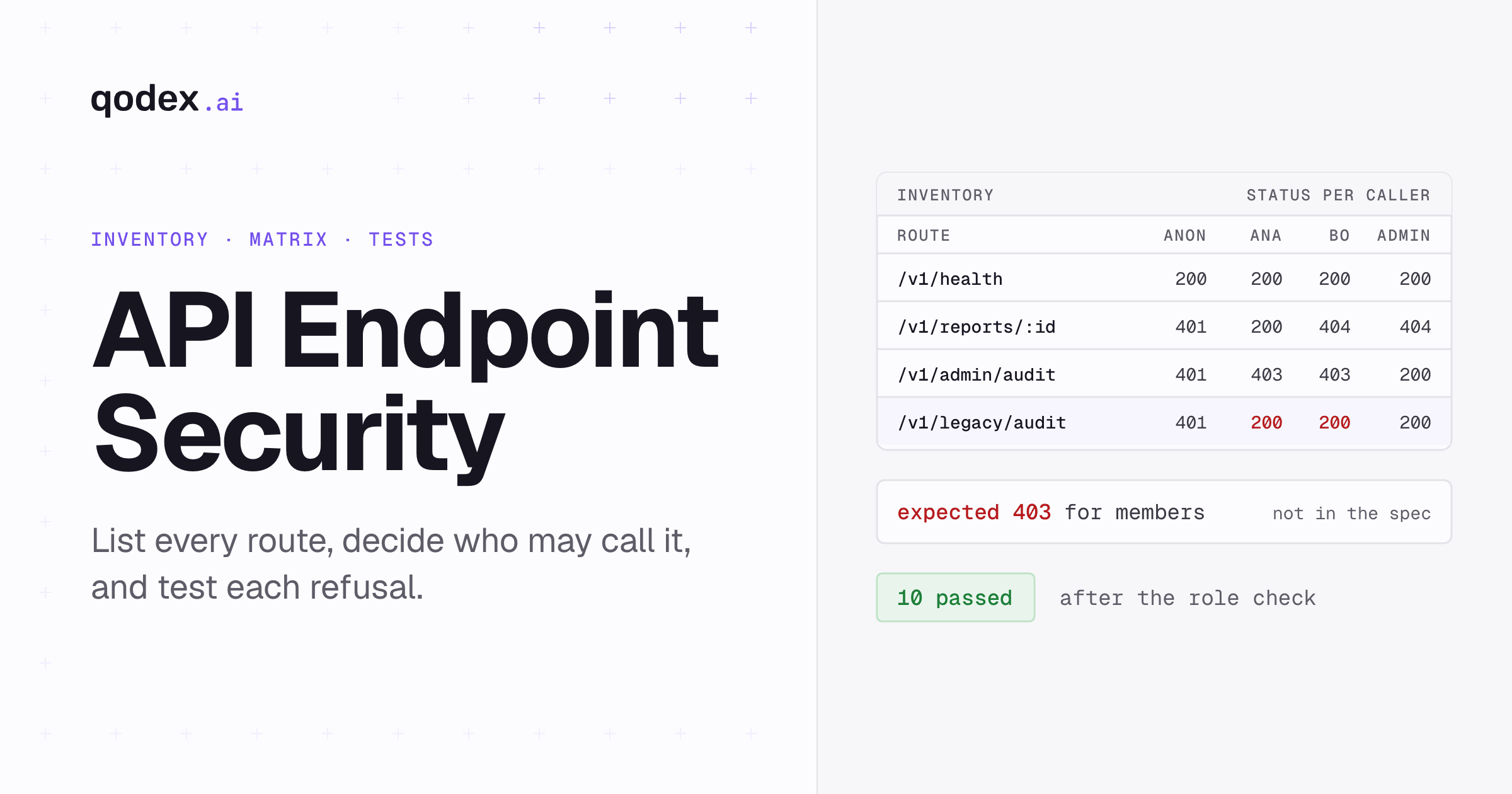
3. Agentic security regression (Qodex). Security checks written as named, role-aware scenarios that live alongside your functional tests and rerun on every change, the same way an assertion about a broken checkout does. This is a different job from scanning: instead of sweeping for known vulnerability classes, it locks specific authorization guarantees ("user B must never read user A's order") into your regression cycle and fails loudly when they break.
Two honest facts anchor the whole decision, and together they are why category matters more than brand. First, most DAST scanning is weak at business-logic authorization. The OWASP API Security Top 10 ranks broken object level authorization (BOLA) as the number one API risk, and generic scanning is worst at it, because nothing in an HTTP response declares that a regular user reading an admin's invoice is a breach. That is business logic; catching it reliably needs multiple real user roles and assertions on what each is allowed to see. Escape is one of the few tools that markets business-logic-aware testing, so it is better here than a plain scanner. Second, and this is the sharper distinction, every option in categories one and two, Escape included, runs security as a periodic event: a scan, a scheduled pentest, a manual session. Agentic security regression is the only category that runs it as a check on every code change, in the pull request that introduced the risk. Which of those two facts matters more to you decides whether you swap Escape for another scanner or move the whole job into regression.
The 7 Best Escape Alternatives in 2026
1. Qodex
Qodex is an agentic AI QA platform: one autonomous agent that covers UI testing, API testing, security, and pull request review from a single suite. On the security side, it treats API security as part of regression rather than a separate scan you run and forget. The agent learns your API from an OpenAPI spec, a Postman collection, or live exploration, then generates security scenarios alongside functional ones: BOLA and IDOR probes using multiple auth profiles per environment (admin, regular, viewer), auth-bypass checks, injection payloads, and OWASP API Top 10 coverage. The whole suite replays deterministically on demand, on a schedule, or from a CI webhook.
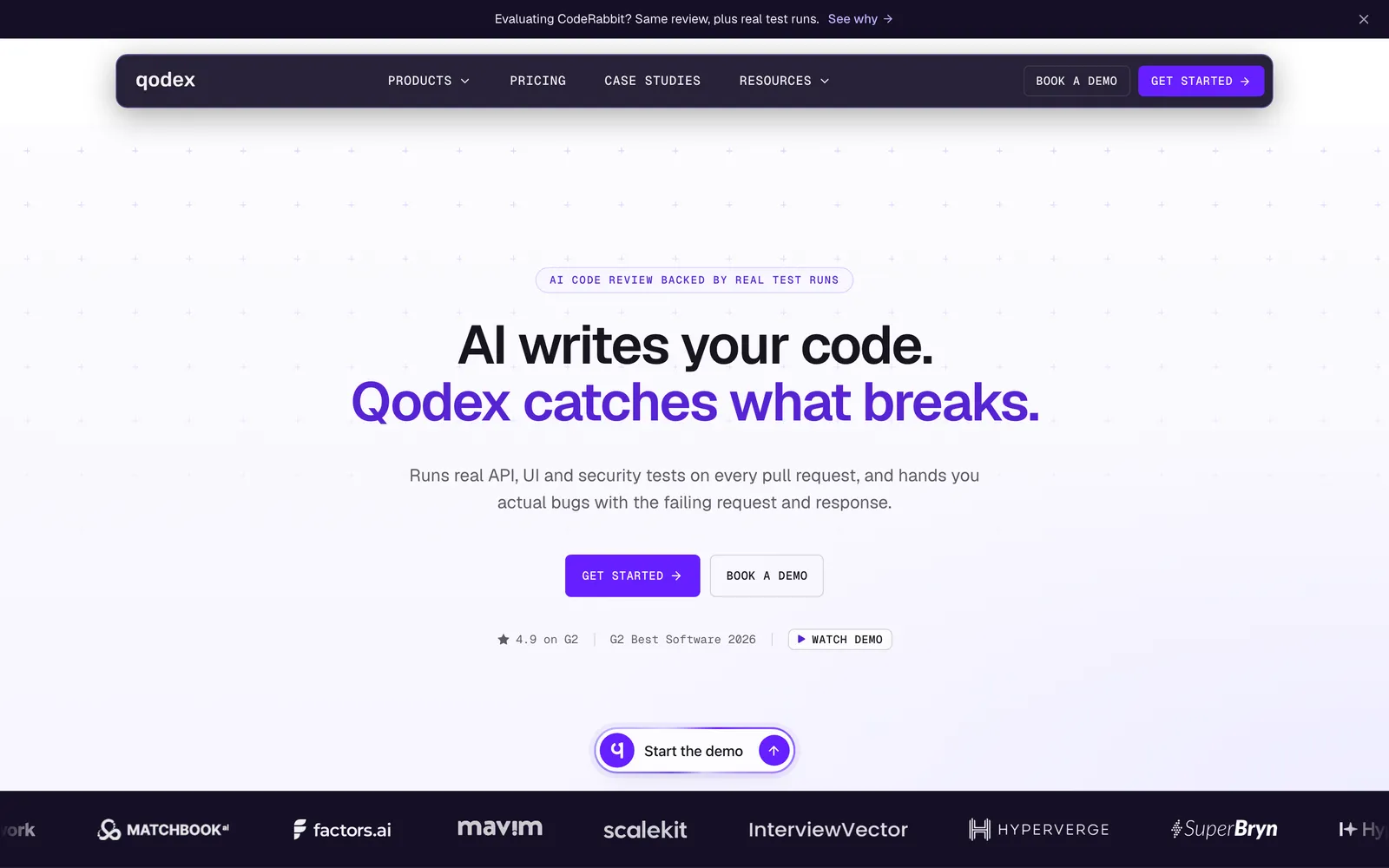
Why it fits an Escape evaluator: it changes when and where security runs. Escape tests security as a periodic event owned by a security team; Qodex turns authorization guarantees into regression checks that rerun on every change and fail in the pull request that broke them, owned by the engineers shipping the code. Because environments carry several auth profiles, the agent systematically attempts cross-tenant and role-escalation access, the BOLA/IDOR class that tops the OWASP API Top 10, and locks the result into the same suite as your functional tests. Two design choices make this trustworthy: security scenarios use inverted semantics (pass means the attack was blocked, fail means you are vulnerable), so the agent will never "fix" a failing security test by relaxing the assertion; and high or critical findings require captured evidence before they are filed, which keeps false alarms out of the queue. The generated tests are standard, ejectable scripts you can read and version, not a proprietary scan format.
Pricing: free tier, no credit card; paid plans are scoped with sales. See Qodex pricing. A structural difference from scanners and per-run tools: once a scenario is saved, replays are deterministic with no LLM in the loop, so per-deploy security regression adds zero marginal AI cost as coverage grows.
Pros:
Security and functional testing come from one agent and one suite, not a security silo bolted onto QA
Real multi-role BOLA/IDOR and auth-bypass testing, the number one API risk scanners structurally miss
Security checks rerun on every change, so an authorization regression fails in the pull request that introduced it
Deterministic replays at zero marginal LLM cost; standard, ejectable test scripts; built-in failure triage
Rated 4.9 out of 5 across 60 reviews on G2
Cons:
Not a breadth-first scanner: it will not inventory a thousand unknown APIs across your org (pair it with discovery tooling like Akto for that)
Younger product than the incumbent scanners on this list
Best for: product and platform teams that want BOLA, IDOR, and auth-bypass checks running with every regression instead of waiting for the next scan or the annual pentest, and who want security to live where their functional tests already do. You can start free and point the agent at a staging API in one session.
2. StackHawk
StackHawk is the closest like-for-like to Escape: a modern DAST platform built for developers and CI/CD. Scans are configured in YAML, run in the pipeline against pre-production builds, and findings arrive as actionable tickets with curl commands to reproduce. It covers REST, GraphQL, gRPC, and SOAP, has pushed into newer surfaces like LLM applications and MCP servers, and discovers your API attack surface from code. If your reason for looking past Escape is ergonomics or pricing rather than a fundamental change in approach, this is the most natural swap.
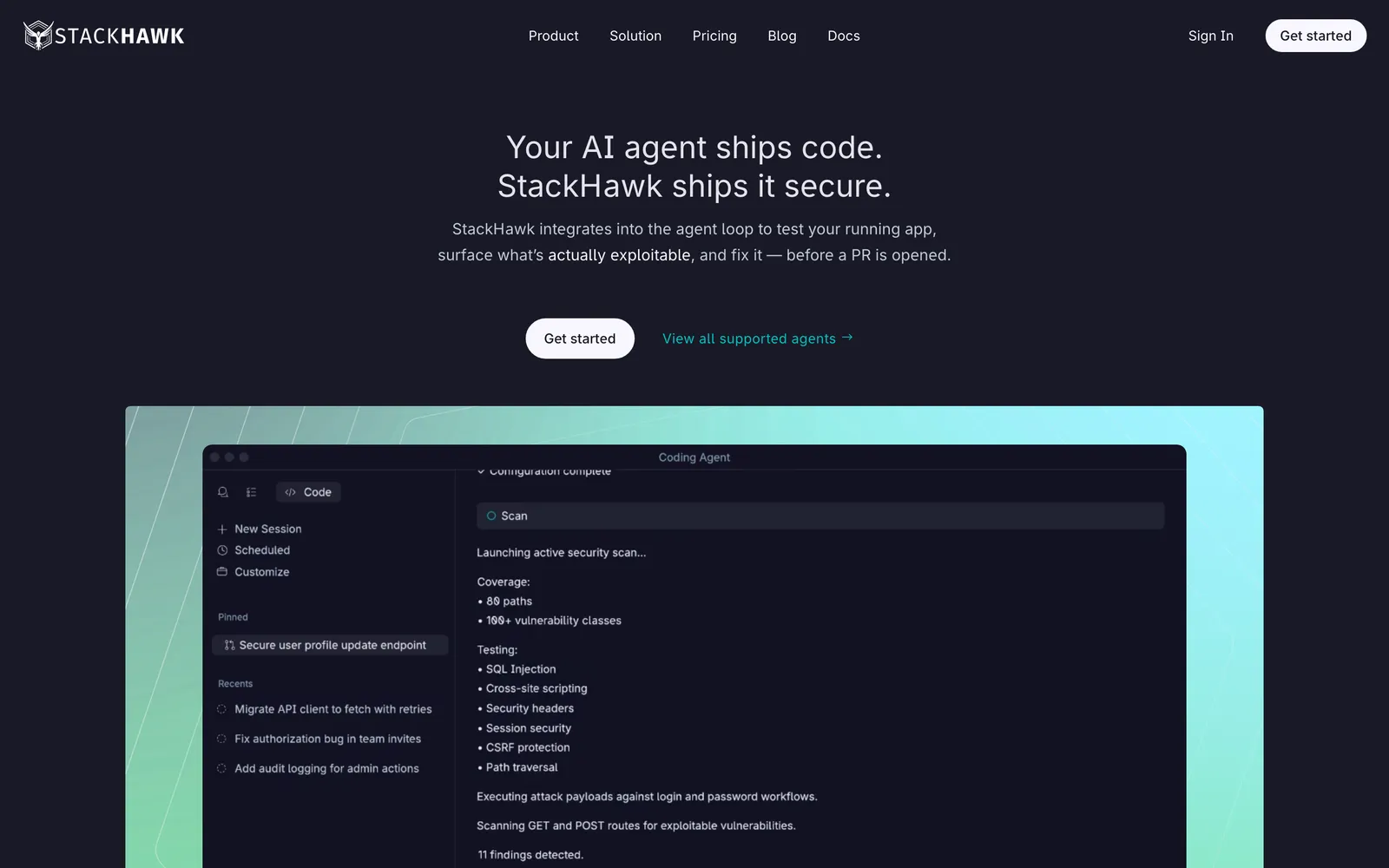
Why it fits an Escape evaluator: same category, developer-first execution. It keeps the "scan the running API in CI" model you already understand, with strong protocol coverage including the GraphQL depth Escape buyers care about, and puts findings directly in the engineering workflow.
Pricing (read 23 October 2026): Wingman is the plan that runs inside AI coding agents such as Claude Code, Cursor and Copilot. It costs $10 per user per month, with unlimited apps, 50 scans per user per month and a 14-day free trial. The Scale plan is priced on request (StackHawk pricing).
Pros: best-in-class CI/CD ergonomics for a scanner; developer-friendly reproduction info; broad API protocol coverage including GraphQL and gRPC. Cons: the Scale plan, which removes the scan limit, is quote-based like Escape. Scanner-class limits on business-logic authorization (BOLA/IDOR) still apply; depth depends on scan-configuration discipline.
Best for: engineering organizations that want security scanning living in the pipeline and owned by developers, and who like Escape's model but want tighter CI ergonomics.
3. Burp Suite
Burp Suite by PortSwigger is the tool security professionals reach for first, and it answers a different question than Escape: not "run a sweep for me," but "give me the deepest possible manual toolkit." The Professional edition is a hands-on kit: intercepting proxy, Repeater for crafting requests, Intruder for automated payloads, authenticated API scanning, and the BApp extension ecosystem. Burp Suite Enterprise Edition turns the scanner into scheduled, multi-site DAST. For chained exploits, token analysis, and business-logic abuse, nothing has Burp's depth.
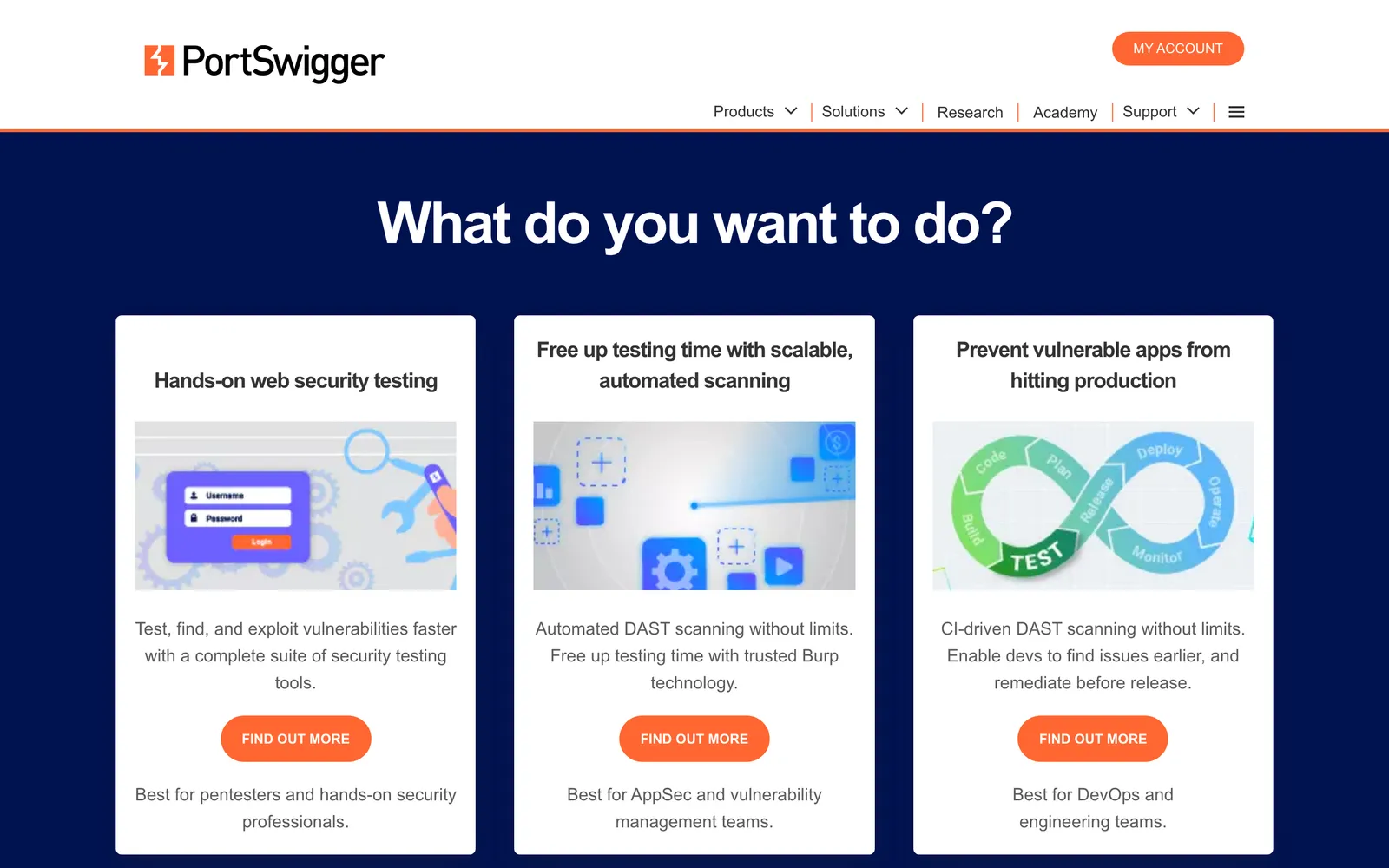
Why it fits an Escape evaluator: if your gap with Escape is that automation misses the creative, chained attacks a skilled human finds, Burp is the answer. It is a complement to continuous scanning as much as a replacement.
Pricing (verified 2026): Community is free with core manual tools; Professional is $499 per user per year; Enterprise Edition is quote-based.
Pros: industry-standard depth for manual testing; huge extension ecosystem; the de facto tool of professional pentesters. Cons: Professional is human-driven, so coverage scales with skilled hours, not compute; not built for continuous per-deploy regression; API-specific workflows take setup versus API-native tools. Our Burp Suite alternatives guide covers the wider field.
Best for: security engineers and pentesters doing expert, manual API testing, usually alongside an automated tool rather than instead of one.
4. ZAP by Checkmarx
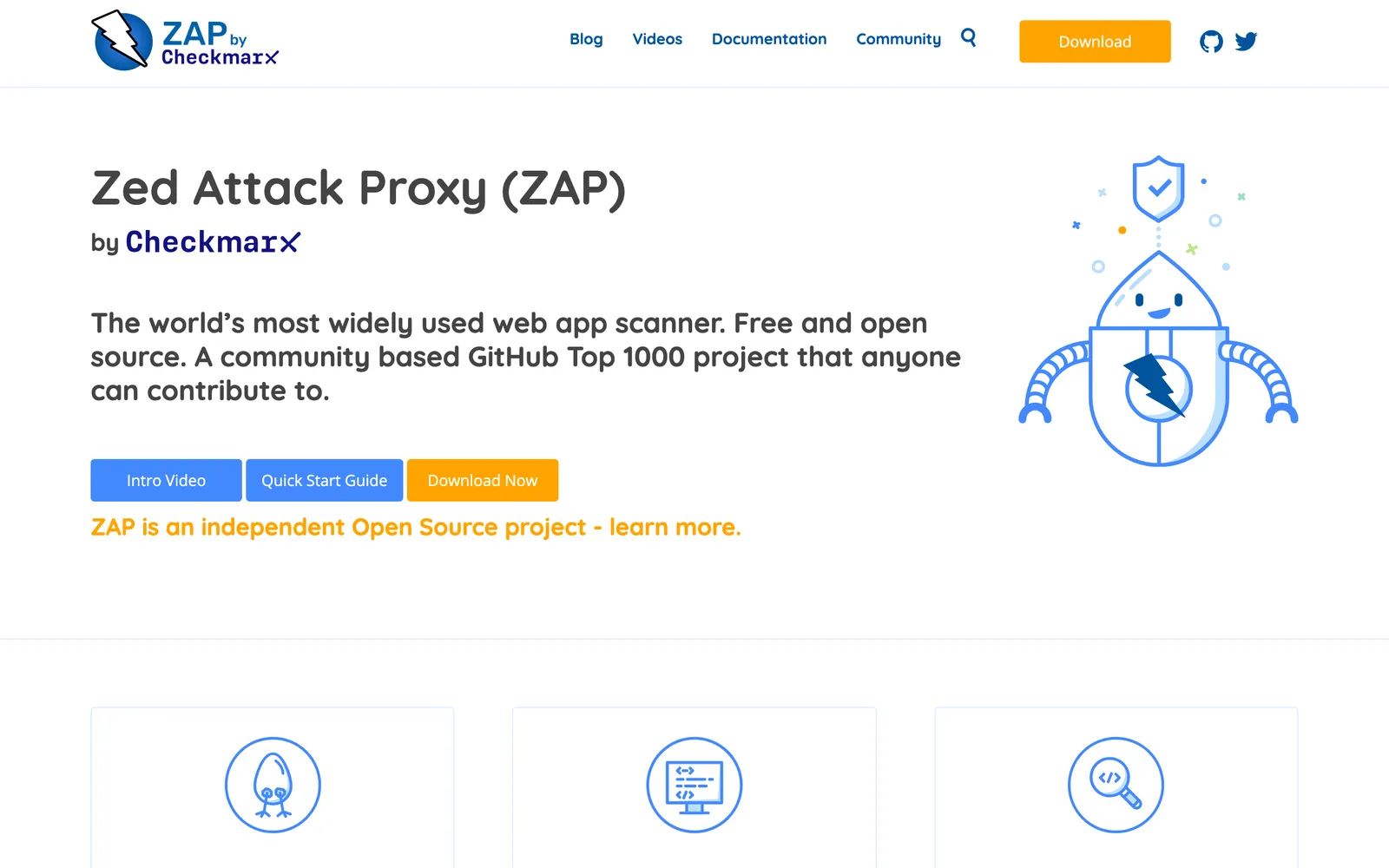
ZAP (Zed Attack Proxy, now branded "ZAP by Checkmarx" on its site, read 22 September 2026) is an open-source web and API scanner that its site calls the world's most widely used. You get an intercepting proxy, active and passive scanning, OpenAPI and GraphQL import, and a workable CI automation framework, all free. For a team leaving Escape to cut cost, ZAP in the pipeline is the honest free floor: dramatically better than nothing, at zero license spend.
Why it fits an Escape evaluator: it is the zero-cost baseline every paid option, Escape included, has to beat. If budget is the reason you are shopping, prove ZAP is not enough before you sign anything.
Pricing: free and open source.
Pros: free; scriptable; active community; OpenAPI and GraphQL import; reasonable CI automation story. Cons: noisier findings than commercial scanners, so triage falls on you; authenticated, multi-role API testing takes significant configuration; no managed reporting or compliance packaging. For the wider scanner field, see our top DAST tools guide.
Best for: budget-constrained teams establishing a baseline, and engineers who want a free proxy for manual poking.
5. APIsec
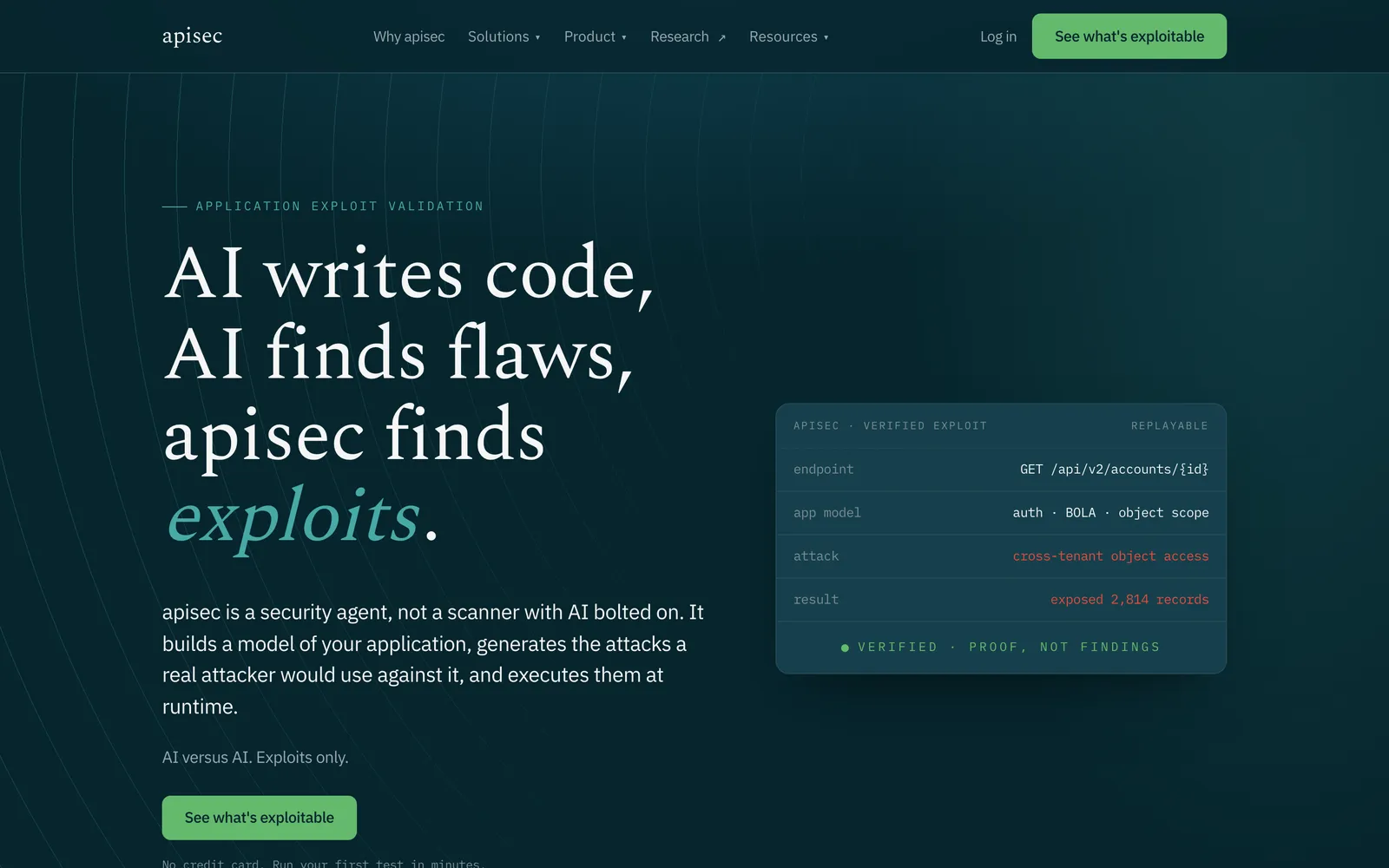
APIsec automates API penetration testing: it analyzes your API, generates attack playbooks covering authorization (BOLA, RBAC), injection, and logic flaws, runs them continuously, and produces certified pentest reports you can hand to auditors and customers. Where Escape is a scanning platform, APIsec is oriented around recurring, evidence-grade pentest output, and it is one of the few vendors in the category with public per-endpoint pricing.
Why it fits an Escape evaluator: if the thing you actually need from Escape is a report to satisfy compliance and enterprise security reviews, APIsec is built for exactly that, with real authorization testing rather than payload spraying and transparent pricing you can budget against.
Pricing (verified 2026): a free tier for trying the platform against test APIs; Standard at $690/month per 100 endpoints; Pro at $2,750/month per 100 endpoints with full CI/CD and ticketing integrations.
Pros: certified pentest reports satisfy compliance and customer security reviews; genuine authorization testing; transparent pricing (rare in this category). Cons: per-100-endpoint pricing climbs fast for microservice estates; it is a security product in a security silo, separate from your QA regression; setup assumes you know your endpoint inventory.
Best for: companies that need recurring, certified API pentest evidence for compliance or enterprise sales.
6. Akto
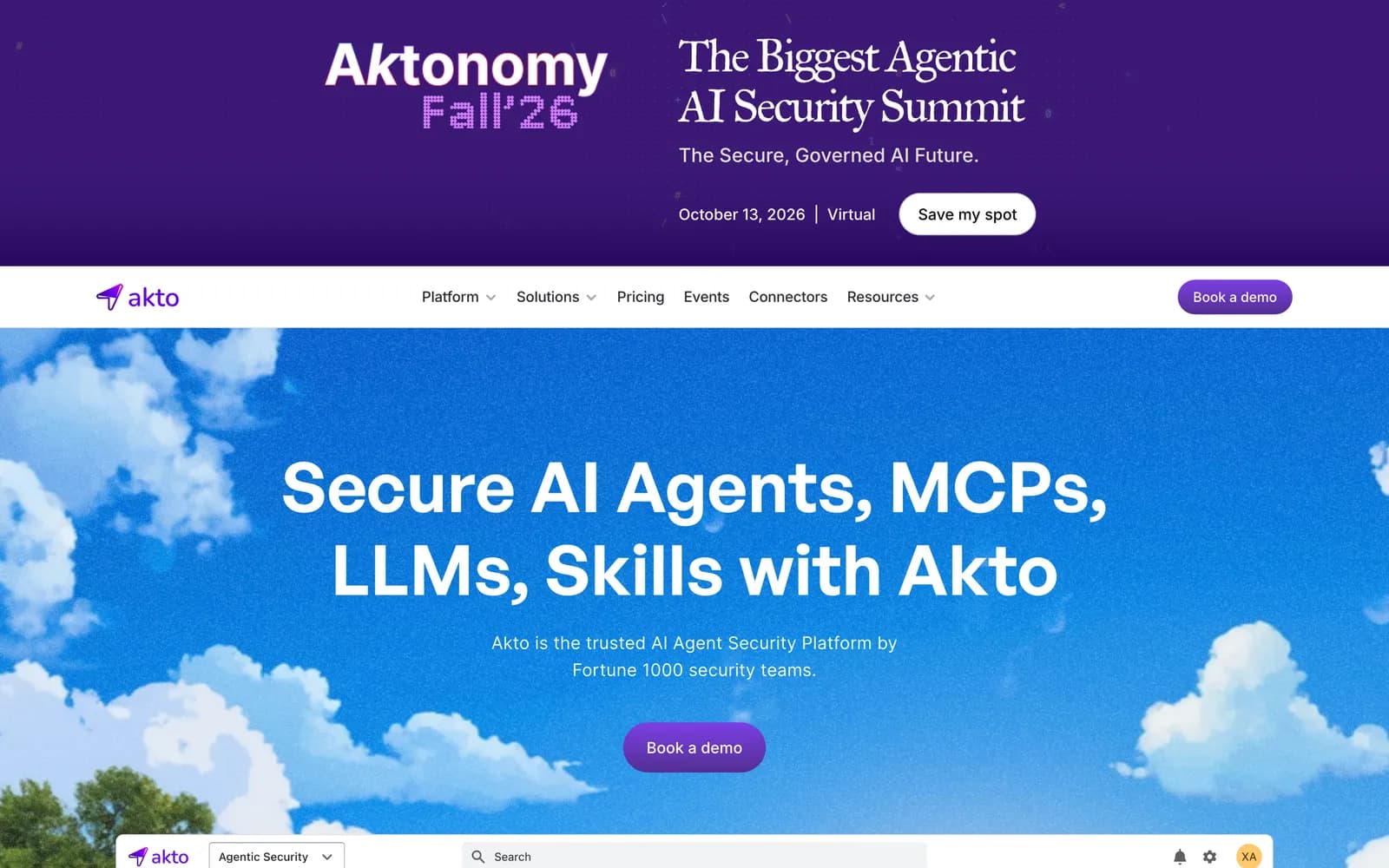
Akto attacks the problem many teams have before testing: not knowing what APIs they actually expose. It builds an API inventory from traffic (mirroring, eBPF, gateway integrations) and code, flags shadow and zombie endpoints, detects sensitive data in flows, then runs a large library of security test templates (BOLA, auth, injection, misconfiguration) against the inventory. An open-source core makes it easy to evaluate. Escape has its own attack-surface-management story, so Akto is the alternative to reach for when discovery is the primary need. Note the repositioning: the Akto homepage now leads with AI agent and MCP security, and API security sits on its own API security page (both read 22 September 2026), so confirm the API scope of the plan you buy.
Why it fits an Escape evaluator: if what drew you to Escape was surface discovery across a sprawling estate, Akto leads with exactly that and adds an open-source entry point and a self-hosted option for regulated environments.
Pricing: open-source edition is free; Cloud and self-hosted plans are quote-based.
Pros: discovery-first approach finds the APIs nobody owns; strong template library with community contributions; open-source entry point; self-hosted option. Cons: traffic-based discovery needs infrastructure integration to shine; template-driven testing inherits scanner-class limits on business logic; the platform's breadth can be more than a single product team needs.
Best for: security teams at organizations with sprawling, partially-unknown API estates that need inventory and testing in one place. It also pairs well with a regression-style tool like Qodex, which tests the authorization logic discovery tools cannot judge.
7. Invicti (Web + API, formerly Acunetix)
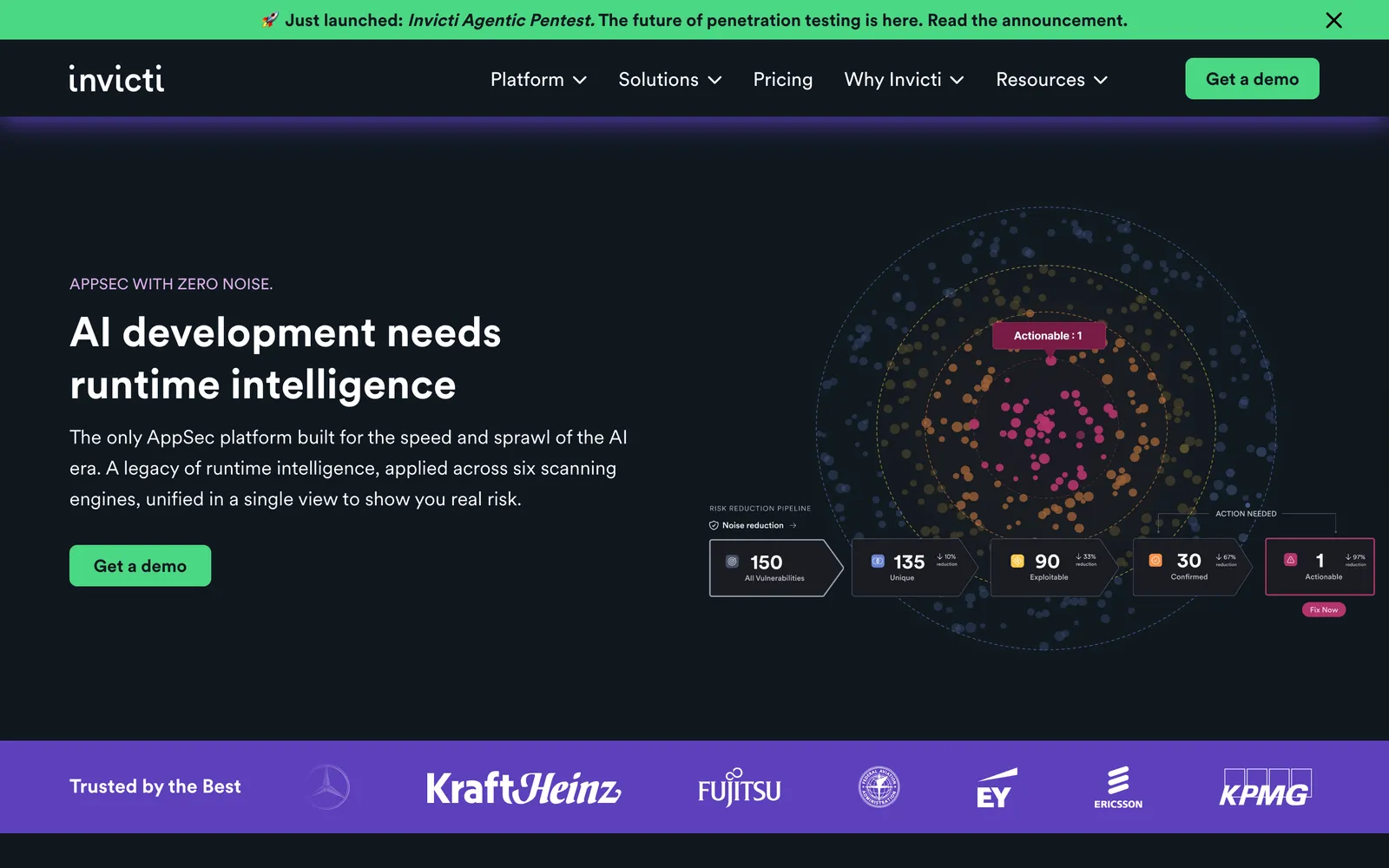
Invicti (formerly Netsparker) is an enterprise application security platform that folds DAST, IAST, SAST, SCA, and API security into one suite. Its signature is proof-based scanning: the engine attempts safe, controlled confirmation of a vulnerability before reporting it, which sharply cuts false positives. On the API side it scans REST, SOAP, and GraphQL with several discovery paths. Acunetix is no longer a separate brand: acunetix.com now opens with "Acunetix is now Invicti Web + API" (read 22 September 2026), so treat it as Invicti's own web and API scanner on the same proof-based engine, licensed per target (FQDN), not as a second vendor.
Why it fits an Escape evaluator: if you want one platform covering web apps and APIs across DAST, IAST, and SAST rather than an API-first point tool, and you have a dedicated AppSec function to run it, this is the enterprise-suite direction. Proof-based scanning is a real answer to Escape buyers frustrated by false-positive triage.
Pricing (read 22 September 2026): Invicti is quote-based and enterprise-tiered by scan targets and deployment, with no public list price. Invicti Web + API is quote-based too: its pricing page shows no list price and asks for a quote, per target (FQDN) (read 22 September 2026).
Pros: proof-based scanning keeps false positives low; broad coverage across web, API, and IAST from one platform; mature reporting and compliance packaging. Cons: priced and positioned for enterprise AppSec, not individual product squads; it is a general web-and-API DAST rather than an API-first tool, so API ergonomics are lighter than Escape's; scanner-class limits on business-logic authorization still apply.
Best for: enterprises that want one proof-based platform across web and API, with an AppSec team to operate it.
When Escape Is Still the Right Call
Not every evaluation should end in a switch. Be honest about where Escape genuinely leads before you move.
GraphQL is your primary attack surface. Escape is one of the few DAST tools with serious GraphQL depth. If most of your API is GraphQL, weigh StackHawk against it directly, but Escape's data-model-aware attack sequences are a real strength worth keeping.
You need broad, agentless scanning and AI-driven pentesting across a large estate. Escape's sweep-from-a-spec model plus its multi-agent AI pentesting covers known vulnerability classes at breadth and is under active development. A regression-style tool like Qodex is deliberately not that; it goes deep on authorization logic in your CI, not wide across a thousand endpoints on a schedule. If breadth and periodic offensive testing are the job, Escape's category is the right one.
An AppSec team, not a product squad, owns security. Escape is built for AppSec-team workflows. If that is who operates your security testing, its ergonomics fit; the developer-first tools on this list are optimized for a different owner.
The tell that you should switch is the opposite of all three: you are shipping daily, product engineers own quality, and the failures that scare you are authorization regressions (a new endpoint that forgot a tenancy check, a refactor that dropped a permission guard) rather than known-CVE-class issues. That is the case that belongs in regression, not a periodic scan.
How to Choose an Escape Alternative Without a Painful Migration
Run this in order. Each step doubles as a question to ask every vendor on this list before you sign.
Step 1: Name the real reason you are leaving
Be specific, because it determines the category, not the brand. Is it enterprise pricing you cannot budget against? Findings that land on a security team instead of the engineers who fix them? Authorization regressions that keep shipping between scans? Or simply cost? "Pricing" points you toward ZAP or public-priced APIsec; "wrong owner for the findings" points toward developer-first StackHawk or regression-style Qodex; "we keep shipping auth regressions" points toward Qodex. Solve the actual problem, not "a different scanner."
Step 2: Test the authorization story before anything else
Ask every candidate one blunt question: "Show me how you detect user A reading user B's object." If the answer is configuring multiple authenticated roles and comparing responses, it is real BOLA testing. If the answer is a generic payload library, you are buying breadth, not the number one API risk. This is the single most important thing a scanner cannot do well, so make each vendor prove it on your own endpoints.
Step 3: Decide where findings should land
Scanners produce reports for security teams; regression-style tools produce failing tests for engineering teams. Findings that land outside the workflow of the people who can fix them age into backlog wallpaper. Match the output to who owns the fix: if product engineers own it, favor a tool that fails in the pull request (StackHawk, Qodex) over one that emails a PDF.
Step 4: Price continuity, not the first scan
Escape, Invicti, Akto Cloud and StackHawk's Scale plan are quote-based, so model a full year, not a first month. APIsec publishes per-100-endpoint pricing that climbs with your estate; ZAP is free; Qodex's free tier plus deterministic zero-cost replays remove the per-run meter entirely. An annual pentest plus quarterly scans leaves the API unguarded for 300-plus days between checks, so compare what per-deploy coverage actually costs on each model.
Step 5: Run a pilot on your five riskiest endpoints
Do not migrate blind. Pick the five endpoints that would hurt most if authorization broke, wire them into your top one or two candidates, and run them for a sprint against real auth roles. You are measuring one thing: how many real authorization and injection issues each tool surfaces on your own API, and how much triage each hands back. That number, not the feature grid, decides the migration.
Decision Framework: Match the Tool to Your Team
Find your row.
| Your situation | Right category | Start with |
|---|---|---|
| Auth regressions (BOLA/IDOR) are the failure that scares you | Agentic security regression | Qodex |
| You want security testing to live with your functional tests | Agentic security regression | Qodex |
| You like Escape's model but want tighter CI, developer-owned | Developer-first DAST | StackHawk |
| You need deep, manual, chained exploit testing | Manual proxy toolkit | Burp Suite Professional |
| Budget is the reason you are leaving | Open-source DAST | ZAP |
| You mainly need certified pentest reports for compliance | Automated API pentesting | APIsec |
| Discovery of a sprawling, unknown API estate comes first | API discovery + testing | Akto |
| You want one proof-based platform across web and API | Enterprise DAST + IAST | Invicti |
Choosing Your Escape Replacement
Decide the category first, then the brand. Escape is an automated DAST scanner, so the like-for-like move is another scanner (StackHawk, APIsec, Akto, Invicti). The higher-leverage question is whether a scanner is even the right category for your risk. If your worst-case failure is an authorization regression, no scanner in this list closes that gap, and the move is into regression, not sideways to another sweep.
Buy for the number one API risk, not the longest feature list. BOLA tops the OWASP API Security Top 10, and it is exactly what generic scanning is worst at. Any tool that cannot show you multi-role authorization testing on your own endpoints is selling breadth, not the risk that actually breaches APIs.
Match findings to the owner of the fix. A report that lands on a security team no engineer reads is worse than a failing test in the pull request that caused it. If product engineers own quality, weight developer-first and regression tools accordingly.
Pilot before you commit. Every claim on this page, including ours, should survive a one-sprint pilot on your five riskiest endpoints. Measure real issues surfaced and triage handed back, and let that decide. For the broader security-tool landscape, see our best API security testing tools and best AI QA tools guides, plus the full comparison library at qodex.ai/alternatives.
Frequently Asked Questions
What is Escape (escape.tech)?
Escape is an AI-powered offensive security platform for APIs and web apps. It combines three products: attack surface management (agentless API discovery and inventory), business-logic-aware DAST that scans a running API and understands your data model with strong GraphQL support, and AI pentesting agents. Since its $18M Series A in March 2026 it leads with the AI-pentesting positioning. It is a well-funded, actively developed product; looking for alternatives is a fit-and-pricing decision, not a response to any problem with the company.
Why do teams look for Escape alternatives?
The common reasons are enterprise pricing (Escape is demo-led with no public price sheet on its own site, and its AWS Marketplace tiers start around $50,000/year), an AppSec-team orientation rather than a developer-workflow one, findings that still need your team's triage, and cadence: security runs as a periodic scan or pentest rather than a check on every code change. If your worst-case failure is an authorization regression that ships between scans, that last point pushes you toward a different category entirely.
What is the closest alternative to Escape?
StackHawk is the closest like-for-like: a modern, API-native DAST platform built for developers and CI/CD, with strong protocol coverage including GraphQL. It keeps Escape's "scan the running API" model with tighter pipeline ergonomics. If your reason for leaving is a change in approach rather than ergonomics, Qodex (security regression) is the bigger shift.
What is the best free Escape alternative?
ZAP is the strongest fully free option: open source, scriptable, with OpenAPI and GraphQL import and CI automation. Akto's open-source edition adds API discovery and a test-template library. Qodex's free tier generates and runs authenticated security scenarios (BOLA, auth bypass, injection) without a credit card, and Burp Suite Community covers free manual testing.
Which Escape alternative is best for BOLA and IDOR?
Reliable BOLA/IDOR detection requires testing with multiple real user roles and asserting on what each is allowed to access, which is business logic no HTTP response declares. Role-aware tools do this best: Qodex generates multi-role authorization scenarios that rerun on every change, so a broken tenancy check fails in the pull request rather than at the next scan, and APIsec includes authorization testing in its pentest playbooks. Escape markets business-logic-aware testing too, so it is stronger here than a plain scanner; the difference with Qodex is continuity and ownership, authorization run as regression in CI rather than as a periodic pentest. Generic, unauthenticated scanning approximates BOLA with heuristics and is structurally weaker.
Does an Escape alternative replace my penetration test?
No. Every testing tool here (including Escape) shifts security checks earlier and reduces how much you lean on a periodic pentest, but it does not replace a regulated audit or the creative, chained attacks a skilled human finds with a tool like Burp. The strongest programs run continuous testing in CI plus periodic expert review.
How do I migrate off Escape without losing coverage?
Name the specific reason you are leaving, then pick the category that solves it rather than defaulting to another scanner. Test each candidate's authorization story on your own endpoints, confirm findings land with the team that owns the fix, model a full year of pricing, and run a one-sprint pilot on your five riskiest endpoints before you commit. Keep Escape running until the replacement proves it surfaces the issues you care about.