Comparison
Qodex vs Postman: Which Fits Your API Testing?
The short answer: Postman is the default workspace for building and sharing API requests. Qodex is an autonomous agent that authors and runs your test suite. If your problem is collaboration around requests, keep Postman. If it is test coverage, regression, and API security, that is Qodex's job.
Different tools, different jobs
This is not a like-for-like comparison, and pretending it is would not help you. Postman is an API workspace: you design requests, organize them into collections, share them across a team, publish documentation, and run scripted checks. It has a massive ecosystem, and its collection format is the closest thing the industry has to a universal API interchange format.
Qodex is an autonomous API testing agent. You point it at your API and talk to it. It explores endpoints, learns auth, writes test scenarios with real assertions, verifies them against your environment, and replays them deterministically on a schedule or from CI. Security testing (OWASP Top 10 and OWASP API Top 10) runs in the same suite, from the same agent.
Many teams run both: Postman as the request workbench and source of truth for API definitions, Qodex as the testing layer that turns those definitions into a living regression and security suite. If you are weighing a full switch, our Postman alternatives guide covers the wider field.
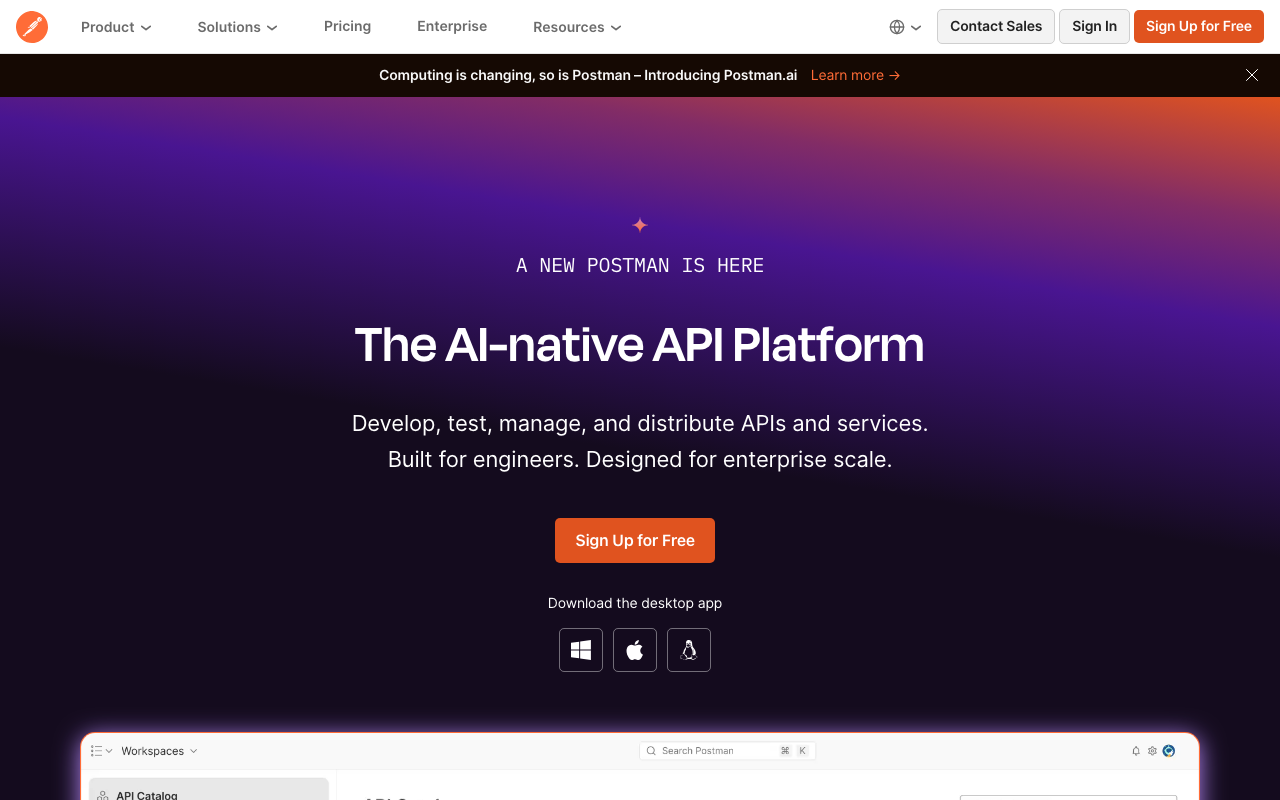
Qodex vs Postman at a glance
| Dimension | Postman | Qodex |
|---|---|---|
| Authoring model | You build requests and write JavaScript test scripts inside collections. Postbot, the AI assistant, suggests assertions and helps debug, but you drive every step. | You describe what to test in chat. The agent explores your API, authors scenarios with assertions, and verifies each one against your environment before saving it. |
| Regression replay cost | Collection runs are scripted, so reruns are cheap. Cloud-based monitors and some platform features are metered usage add-ons on top of seats. | Saved scenarios replay deterministically with zero LLM spend. The AI writes the test once; reruns are plain script execution, so cost stays flat as the suite grows. |
| Security testing | Test scripts are functional assertions. Security scanning is not the core product; most teams pair Postman with a separate security tool. | OWASP Top 10 and OWASP API Top 10 scenarios run in the same suite as functional tests, with inverted semantics: pass means the attack was blocked. |
| Collaboration and docs | Best in class. Workspaces, forking, comments, auto-generated docs, mock servers, and the Public API Network. This is the moat. | Project-based teams share scenarios, runs, and findings. No public network or hosted API docs; collaboration centers on the test suite, not the API definition. |
| Import and export | Exports Collection v2.1 JSON that virtually every API tool can read. The de facto interchange format. | Imports Postman collections and OpenAPI 3.x / Swagger 2.0 specs. Generated tests are standard Playwright and HTTP scripts you can git-sync and run anywhere. |
| Pricing model | Per seat: Free, Solo at $9/month, Team at $19 per user/month, Enterprise at $49 per user/month (billed annually, June 2026), plus usage add-ons for monitors and Flows. | Free tier, then Premium and Enterprise plans. Bring your own OpenAI key (BYOK) with every token logged, so AI spend is transparent and yours to control. |
Postman pricing checked on postman.com/pricing, June 2026. Plans and prices may change; always confirm on their site.
When Postman is the right choice
Postman earned its position. If any of these describe you, it is probably the right tool, and Qodex will not change that:
- Your team designs APIs collaboratively. Workspaces, forking, commenting, and version-controlled collections make Postman the shared whiteboard for API development. Nothing else has the same network effect.
- You publish APIs for others to consume. Auto-generated documentation, mock servers, and the Public API Network give external developers a familiar front door.
- You need a manual request workbench every day. For poking at an endpoint, debugging a header, or sharing a reproduction with a teammate, Postman is fast and universally understood.
- Your tests are simple smoke checks. If a handful of status-code assertions on a collection run covers your risk, the built-in test scripts are enough. Adding an autonomous agent would be overkill.
When Qodex is the right choice
Qodex makes sense when the bottleneck is not building requests but maintaining real test coverage:
- Writing and maintaining test scripts is the bottleneck. In Postman, every assertion is JavaScript someone writes and updates by hand. The Qodex agent authors scenarios from a chat brief, auto-verifies them on save, and flags stale tests when your API changes.
- You want security in the same suite. Qodex runs OWASP Top 10 and API Top 10 checks (injection probes, broken auth, IDOR with multiple auth profiles) alongside functional tests. Pass means the attack was blocked, and the agent will not weaken an assertion to make a security test pass.
- You care about the cost curve. AI-assisted tools that call a model on every run get more expensive as your suite grows. Qodex spends LLM tokens once at authoring time; replays are deterministic scripts at zero LLM cost.
- You want tests as code, not tests in a tool. Generated scenarios are standard Playwright and HTTP scripts. Eject them to git whenever you want; there is no proprietary runtime.
From Postman collection to running suite in five steps
Qodex treats your Postman collection as a starting point, not a rebuild. The walkthrough below is the actual product flow:
- Export your collection from Postman. Collection v2.x JSON, the standard export. Environments can come along as variables you map in step three.
- Import it into Qodex. Every request in the collection lands as an endpoint in the API catalog. Qodex reads the collection's auth configuration and infers your auth scheme (bearer, API key, basic) instead of making you re-enter it. OpenAPI 3.x and Swagger 2.0 specs import the same way, by file or URL.
- Point it at an environment. Set a base URL and credentials per environment (staging, prod). Qodex supports HTTP login flows with token extraction and multiple auth profiles per environment, which is what enables role-escalation and IDOR testing later.
- Ask the agent for a suite. A chat brief like "cover the payments endpoints, happy path plus auth failures" produces scenarios with assertions. Each API scenario is run against your environment on save, so you see a verified pass/fail before anything enters the suite. Scenarios stay in draft until a human promotes them.
- Schedule it or wire it into CI. Cron schedules, webhook triggers with per-project API keys, and notifications to Slack or email. Reruns are deterministic scripts, so the nightly regression run costs zero in LLM spend.
The honest bottom line
Postman is the better API workspace. Qodex is the better API testing agent. If your team lives in collections and mostly needs a shared workbench, stay put. If your collections have become a graveyard of half-maintained test scripts while bugs and security gaps ship anyway, import the collection into Qodex and let an agent own the suite. The import takes minutes, the free tier covers your first 100 endpoints, and the generated tests are yours to keep either way.
Qodex vs Postman: common questions
Straight answers for teams evaluating both tools.
Does Qodex replace Postman?+−
Can I import my Postman collections into Qodex?+−
How is Qodex’s AI different from Postbot?+−
What does rerunning tests cost in Qodex?+−
Does Qodex test UIs too, or only APIs?+−
Am I locked in if I adopt Qodex?+−
Bring your Postman collection. Leave the test maintenance.
Import your collection, and the Qodex agent authors a verified functional and security suite that replays at zero LLM cost.