10 Best Insomnia API Client Alternatives in 2026
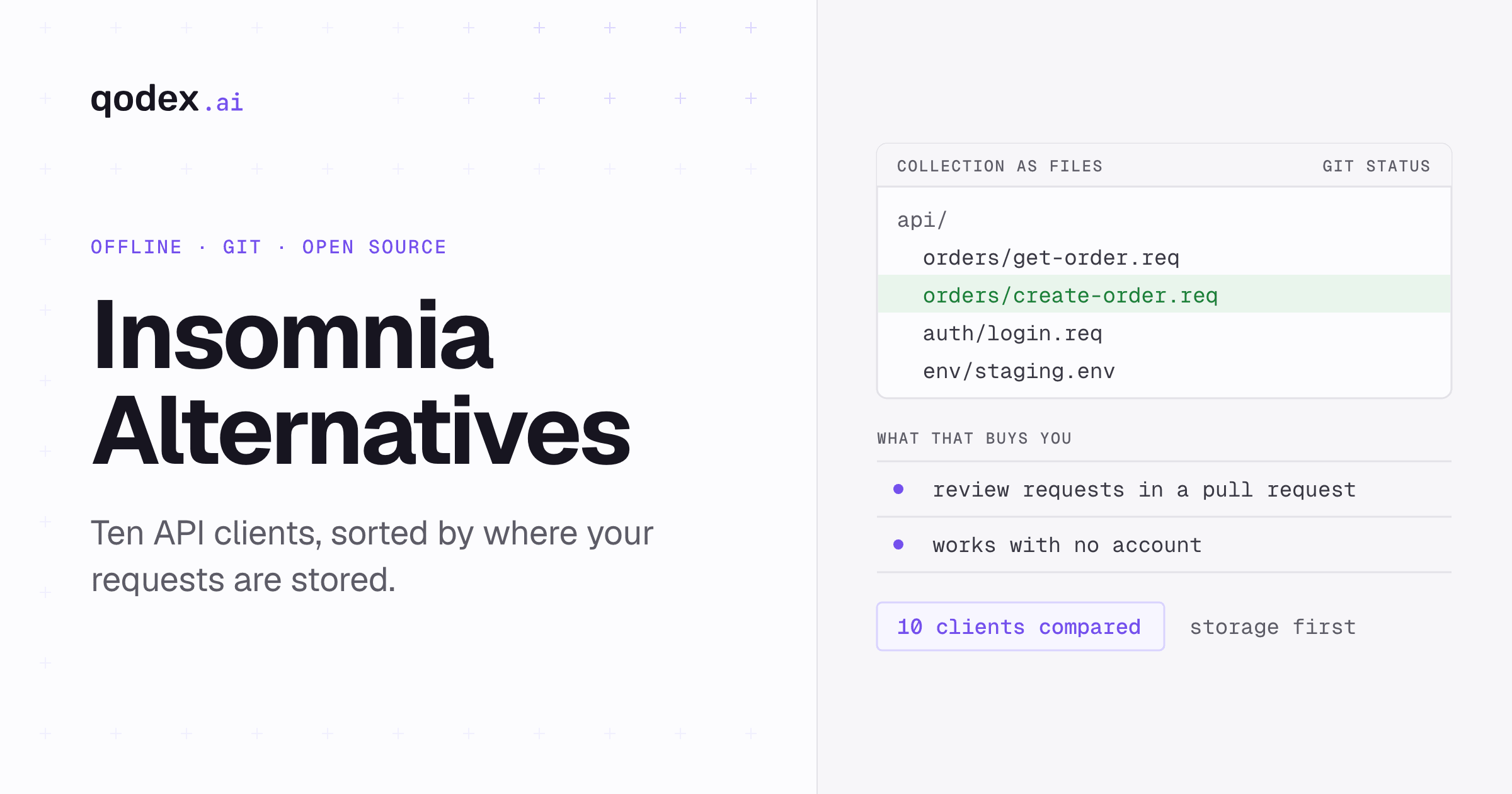
The main alternatives to Insomnia in 2026 are Bruno and Yaak if you want collections as files in Git, and Hoppscotch for an open-source browser client you can self-host. Kreya is built around gRPC, and Postman has the same hosted-platform shape. Insomnia itself is Kong's desktop API client for REST, GraphQL and gRPC requests. This guide compares ten alternatives to it, for developers who send HTTP requests for a living. Every price and limit came off the vendor's own page on 4 October 2026. Where a vendor publishes no number, this guide says so instead of guessing. You can also see how Qodex compares to other QA tools in one place.
Quick answer: choose by constraint
Collections as files in your repo: Bruno or Yaak. Requests on disk, synced through Git.
Open source in a browser, or on your own server: Hoppscotch. MIT, with a free self-host option.
gRPC is your main protocol: Kreya. Local-first, with a headless CLI for CI.
You live in your editor: Thunder Client. An extension for VS Code and JetBrains.
You live in the terminal: HTTPie. The CLI is BSD 3-Clause and the core product.
Shared workspaces for a team: Postman, or Testfully if you also want an offline workspace.
Nobody has time to write the tests: Qodex. It writes and runs them, and it is not a request client.
Staying put: Insomnia Essentials is $0, with Inso CLI and Git Sync for up to three users.
Several of those cost nothing and one starts at $1,299 a month. That gap is the point. "Insomnia alternative" hides two questions: a better window to compose requests in, or a way to stop composing them by hand.
What are you replacing?
Insomnia does several jobs at once, and you may want to replace only one of them. Name the piece first.
A manual request client. Compose, send, read the response. Bruno, Yaak, Kreya, Thunder Client, HTTPie and Hoppscotch all do this.
A shared workspace. Collections other people open without a Git checkout. Postman, Hoppscotch, Apidog, Testfully.
An API design platform. Specs, docs and mock servers next to the requests. Apidog and Postman.
A collection runner. The same requests on a schedule or in CI. That is Inso CLI, and Bruno, Hoppscotch, Postman, Testfully, Apidog and Kreya publish an equivalent.
An automated regression system. Something that writes the tests instead of running the ones you wrote. Different category. Qodex is the entry here.
Swapping the request composer is the easy half. Replacing Git Sync, Inso CLI and mock servers usually takes two products, and the free plan you land on may not include the part you depended on.
Insomnia alternatives at a glance
Ten API clients and platforms against Insomnia, prices read 4 October 2026. "Not published" means the vendor's page states nothing, not that the feature is missing. Offline use, Git and self-hosting are compared in the definitions section below, and protocols in the protocol table.
| Tool | License | Paid from | Free plan | Insomnia import |
|---|---|---|---|---|
| Insomnia (baseline) | Client Apache 2.0 | $12/user/mo Pro | Essentials $0 | n/a |
| Bruno | MIT core | $6/user/mo | $0, 2 workspaces | Yes |
| Yaak | MIT source, paid binary | $79/yr | Personal use only | v4 and v5 |
| Hoppscotch | MIT | $6/user/mo | $0, personal workspace | Yes |
| Thunder Client | Proprietary | $3/user/mo | $0, limits unpublished | v4 or v5, paid |
| HTTPie | CLI BSD 3-Clause | Not published | CLI open source | Desktop and Web import |
| Kreya | Proprietary, not open source | Not published | Free forever | Yes |
| Apidog | Not published | Not read | Not read | Yes |
| Testfully | Proprietary terms | $14/user/mo | $0, 1 offline plus 1 cloud | v4 JSON |
| Postman | Commercial terms | $9/mo Solo | $0 for individuals | Yes |
| Qodex | Not published | $1,299 per project/mo | $0, 25 scenarios | Not published |
Why developers leave, and what Insomnia fixed
Insomnia 8.0 introduced the local-only Scratch Pad, and Insomnia 8.3 restored local projects on 18 October 2023. Today Insomnia offers local, Git, cloud and hybrid storage.
Forced cloud storage is history, and the free tier is not a stub: Essentials costs $0 and includes Inso CLI. The current limits are further down, under when Insomnia is still the right choice.
The honest reasons to leave are narrower than the 2023 story. Git Sync stops at three users before you pay. And if a cloud default surprised you once, you may not want the option in the product at all.
The 10 best Insomnia alternatives
Grouped by what they replace. Local clients first, because that is where most people leaving Insomnia land.
1. Bruno
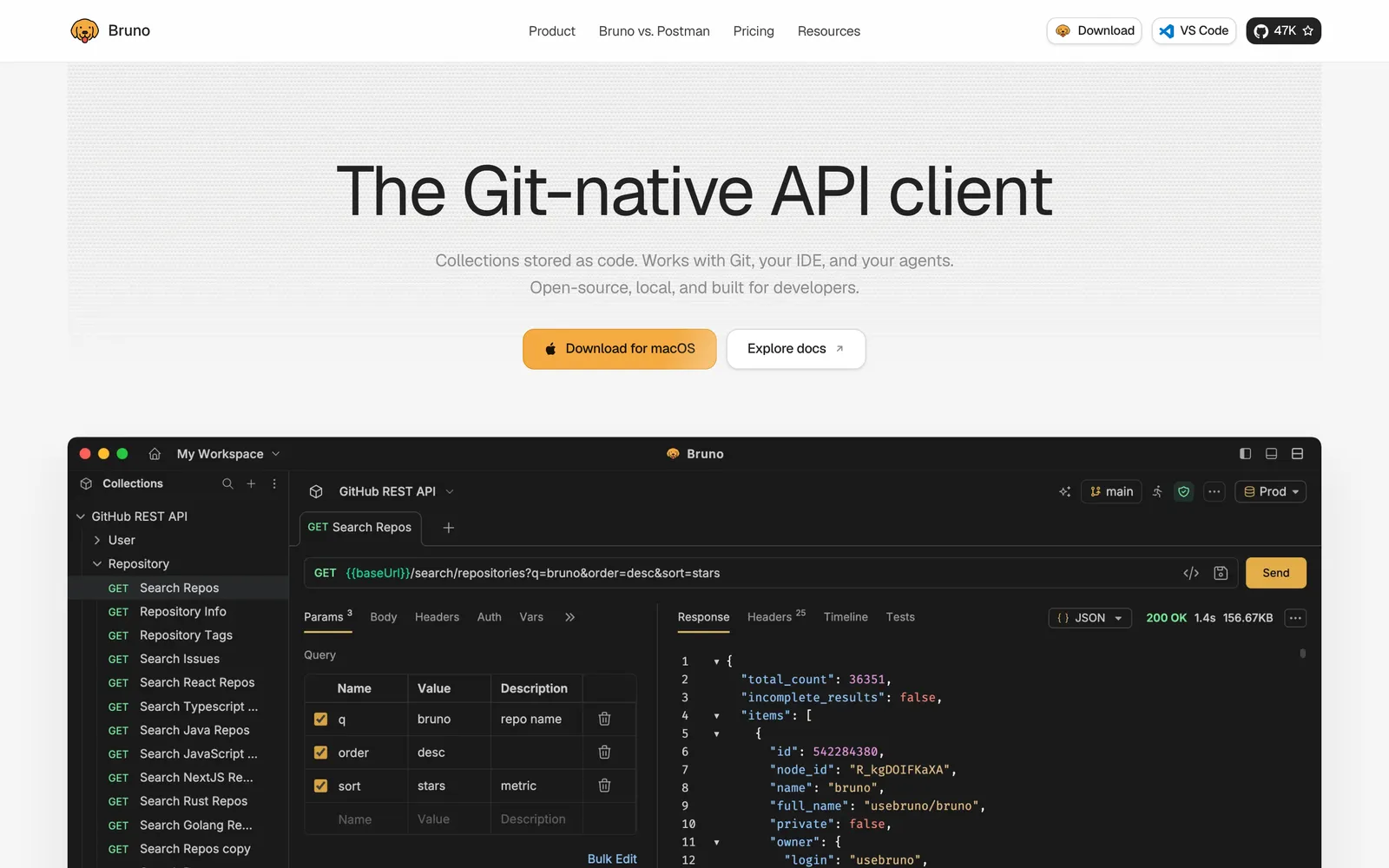
Bruno keeps every collection as plain text files in your repository, and there is no Bruno cloud at all.
Category: desktop client, offline-first.
License: MIT core.
Price, 4 Oct 2026: Open Source $0, Pro $6, Ultimate $11 per user/month annual. Ultimate has a 14-day trial, no card.
Free plan: HTTP, REST, GraphQL, gRPC, testing, scripting, code generation, unlimited collection runs, two workspaces.
Data: your machine, no account.
Git: plain text you branch, diff and merge like code.
Insomnia import: accepted.
Protocols: GraphQL and gRPC, both free.
Runner: Bruno CLI, terminal and CI.
Best for: teams who want API changes reviewed in a pull request, next to the code they test.
Watch out for: sharing happens through Git and nothing else.
2. Yaak
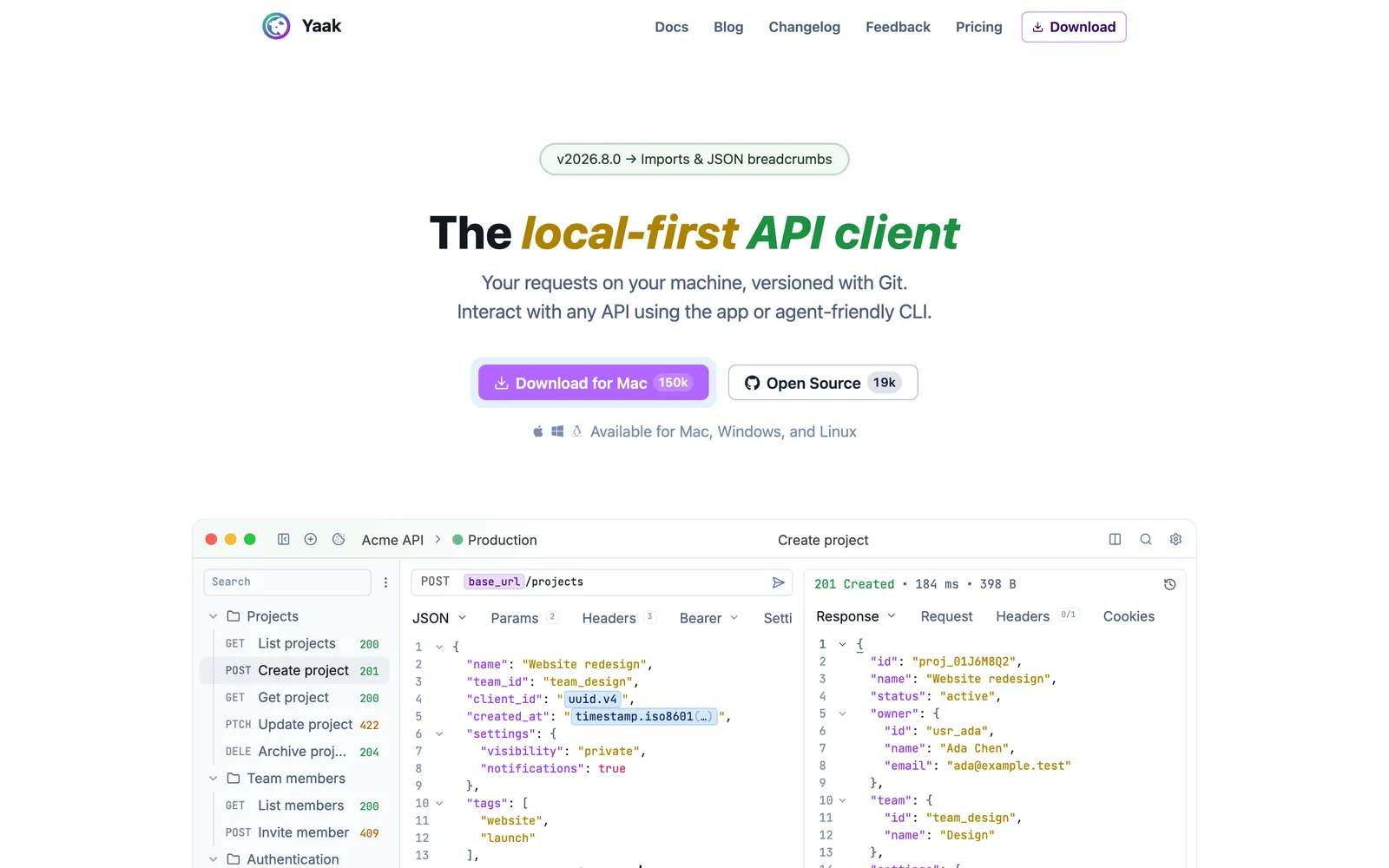
Yaak is local by default, and it publishes a detailed Insomnia migration path.
Category: desktop client, local by default.
License: MIT source. The prebuilt binaries are free for personal use and need a license for work.
Price, 4 Oct 2026: Individual $79 a year or $399 once. Business $149 per user a year. Commercial trial 30 days, no card, no signup.
Free plan: personal use of the binaries.
Data: local only. No account, no telemetry, secrets encrypted.
Git: a plain-file directory with Git sync built in.
Insomnia import: v4 and v5, carrying HTTP and gRPC requests, folders, environments, selected auth, bodies and templates. WebSocket requests import from v5 only.
Protocols: GraphQL and gRPC.
Runner: a CLI sends and edits requests.
Best for: an Insomnia user who wants the same working style with the data on disk.
Watch out for: using it at work means paying, and "selected auth" means some schemes fall outside the import.
3. Hoppscotch
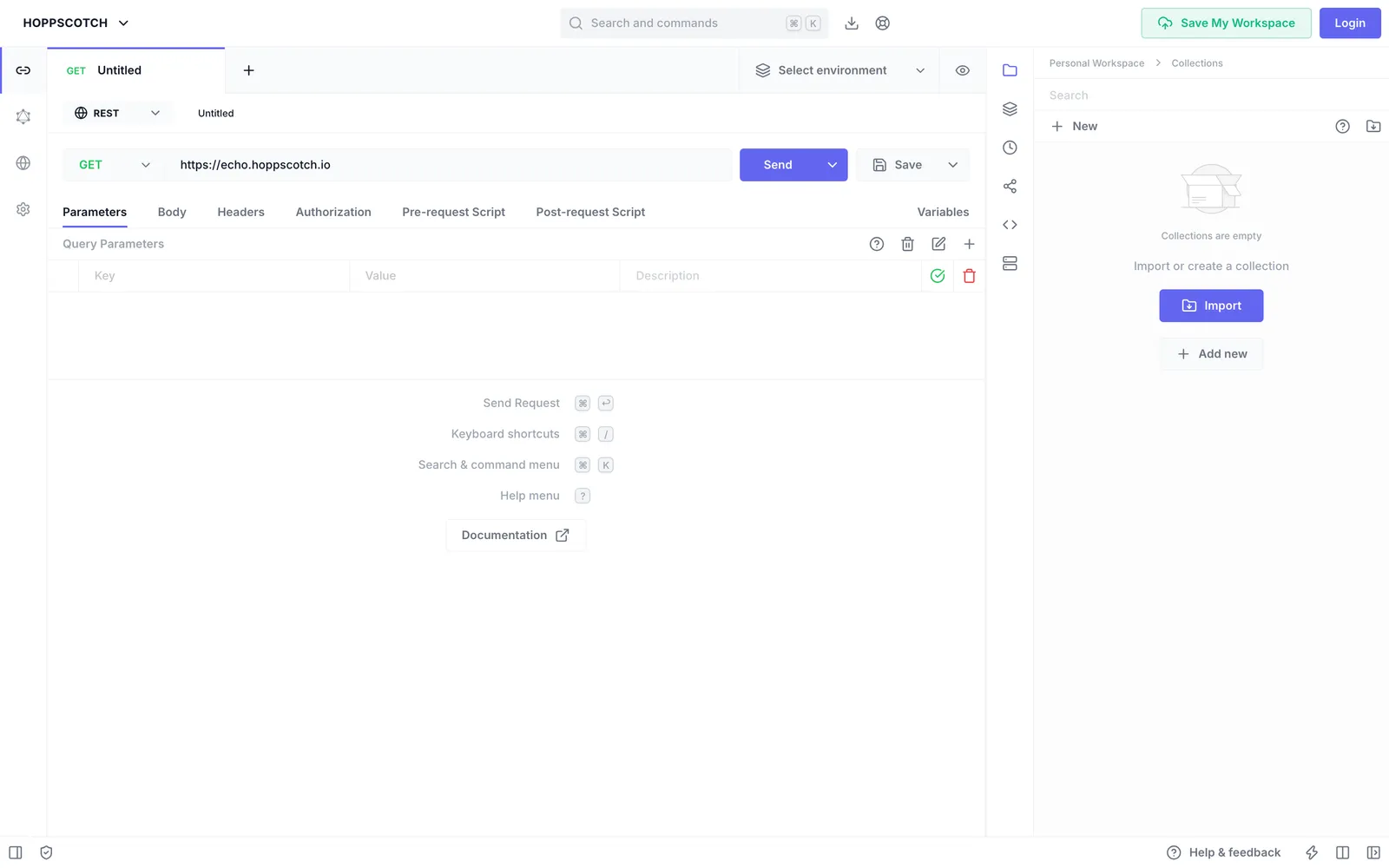
Hoppscotch is the open-source client you can use in a browser tab or run on your own server.
Category: browser client, cloud or self-hosted.
License: MIT.
Price, 4 Oct 2026: Cloud Free $0. Cloud Business $6 per user/month billed annually. Enterprise Cloud, added on 29 September 2026, is $11 per user/month billed annually or $14 billed monthly.
Free plan: a personal workspace. Team workspaces are on Business.
Data: hosted, or on hardware you own. The free self-host option is linked from pricing.
Git: Git-native collection files are not published.
Insomnia import: collections and environments, with parameters, bodies, headers and basic auth. Scripts, tests and advanced auth do not come across.
Protocols: GraphQL and WebSocket.
Runner: Hoppscotch CLI, cloud or self-hosted collections, in CI/CD.
Best for: teams that want an open-source client inside their own network, and anyone who wants to send a request without installing anything.
Watch out for: self-hosted is not offline, fully offline use is not published, and there is no published gRPC.
4. Thunder Client
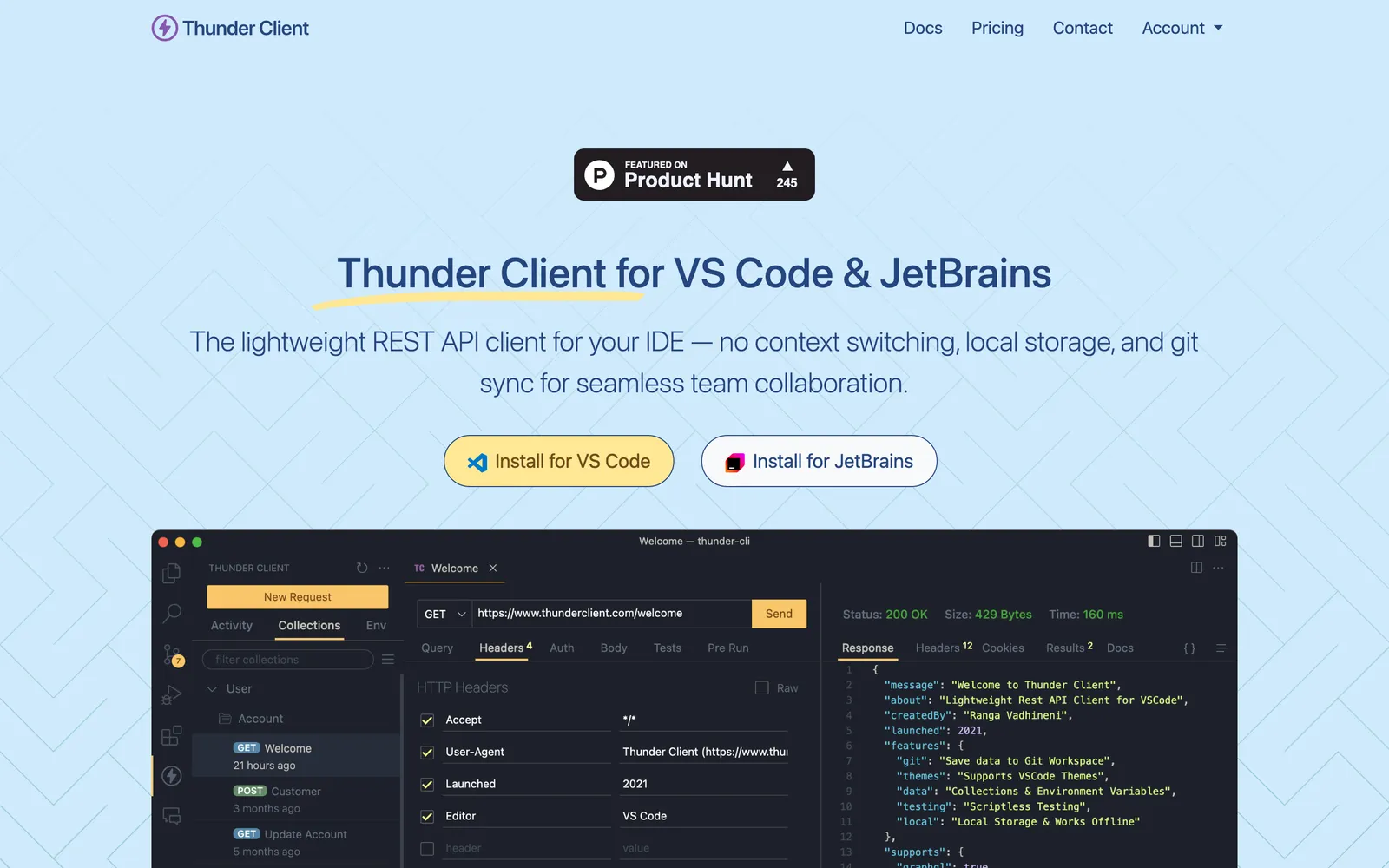
Thunder Client puts the client inside VS Code or a JetBrains IDE, where a lot of the work already happens.
Category: extension for VS Code and JetBrains.
License: proprietary software and subscription terms.
Price, 4 Oct 2026: Free $0. Starter $3, Business $7, Enterprise $16 per user/month annual. A 14-day paid trial goes to business email addresses by request.
Free plan: $0. Paid runs are metered: Starter 250 local collection runs per user a month, Business 500, Enterprise unlimited. CI/CD runs are not capped.
Data: collection data stays on your machine.
Git: Git Sync is paid.
Insomnia import: v4 or v5 collections and environments, on paid plans.
Protocols: WebSocket, SSE and gRPC on paid plans.
Runner: CLI and CI/CD are paid.
Best for: VS Code and JetBrains users doing REST work who want one fewer window open.
Watch out for: the migration itself is a paid feature. Import, Git Sync and the CLI all sit behind Starter or higher.
5. HTTPie
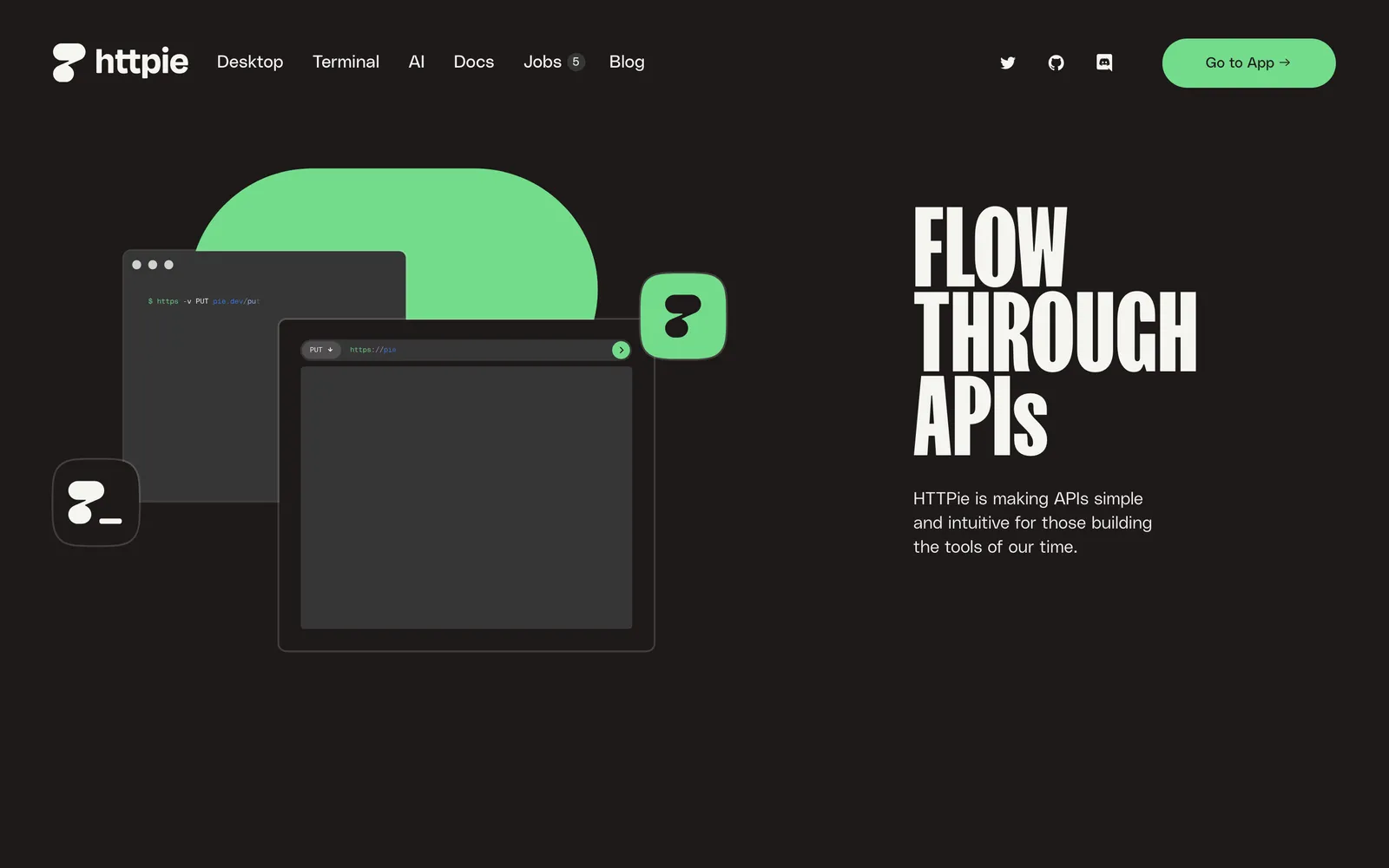
HTTPie is a terminal HTTP client whose syntax documents itself: http POST api.example.com name=John.
Category: command-line client, with desktop and web apps in public beta.
License: the CLI is BSD 3-Clause. The apps are separate.
Price, 4 Oct 2026: no paid price and no numeric free limit are published.
Free plan: the CLI is open source. The desktop app is a public beta.
Data: the desktop app works offline, without an account.
Git: not published.
Insomnia import: the Desktop and Web apps import collections, environments and data dumps. Scripts are not supported.
Protocols: the Desktop and Web apps document a GraphQL body mode.
Runner: the CLI is the product. No CI service published.
Best for: debugging by hand in a shell, and scripting one-off requests where a GUI slows you down.
Watch out for: the apps carry a beta label and no published price, so plan around the CLI.
6. Kreya
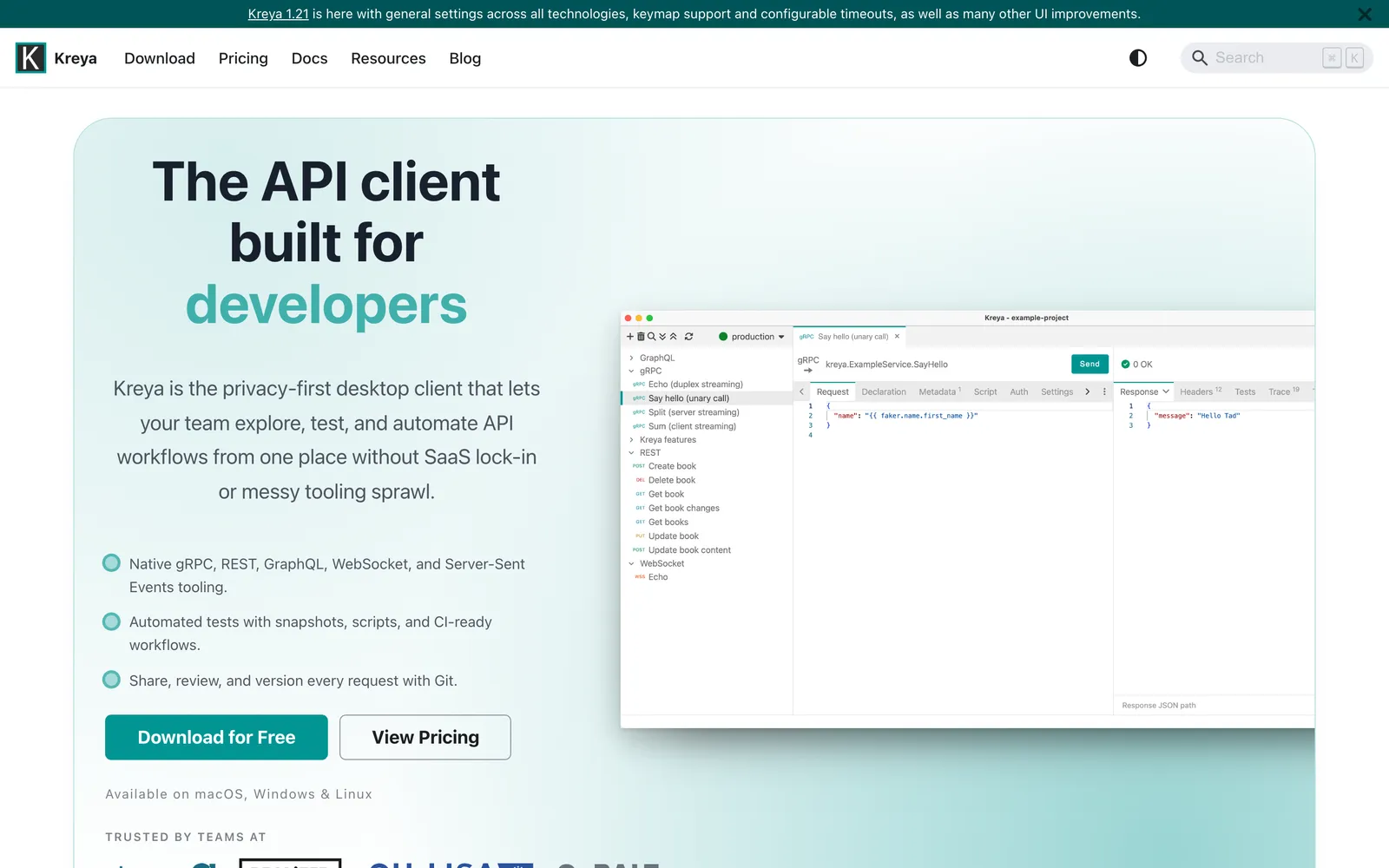
Kreya is the gRPC-led desktop client, and its runner writes JUnit reports.
Category: desktop client, local-first.
License: proprietary; Kreya states it is not open source.
Price, 4 Oct 2026: Free is free forever. Pro and Enterprise exist, with no numeric price on the page we read. Paid plans have a 10-day trial.
Free plan: free forever, with request history limited to the latest request. Advanced testing is paid.
Data: your machine. Enterprise offers an offline license that works without an account.
Git: project data is structured JSON that diffs cleanly.
Insomnia import: v4 JSON and v5 YAML exports, with REST, GraphQL, gRPC and WebSocket operations.
Protocols: GraphQL and gRPC.
Runner: headless CLI, Docker image, JUnit reports, CI/CD.
Best for: microservice teams whose primary protocol is gRPC and who want those calls running in CI.
Watch out for: you cannot budget from the website. Get the paid numbers first, and spend the 10-day trial on the CLI.
7. Apidog
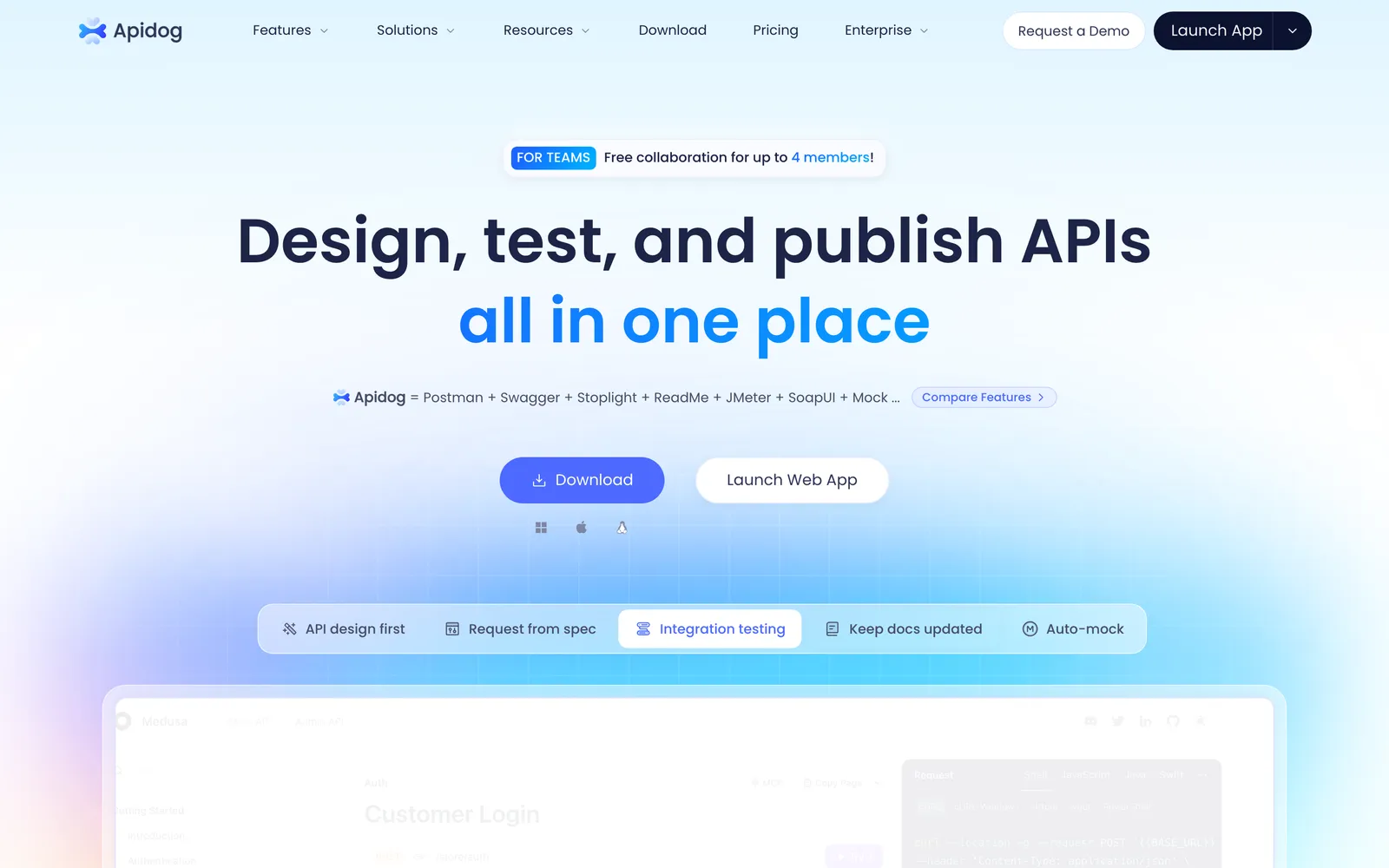
Apidog combines design, mocking, testing and a request client in one product.
Category: API design, mocking and testing platform.
License: not published.
Price, 4 Oct 2026: the pricing page returned a bot check, so this guide states no price or free-plan limit. Confirm both with Apidog.
Data: a desktop Offline Space keeps selected projects local. Self-hosted runners and mock servers are published, and an On-Premises edition hosts the whole platform.
Git: Offline Space data can be managed locally with Git.
Insomnia import: direct Insomnia import is documented.
Protocols: HTTP, GraphQL, gRPC, WebSocket, SSE and SOAP.
Runner: Apidog CLI in Jenkins, GitLab CI and GitHub Actions, plus scheduled runs.
Best for: a team replacing more than the request window, where the spec, the mock server and the tests belong in one place.
Watch out for: no price we could read. Confirm the price and free-plan limits in writing.
8. Testfully
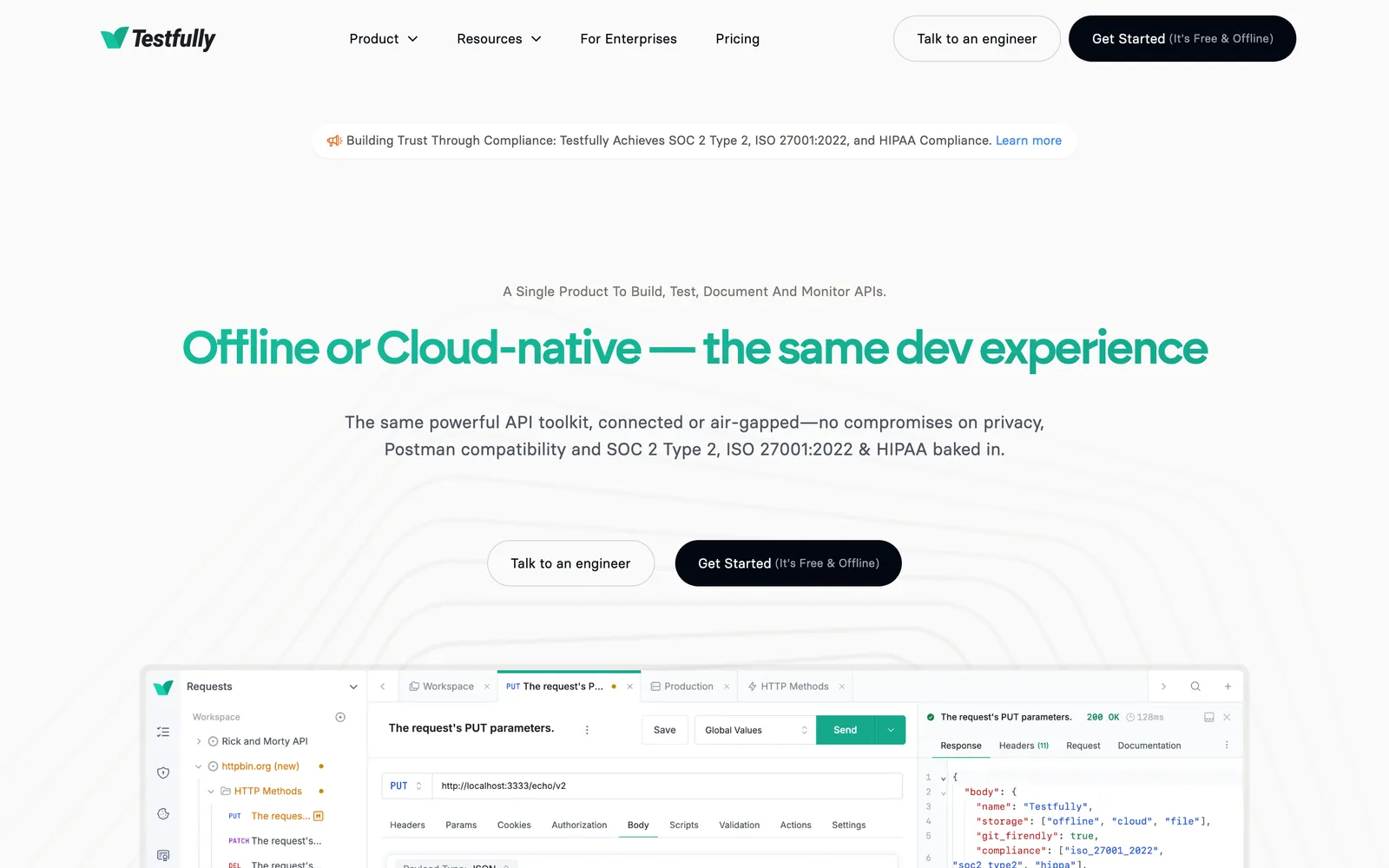
Testfully treats an offline workspace as a first-class product rather than a fallback.
Category: hosted client and testing platform, with offline workspaces.
License: not published.
Price, 4 Oct 2026: Developer $0. Team $14, Enterprise $29 per user/month billed annually. Paid plans have a 14-day trial by request.
Free plan: one offline and one cloud workspace, up to five users each, unlimited collection-runner executions, all core features, and the CLI.
Data: offline workspaces need no account and are described as air-gapped. Self-hosting the cloud service is not published.
Git: Team adds Git integration for offline workspaces.
Insomnia import: Collection v4 JSON, cloud and offline.
Protocols: GraphQL. Current native gRPC support is not stated.
Runner: Testfully CLI, in the free plan, either workspace, in CI.
Best for: a small team that wants shared workspaces without giving up a local one.
Watch out for: the importer takes v4, so export from Insomnia in that version. gRPC is the unpublished gap.
9. Postman
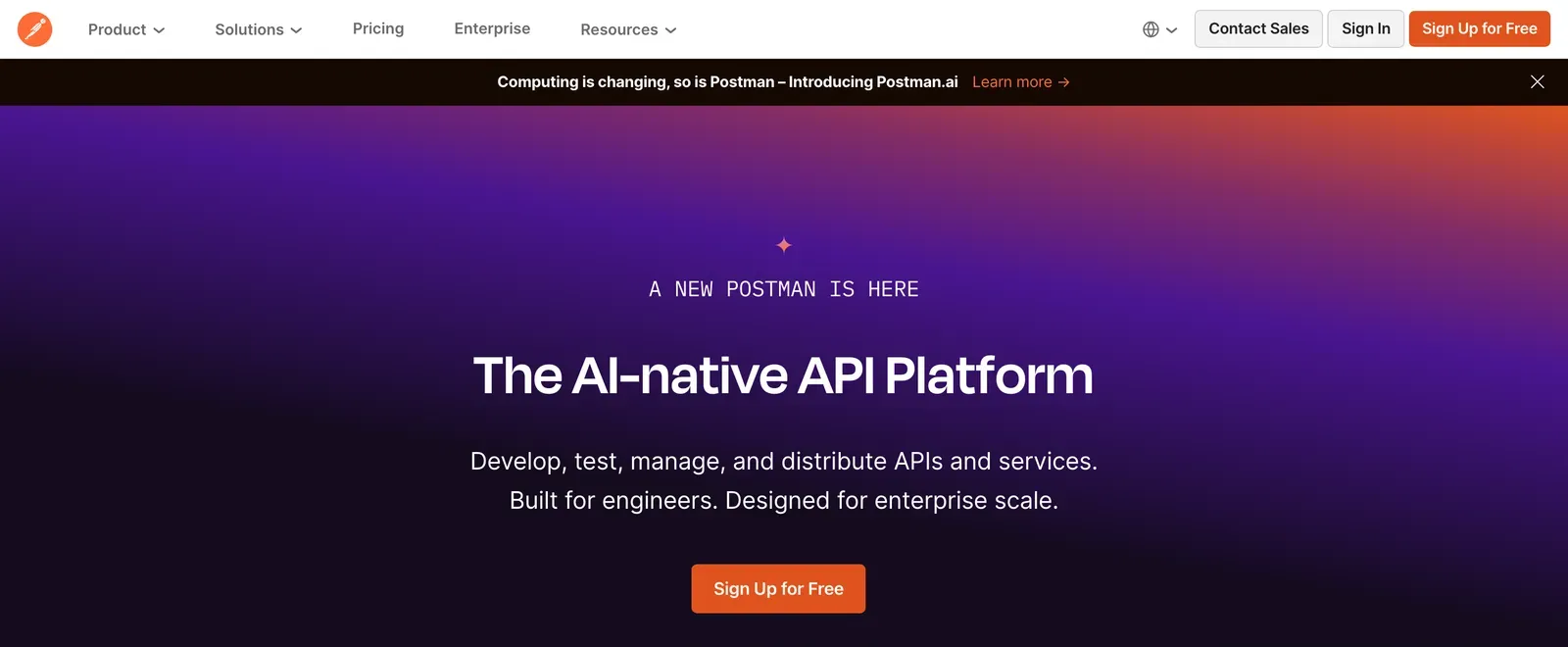
Postman is the tool many Insomnia users originally left. It belongs here honestly, and native Git on every plan is the reason why.
Category: hosted API platform.
License: no open-source platform license published.
Price, 4 Oct 2026: Solo $9 a month annual, Team $19 per user/month annual. Enterprise is priced by sales.
Free plan: $0 for individuals: the client, specs, mock servers, native Git, collection-runner and performance-testing runs, 1,000 monitor requests and 50 AI credits a month.
Data: cloud workspaces are the centre of the product. Its lightweight API Client can send requests offline. Enterprise private test runners are runners, not a self-hosted Postman.
Git: native Git on every plan.
Insomnia import: the importer accepts Insomnia data exports.
Protocols: GraphQL and gRPC.
Runner: Postman CLI on every plan, collections in CI.
Best for: teams that want one hosted place for specs, mocks, docs and tests.
Watch out for: native Git narrows the gap with the local-first clients. It does not close it. Our Postman alternatives guide covers the escape routes, and Insomnia vs Postman compares the two directly.
10. Qodex
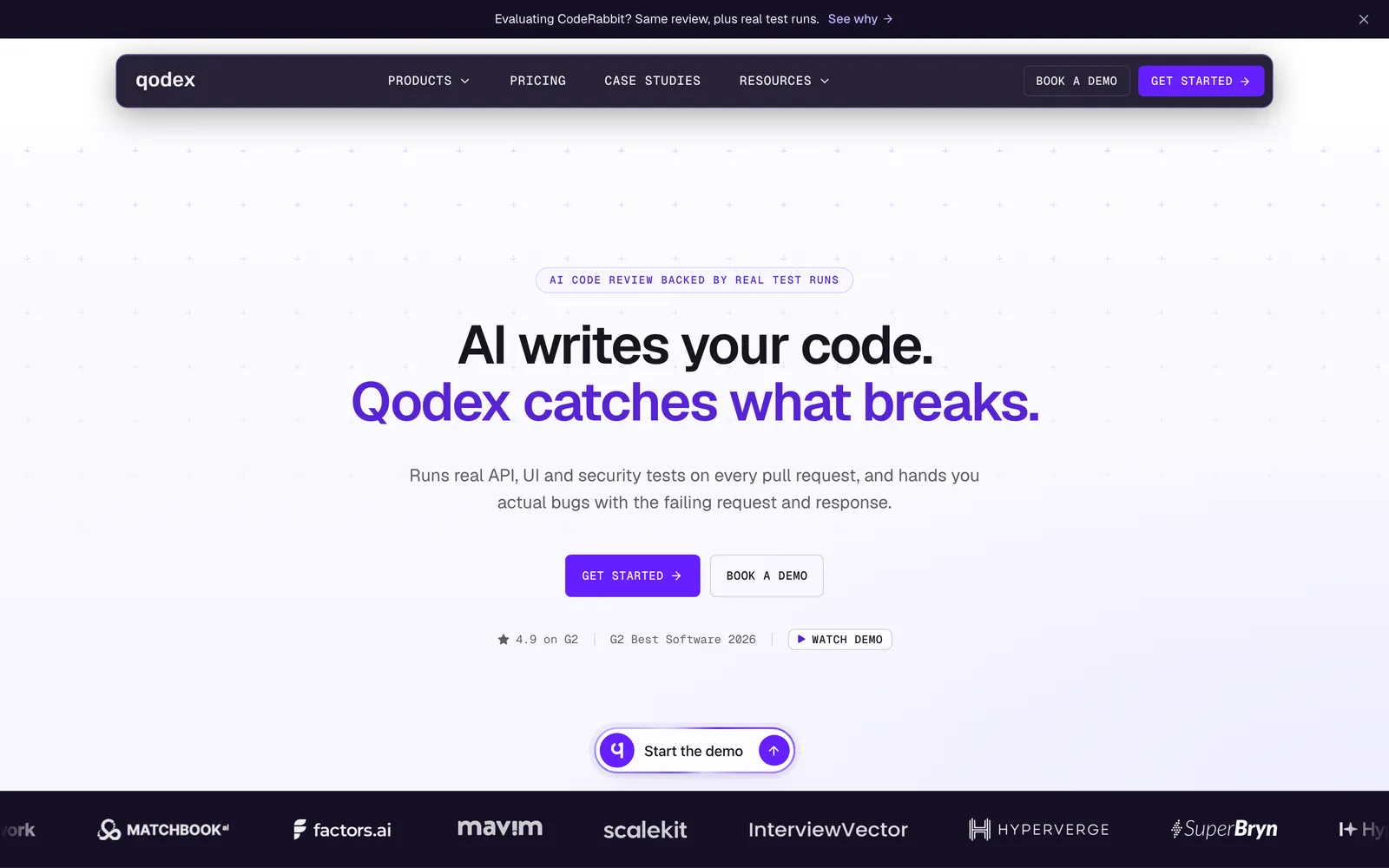
Qodex is an AI QA agent that writes and runs API, UI and security tests on every pull request, from your spec and your running app. It is not a request client, and there is no window here to replace Insomnia's.
Category: automated API testing, not a manual client.
License: not published.
Price, 4 Oct 2026: Individual $0. Startup from $1,299 per project per month. Scale from $2,500 a month. See Qodex pricing.
Free plan: one repository, 25 scenarios, 100 runs a month, one AI chat session, one run at a time.
Data: self-hosting is published for PR Review Enterprise only.
Git: generated tests are exportable Playwright and HTTP code, synced to Git. They are scenarios, not request collections.
Import: it takes OpenAPI, Postman collections, spreadsheets and existing tests.
Protocols: HTTP and GraphQL scenario runs.
Runner: Startup adds CI/CD integrations plus scheduled and webhook-triggered runs.
Best for: teams whose problem is that nobody writes the tests, rather than that the request window is wrong. See API testing, or start free against staging.
Watch out for: $0 to $1,299 is a steep step, and you still want a client for poking at an endpoint by hand.
Free and open source are not the same thing
Four arrangements get called free on this page, and they give you four different sets of rights.
Open-source software. Bruno's core is MIT, Hoppscotch is MIT, the HTTPie CLI is BSD 3-Clause, and the Insomnia desktop client itself is Apache 2.0. The license sits on the source, not on a plan.
Open source with a paid binary. Yaak only. The source is MIT, the binaries are free for personal use, and commercial use costs $79 a year, $399 once, or $149 per user a year for Business.
Proprietary products with a free plan. Postman ($0 for individuals), Thunder Client ($0) and Testfully Developer ($0, one offline and one cloud workspace). Also Kreya (free forever, history limited to the latest request), Qodex Individual ($0, 25 scenarios and 100 runs a month), Insomnia Essentials ($0, Git Sync for three users, Inso CLI).
Trials with a clock. Yaak's commercial trial runs 30 days, no card. Bruno Ultimate, Apidog, Testfully and Thunder Client run 14 days, the last two by request. Kreya runs 10.
An Apache 2.0 license on the Insomnia client did not prevent the 2023 storage change, and MIT on Yaak's source does not make the binary free at work. Read the license for what you may run, the plan for what you get.
Local-first, Git-native and self-hosted, defined once
These three get used as if they mean one thing. They are separate controls, and a tool can have one without the others.
Local-first: the data sits on your machine and the app works without an account. Yaak, Bruno and Insomnia's Scratch Pad qualify. So do Testfully's offline workspaces and HTTPie's desktop app. Kreya works without an account on its Enterprise Offline license.
Git-native: the collections are files you can diff and review. Bruno stores plain text, Yaak a plain-file directory with Git sync, Kreya structured JSON. Insomnia's Git Sync is free for three users, Postman lists native Git on every plan, and Thunder Client's and Testfully's are paid. Apidog's Offline Space data can be managed with Git; Hoppscotch publishes no Git-native files on the pages we read.
Self-hosted: you run the server. Hoppscotch publishes a free self-host option for the whole application. Apidog sells an On-Premises edition of the full platform, plus self-hosted runners and mock servers. Qodex lists self-hosting for PR Review Enterprise. Bruno, Yaak and Kreya have no server to host.
Hoppscotch shows why this matters: you can run it on your own hardware and it is still a web app.
Migrating from Insomnia
Export first, then check what arrived. A few vendors publish what their importer carries; for the rest, verification is yours.
| Tool | Accepted Insomnia export | What the vendor says survives |
|---|---|---|
| Yaak | v4 and v5 | HTTP and gRPC requests, folders, environments, selected auth, bodies, templates; WebSocket from v5 only |
| Thunder Client | v4 or v5, paid plans only | Collections and environments |
| Testfully | Collection v4 JSON, cloud and offline | Not stated |
| Apidog | Direct Insomnia import | Base URLs, static resources and endpoint cases are documented |
| Bruno | Insomnia collections | Not stated |
| Hoppscotch | Collections and environments | Parameters, bodies, headers, basic auth; not scripts, tests or advanced auth |
| Postman | Insomnia data exports | Requests, environments and other data |
| Kreya | v4 JSON and v5 YAML | REST, GraphQL, gRPC and WebSocket operations |
| HTTPie | Insomnia import documented | Scripts not supported |
| Qodex | Imports OpenAPI and Postman | No Insomnia importer listed |
Export, and note the version. Testfully takes v4. Yaak and Thunder Client take v4 or v5.
Import into a scratch workspace. Not over anything you rely on, and keep Insomnia installed until the end.
Validate environments and variables. Compare values against the original, not just names.
Repair auth and scripts. Yaak carries selected auth, and Hoppscotch only basic auth. Hoppscotch and HTTPie say scripts do not come across, so plan to rewrite them.
Smoke-test one request per protocol. If you use gRPC this is the step that matters: check it in each tool, and note that Thunder Client's is paid.
Wire the runner into CI before you cancel anything. Inso CLI is the piece teams forget they depend on.
Choose by protocol and runner
| Need | Tools that publish it | Notes |
|---|---|---|
| REST and HTTP | All ten, plus Insomnia | Choose on storage and price, not protocol. |
| GraphQL | Bruno, Yaak, Hoppscotch, Kreya, Apidog, Testfully, Postman, Qodex, Insomnia | Check Thunder Client and HTTPie in a trial. |
| gRPC | Bruno, Yaak, Kreya, Apidog, Postman, Insomnia; Thunder Client on paid plans | Check the others in a trial. |
| WebSocket | Apidog, Kreya, Yaak, Insomnia, Postman, Hoppscotch; Thunder Client on paid plans | Apidog also publishes SSE and SOAP. |
| Inside the editor | Thunder Client | VS Code and JetBrains. |
| In the terminal | HTTPie CLI | BSD 3-Clause. Bruno, Kreya and Yaak also ship CLIs. |
| Collection runs in CI | Bruno, Hoppscotch, Postman, Testfully, Apidog, Kreya, Inso CLI | Kreya, Bruno, Hoppscotch and Testfully write JUnit reports. Thunder Client's CLI is paid. |
| Tests written for you | Qodex | HTTP and GraphQL scenarios, triggered by a pull request. |
When Insomnia is still the right choice
Essentials is $0, with unlimited local and cloud projects, unlimited collection runs, Inso CLI, 1,000 mock-server requests a month, and Git Sync for up to three users.
Storage can be local, Git, cloud or hybrid, Scratch Pad is local-only and free forever, and Enterprise can mandate the mode.
Native GraphQL and gRPC are both included, which is more than half this list can say. The client is Apache 2.0.
Pro is $12 and Enterprise $45 per user per month, annual, where the storage policy controls live.
Leave when a specific line breaks. A fourth person needs Git Sync. You need self-hosting, which Insomnia does not publish. Policy rules out a Kong-hosted service. Or the real problem was never the client, and no amount of window-shopping writes the regression suite for you.
Frequently Asked Questions
What is the best free alternative to Insomnia?
Bruno, if you want collections as plain files in Git: MIT, $0, two workspaces, unlimited collection runs, GraphQL and gRPC included. Hoppscotch, if you want a browser client or a free self-hosted deployment, under MIT. Both are open source rather than free tiers of a paid product.
What happened with Insomnia and forced accounts?
Insomnia 8.0 introduced a local-only Scratch Pad, and Insomnia 8.3 restored local projects on 18 October 2023. Today it offers local, Git, cloud and hybrid storage, and Essentials still includes Git Sync for up to three users. People shop around because the option existed at all.
Can I import my Insomnia collections into other tools?
Bruno, Yaak, Hoppscotch, Postman, Kreya, Apidog, Testfully and Thunder Client all publish Insomnia import. Yaak takes v4 and v5, Thunder Client v4 or v5 on paid plans, and Testfully Collection v4 JSON. HTTPie's Desktop and Web apps import collections, environments and data dumps. Qodex imports OpenAPI and Postman collections.
Who makes Yaak, and how is it related to Insomnia?
Yaak is built by Gregory Schier, who created Insomnia before Kong acquired it. It is local by default with no account and no telemetry, and sync happens through a plain-file directory in Git. Its Insomnia importer is documented in detail: v4 and v5, carrying requests, folders, environments, selected auth, bodies and templates.
Which Insomnia alternative is best for gRPC?
Kreya. It is local-first, gRPC is the protocol it leads with, and its headless CLI produces JUnit reports for CI. Bruno includes gRPC in the free tier, and Yaak, Apidog and Postman all publish it. Thunder Client's is paid. Check gRPC in the other tools in a trial.
Is Insomnia still open source?
The desktop client is Apache 2.0. The commercial layer is the plans: Essentials at $0, Pro at $12 and Enterprise at $45 per user per month annual, where storage policy and admin controls live. Open source here means you can read and run the client.
Which alternatives work fully offline?
Yaak is local by default with no account. Bruno is offline-first. Kreya is local-first, and Enterprise adds an offline license with no license server. Testfully's offline workspaces need no account and are described as air-gapped. Thunder Client keeps collection data on the machine, HTTPie's desktop app works offline, and Apidog's Offline Space covers selected projects. Postman's lightweight API Client can send requests offline, separate from its cloud workspaces.
Which alternatives store collections as Git-readable files?
Bruno writes plain text files you can branch, diff and merge. Yaak uses a plain-file directory with Git sync built in. Kreya stores structured JSON that diffs cleanly. Insomnia's own Git Sync is free for up to three users, and Postman lists native Git on every plan. Thunder Client's Git Sync and Testfully's Git integration are paid, and Apidog's Offline Space data can be managed with Git.
What survives an Insomnia import?
Yaak publishes a detailed list: HTTP and gRPC requests, folders, environments, selected auth, bodies and templates, from v4 and v5 exports, with WebSocket from v5 only. Hoppscotch carries parameters, bodies, headers and basic auth, but not scripts or tests. Kreya lists REST, GraphQL, gRPC and WebSocket operations. Check environments and auth by hand afterwards, and expect to rewrite pre-request scripts.
Which alternatives run in CI?
Bruno CLI, Hoppscotch CLI, Postman CLI, Testfully CLI, Apidog CLI and Kreya's headless CLI all run collections in CI, and Kreya adds a Docker image and JUnit reports. Insomnia's own Inso CLI is in the free Essentials plan. Thunder Client's CLI is paid, and its CI/CD runs are not capped. Qodex runs on CI/CD integrations plus scheduled and webhook triggers, on Startup.