TestProject Alternatives in 2026: 8 Tools After the Shutdown
TestProject no longer exists. Tricentis closed signups on 16 November 2022 and switched off every account on 31 March 2023, so any TestProject alternative today is a replacement, not a migration target. The free replacements are the tools TestProject was built on: Selenium for web and Appium for mobile, with Playwright as the newer choice for web. Katalon Studio is the closest free product with a recorder for web, mobile and API. Tricentis itself points former users to Testim. Qodex fits when you would rather have an AI agent write and run web and API tests than record them.
Quick answer: pick by what you used TestProject for
Free, web tests in code: Selenium or Playwright. Both are Apache 2.0.
Free, mobile app tests: Appium. Apache 2.0, and the engine TestProject used for mobile.
A recorder for web, mobile and API in one product, with a free plan: Katalon Studio.
The vendor's own successor: Tricentis Testim, which has a free Community plan for web tests.
Tests in plain English, no code: Testsigma or testRigor. Testsigma prices by quote.
An agent that writes and runs web and API tests on every pull request: Qodex. It does not test native mobile apps.
What happened to TestProject
TestProject was a free test automation platform for web, mobile and API testing, built on Selenium and Appium. Tricentis bought it in August 2019 and kept it free. On 17 November 2022 Tricentis announced the end of life: new accounts were disabled from 16 November 2022, and on 31 March 2023 all existing accounts were deactivated and access was revoked. The announcement is preserved in the archived TestProject blog post, and the Tricentis qTest end of support page repeats the date.
Before the shutdown, users could export their tests four ways: as code (Java, C# or Python), as TestProject YAML, as an Excel test document, or by syncing to GitHub. If your team exported code, it is Selenium or Appium code, and it still runs with the open-source libraries. If nobody exported anything, the tests are gone and you are starting again, which changes the choice below: there is nothing to import, so pick the tool you want to live with.
TestProject alternatives at a glance
The criteria are the ones a former TestProject user has to decide on: what the tool tests, how tests get written, the license, and what it costs. Prices and plans were read on each vendor's own pricing page on 11 November 2026, except where a cell says "Not read"; licenses were read on each project's GitHub repository.
| Tool | Web | Mobile apps | API | How tests are written | License | Price, 11 Nov 2026 |
|---|---|---|---|---|---|---|
| TestProject (shut down) | Yes | Yes | Yes | Recorder, or code with its SDK | Was free, proprietary | Unavailable since 31 March 2023 |
| Selenium | Yes | No | No | Code (Java, Python, C#, JavaScript, Ruby) | Apache 2.0 | Free |
| Appium | Mobile web | Yes | No | Code, over the WebDriver protocol | Apache 2.0 | Free |
| Playwright | Yes | No | Yes, through its request API | Code, plus a code generator | Apache 2.0 | Free |
| Katalon Studio | Yes | Yes | Yes | Recorder, keywords or scripts | Proprietary | Free plan; Professional $1,800 per seat a year |
| Tricentis Testim | Yes | Yes, as Testim Mobile | Not stated | Recorder with AI locators | Proprietary | No list price; free Community plan after a trial |
| Testsigma | Yes | Yes | Yes | Plain-English steps | Proprietary | Quote only |
| testRigor | Yes | Yes | Yes | Plain-English steps | Proprietary | Not read |
| Qodex | Yes | No | Yes | An AI agent writes them; you review | Proprietary; tests export as Playwright and HTTP code | Individual $0; Startup from $1,299 per project a month |
"Not read" means we did not open that vendor's pricing page on the day, so no price is stated here. Qodex prices come from the Qodex pricing page.
The 8 alternatives, one by one
1. Selenium
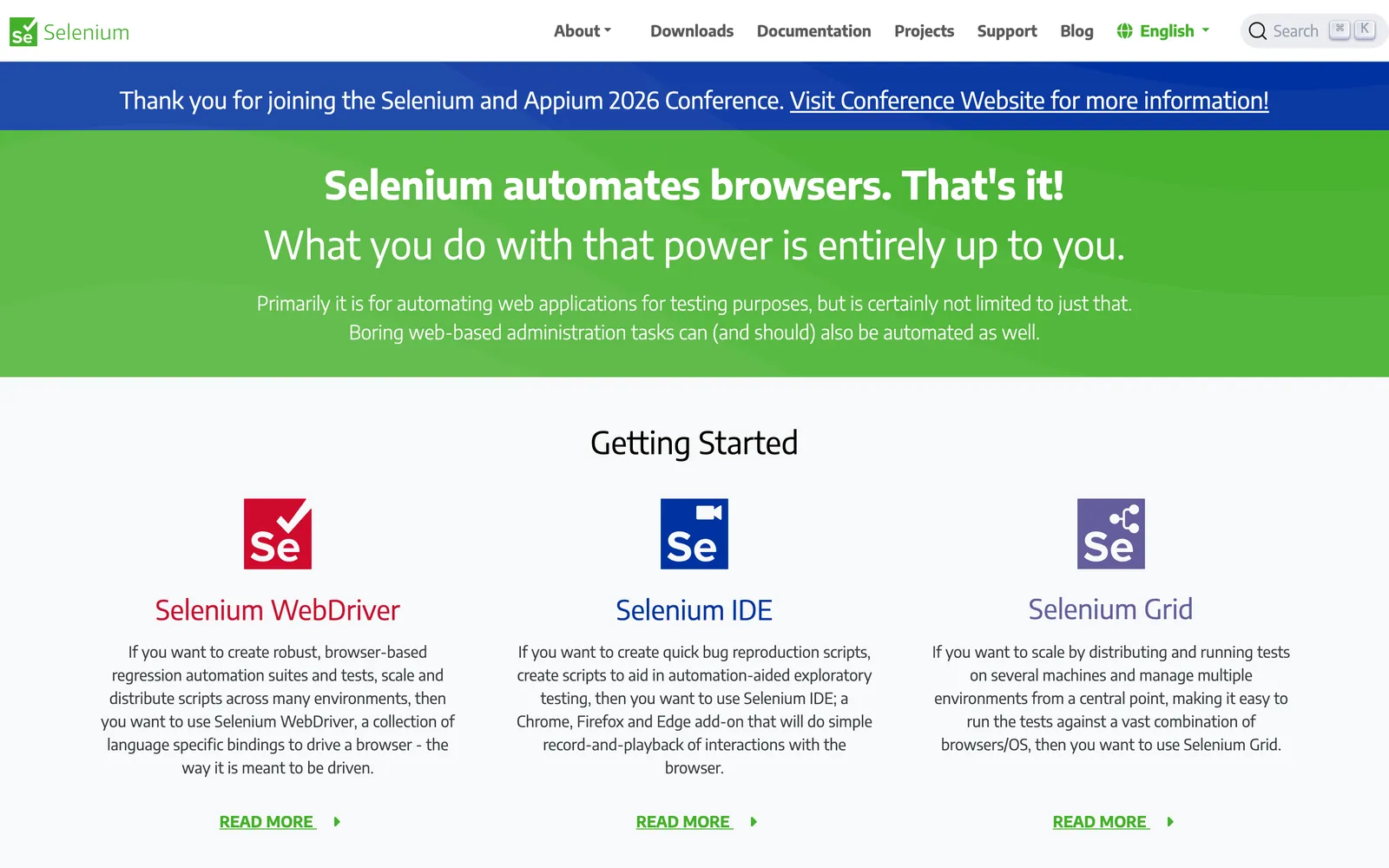
Selenium is the browser automation project TestProject wrapped for web testing. It implements the W3C WebDriver specification and works with every major browser.
What it does well: if you exported your TestProject tests as Java, C# or Python, Selenium is where that code runs with the least change. It is free under Apache 2.0, and nearly every cloud browser grid accepts it.
Limits: it automates browsers and nothing else. There is no recorder comparable to TestProject's, no built-in reporting dashboard and no API or native mobile testing. You assemble the test runner, reports and CI yourself.
Who it suits: teams with engineers who write code and want no license at all. If Selenium itself is what you are trying to leave, see our Selenium alternatives.
2. Appium
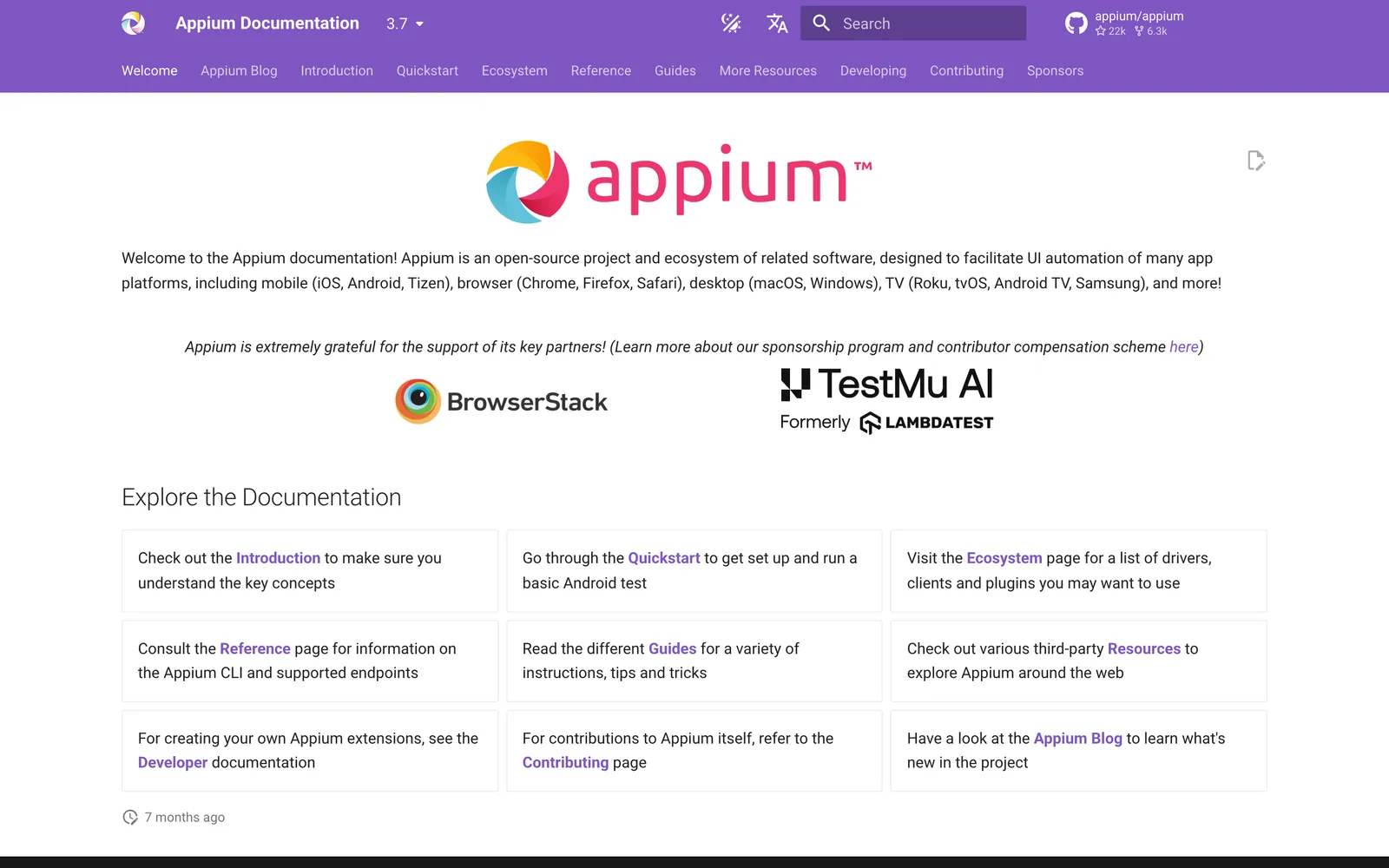
Appium is the open-source automation framework TestProject used for mobile. It drives native, hybrid and mobile web apps over the same WebDriver protocol Selenium uses.
What it does well: it is the free, standard way to automate Android and iOS apps, under Apache 2.0, and exported TestProject mobile tests are Appium code underneath.
Limits: setup is the hard part. You manage drivers, emulators or real devices, and signing for iOS. Like Selenium it ships no recorder dashboard and no reporting of its own.
Who it suits: teams whose TestProject use was mostly mobile apps and who can own the device setup.
3. Playwright
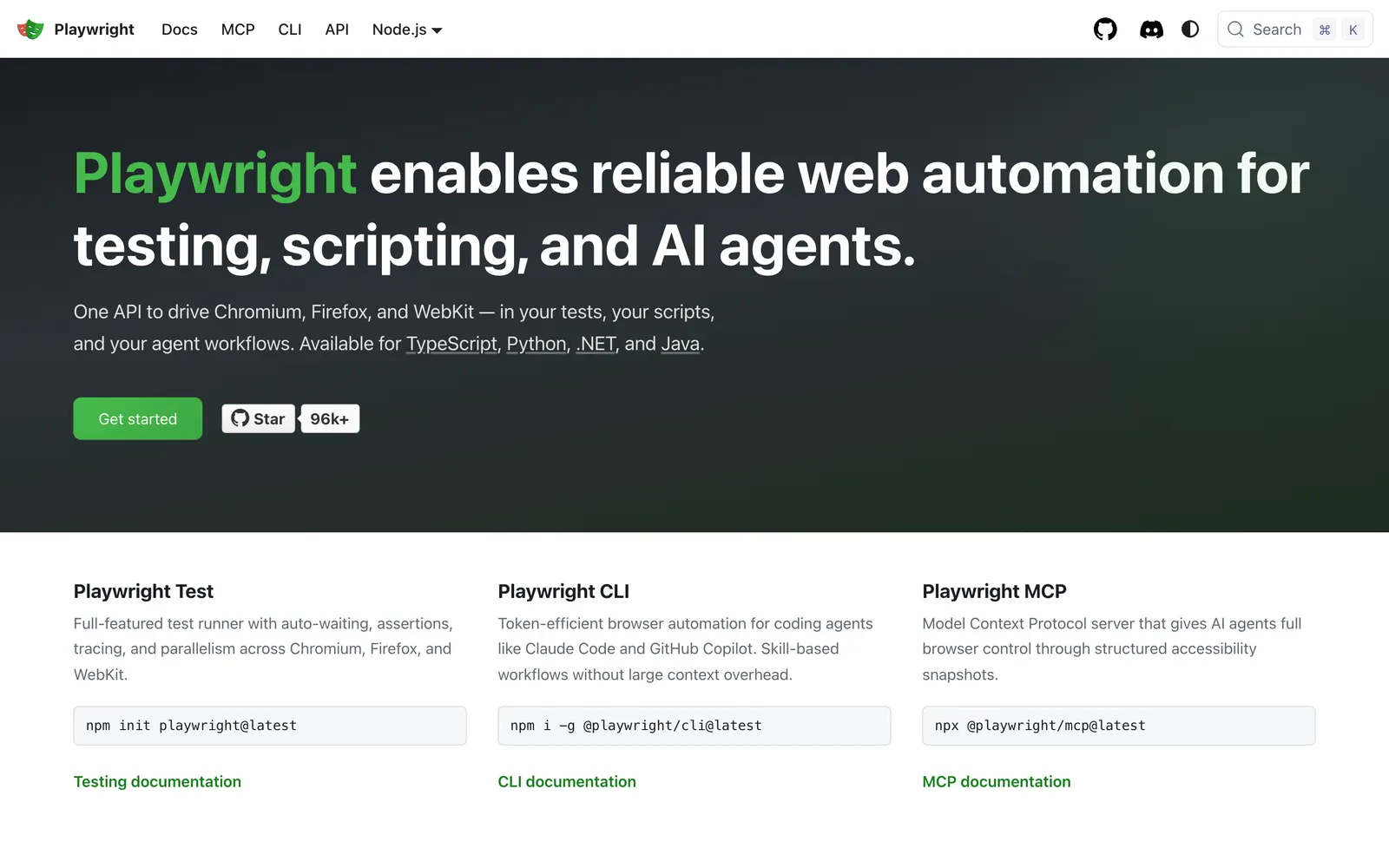
Playwright is Microsoft's open-source framework for web testing. One API drives Chromium, Firefox and WebKit, and its test runner includes browser isolation, auto-waiting and web-first assertions.
What it does well: if you are rewriting web tests anyway, Playwright gives you a runner, a code generator that records your clicks into a script, and traces for debugging, all free under Apache 2.0.
Limits: it does not automate native mobile apps, and it will not run exported TestProject code, which targets Selenium or Appium. Moving to it is a rewrite.
Who it suits: teams starting fresh on web tests. Our Playwright alternatives guide covers the neighbours.
4. Katalon Studio
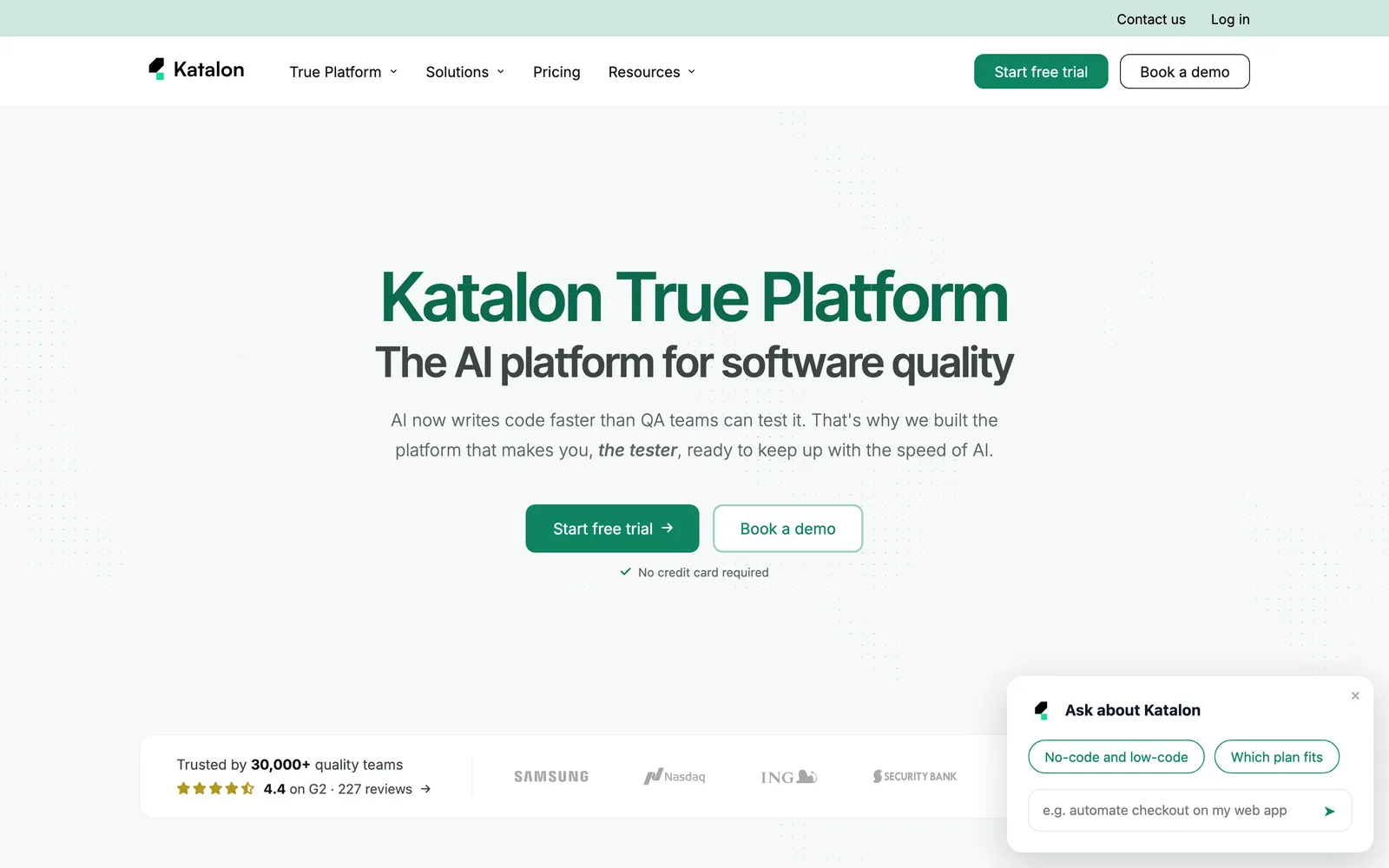
Katalon Studio is the closest thing to TestProject that still has a free plan: one desktop product with record and playback for web and mobile, plus API testing.
What it does well: the Free plan lets you author and run tests locally with record and playback, across web, API and mobile. That is the TestProject workflow with a different vendor.
Limits: the free plan stops at 40 static test suites and has no parallel execution, no desktop app testing and no AI self-healing. Running from the command line or in CI needs the Katalon Runtime Engine add-on. Professional is $1,800 per seat a year on Katalon's pricing page (shown against a $2,199 list price), read 11 November 2026.
Who it suits: QA teams that relied on the TestProject recorder and want one tool for web, mobile and API. See Katalon alternatives for how it compares.
5. Tricentis Testim
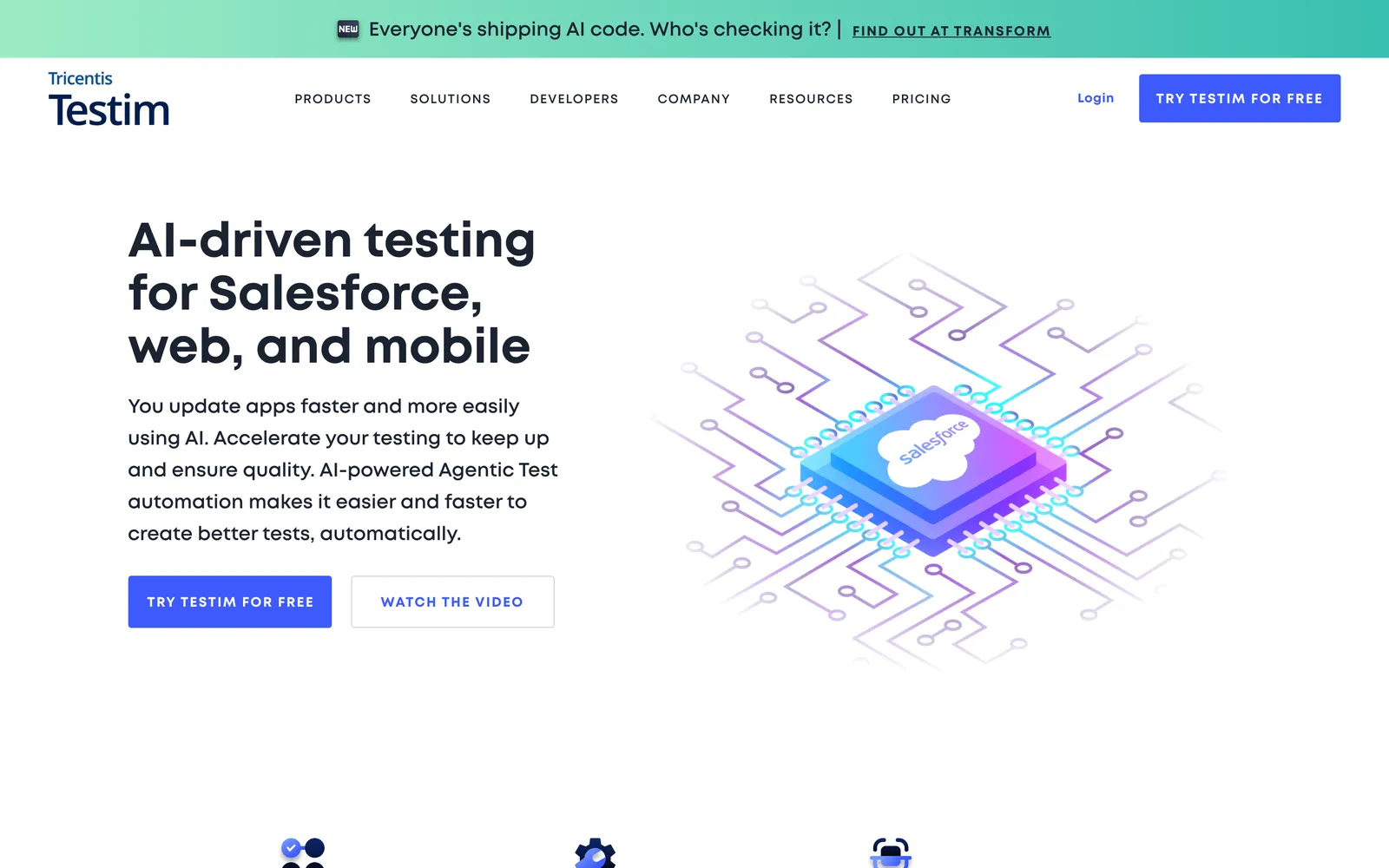
Testim is the product Tricentis named when it retired TestProject. It is a recorder-based tool for web tests with AI-powered locators, and a separate Testim Mobile product.
What it does well: low-code, recorder-based authoring that will feel familiar, runs on Testim's cloud or any Selenium grid, and a free Community plan that an account reverts to when its trial ends.
Limits: Testim's pricing page lists no prices (read 11 November 2026), the Community plan is limited to one per organization and its features are "subject to change", and mobile needs a separate platform purchase. Only Professional plan users can export tests to Puppeteer, Selenium or Playwright.
Who it suits: teams already buying from Tricentis, or teams that want the recorder experience and accept a quote.
6. Testsigma
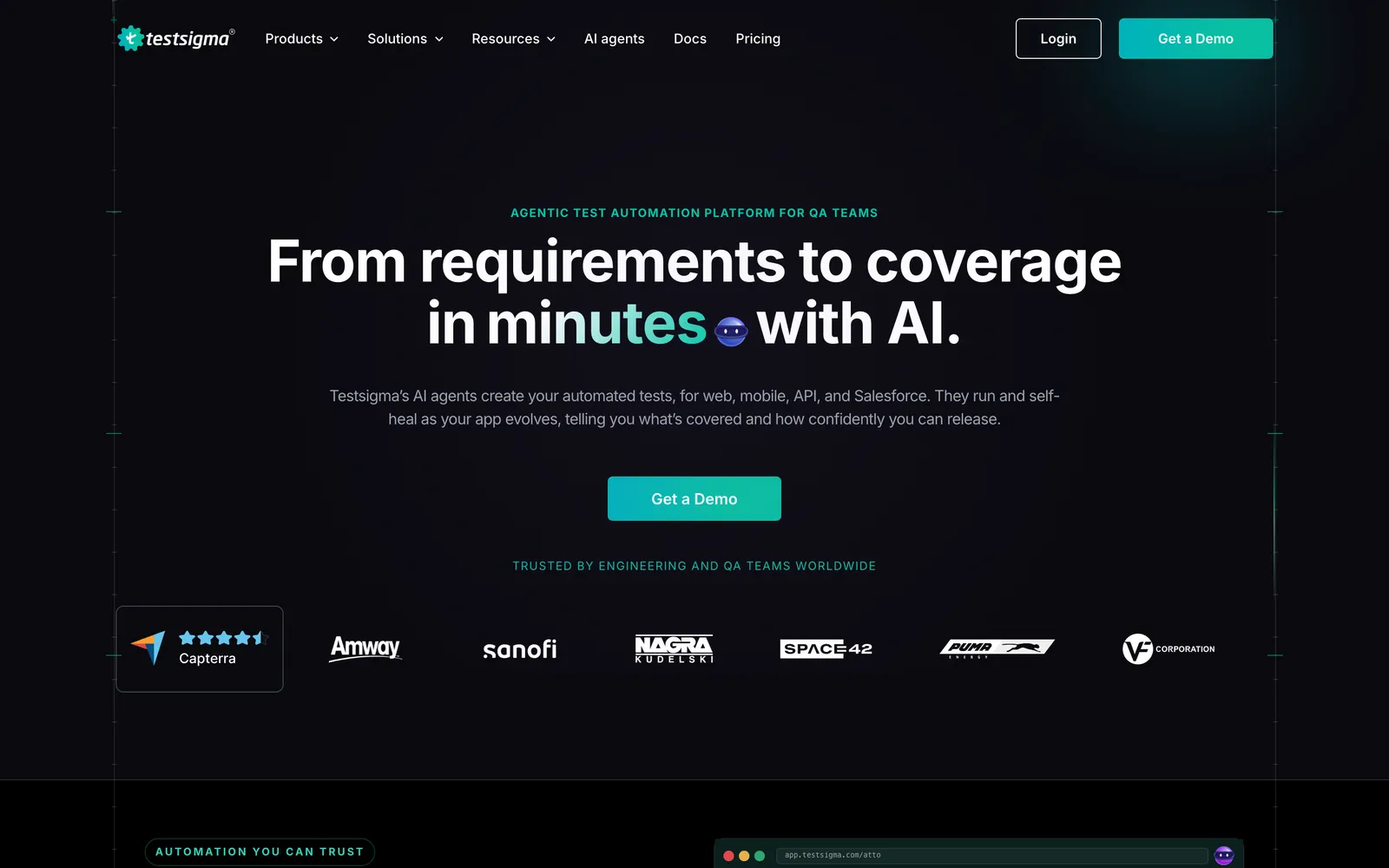
Testsigma is a cloud platform where tests are written as plain-English steps. It covers web, mobile web, Android and iOS apps, desktop and API projects.
What it does well: the breadth matches what TestProject covered, with hosted browsers and real devices included, and it published its own TestProject migration guide when the shutdown was announced.
Limits: both plans, Pro and Enterprise, are "Get Custom Pricing" on Testsigma's pricing page (read 11 November 2026), so there is no free tier to stay on the way there was with TestProject.
Who it suits: QA teams without programmers that need web and mobile in one hosted product. See Testsigma alternatives.
7. testRigor
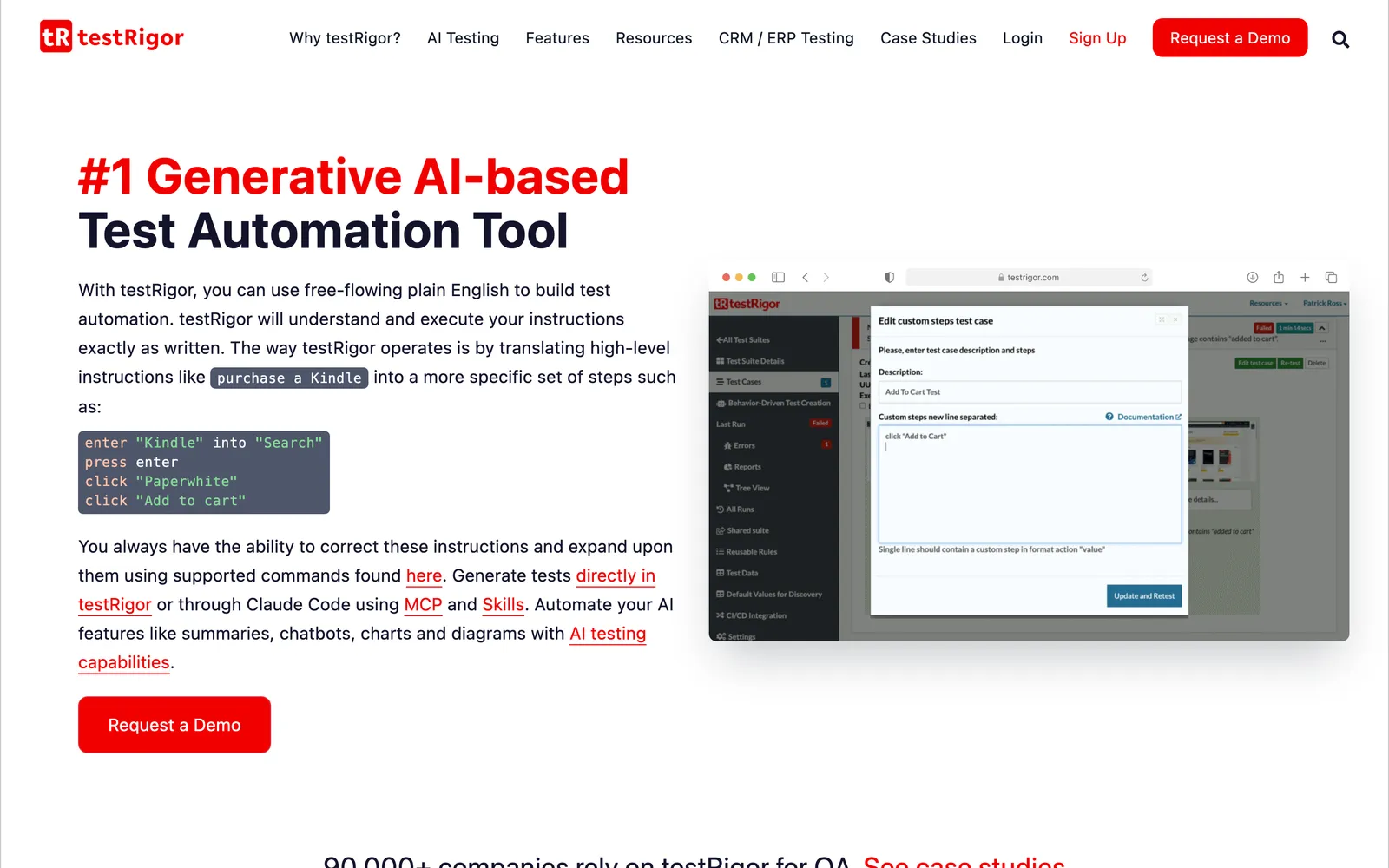
testRigor runs tests written in plain English from the end user's point of view. Its TestProject page describes converting TestProject tests by exporting them as manual test steps and cleaning those up.
What it does well: tests avoid selectors, so anyone on the team can read and edit them.
Limits: we did not read its pricing page for this update, so this guide states no price. Tests live in testRigor's own format rather than in code you keep.
Who it suits: teams where manual testers, not engineers, will own the suite. See testRigor alternatives.
8. Qodex
Qodex is a different shape of answer. It is an AI QA agent: you describe what to test in chat, it explores your web app with a real browser and your API with direct calls, and it writes runnable Playwright and HTTP scenarios. Saved scenarios replay on demand, on a schedule or on every pull request.
What it does well: nobody records or hand-writes the first suite. The generated tests are standard Playwright and HTTP code you can export and keep in Git, and the same agent covers UI, API and OWASP-aligned security checks. See UI testing and API testing.
Limits: Qodex tests web apps and APIs. It does not test native mobile apps, so it does not replace the Appium half of TestProject. It has no click-to-record tool, and it cannot import TestProject exports. Individual is $0 with 25 scenarios and 100 runs a month; Startup starts at $1,299 per project a month.
Who it suits: product teams with a web app and an API whose TestProject suite was never rebuilt after the shutdown.
How to choose
Do you still have exported tests? Exported Java, C# or Python runs on Selenium and Appium. Start there and add a runner and CI.
Do you test native mobile apps? Then the list is Appium, Katalon, Testim Mobile, Testsigma or testRigor. Playwright, Selenium and Qodex are out for that part.
Who will write the tests? Engineers: Selenium, Appium or Playwright. Testers who used the recorder: Katalon or Testim. Nobody has the time: Qodex for web and API.
Is free a requirement? Selenium, Appium and Playwright are free and open source. Katalon and Qodex have free plans with limits. Testim's free plan arrives after a trial. Testsigma quotes.
For a wider list than this one, see our guide to AI QA tools.
Frequently Asked Questions
Is TestProject still available?
No. Tricentis disabled new accounts on 16 November 2022 and deactivated all existing accounts on 31 March 2023. The platform cannot be used or signed up for today.
What is the best free alternative to TestProject?
For code, Selenium (web), Appium (mobile apps) and Playwright (web) are free under Apache 2.0. For a recorder across web, mobile and API, Katalon Studio's Free plan is the closest match, with limits such as 40 static test suites and no parallel runs.
What did Tricentis recommend instead of TestProject?
Tricentis pointed users to Tricentis Testim, a recorder-based tool for web apps with a free Community plan, and said TestProject's key features were also available in Tricentis Tosca.
Can I still use my old TestProject tests?
Only if they were exported before 31 March 2023. Code exports (Java, C#, Python) are Selenium and Appium code and run with those libraries. YAML and Excel exports are a record of the steps, which you would rebuild in a new tool.
Is there a TestProject alternative that covers web, mobile and API in one tool?
Katalon Studio, Testsigma and testRigor each cover all three. Selenium, Appium and Playwright cover them between them, as separate libraries. Qodex covers web and API, not native mobile apps.